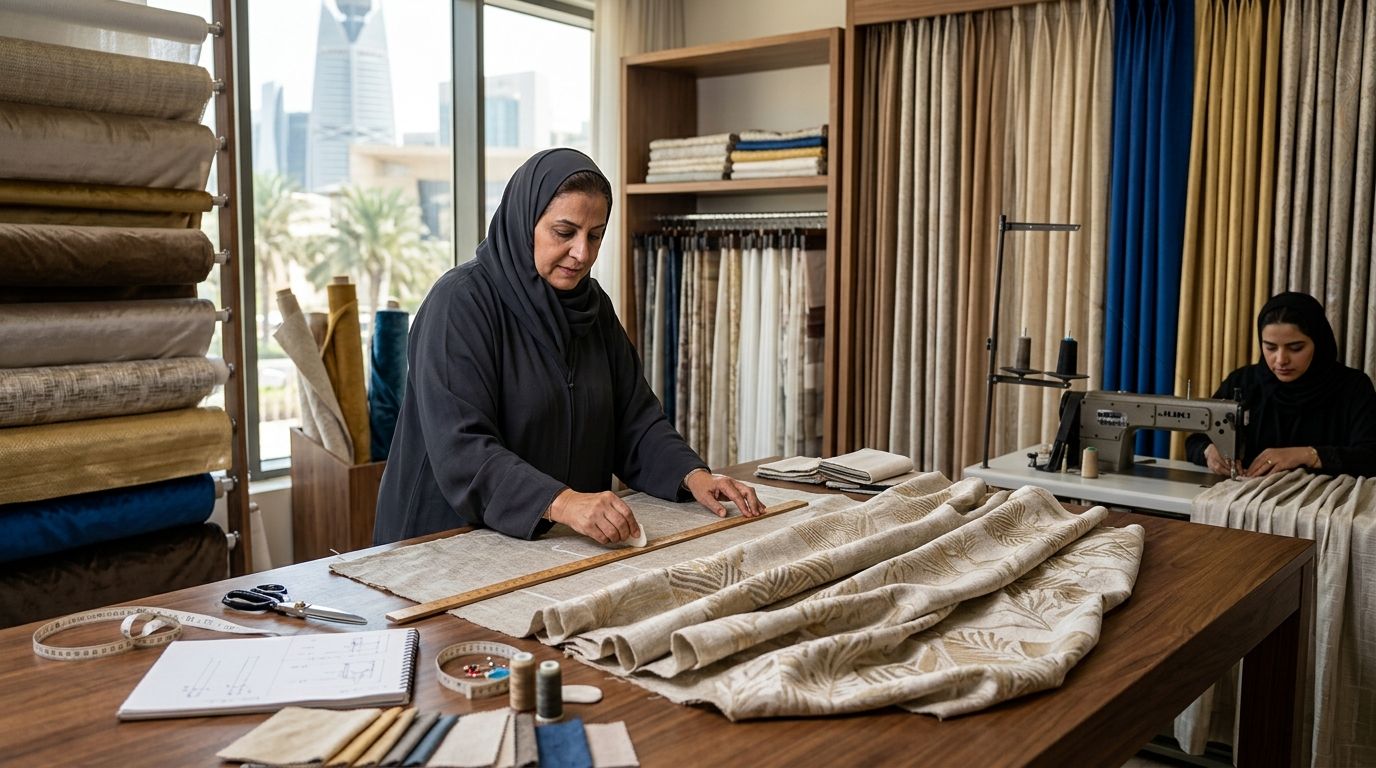
Custom curtains in Riyadh in 2026 are made-to-measure window coverings sized and cut to your exact frame, layered with a fullness ratio of roughly 2x to 2.5x the track width for a fuller, more finished drape than off-the-shelf panels. The hidden cost most homeowners miss isn't the fabric itself — it's the extra yardage needed for that fullness, plus lining for heat and light control, which changes the final quote more than the fabric choice alone.
- Custom curtains in Riyadh use a 2x-2.5x fullness ratio and made-to-measure drop lengths, not standard off-the-shelf sizes.
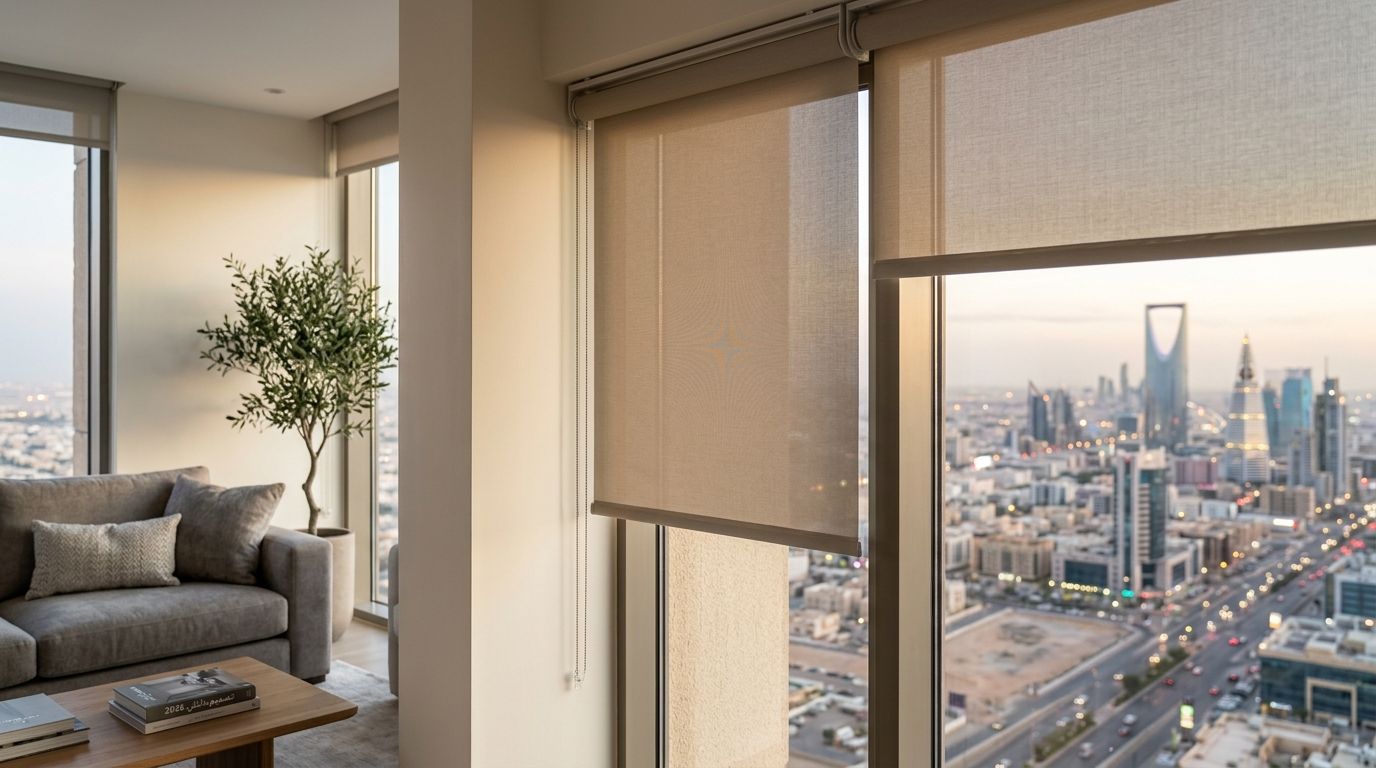
- Blackout and thermal-lined fabrics are the practical pick for Riyadh's sun exposure and dust; sheers alone rarely hold up.
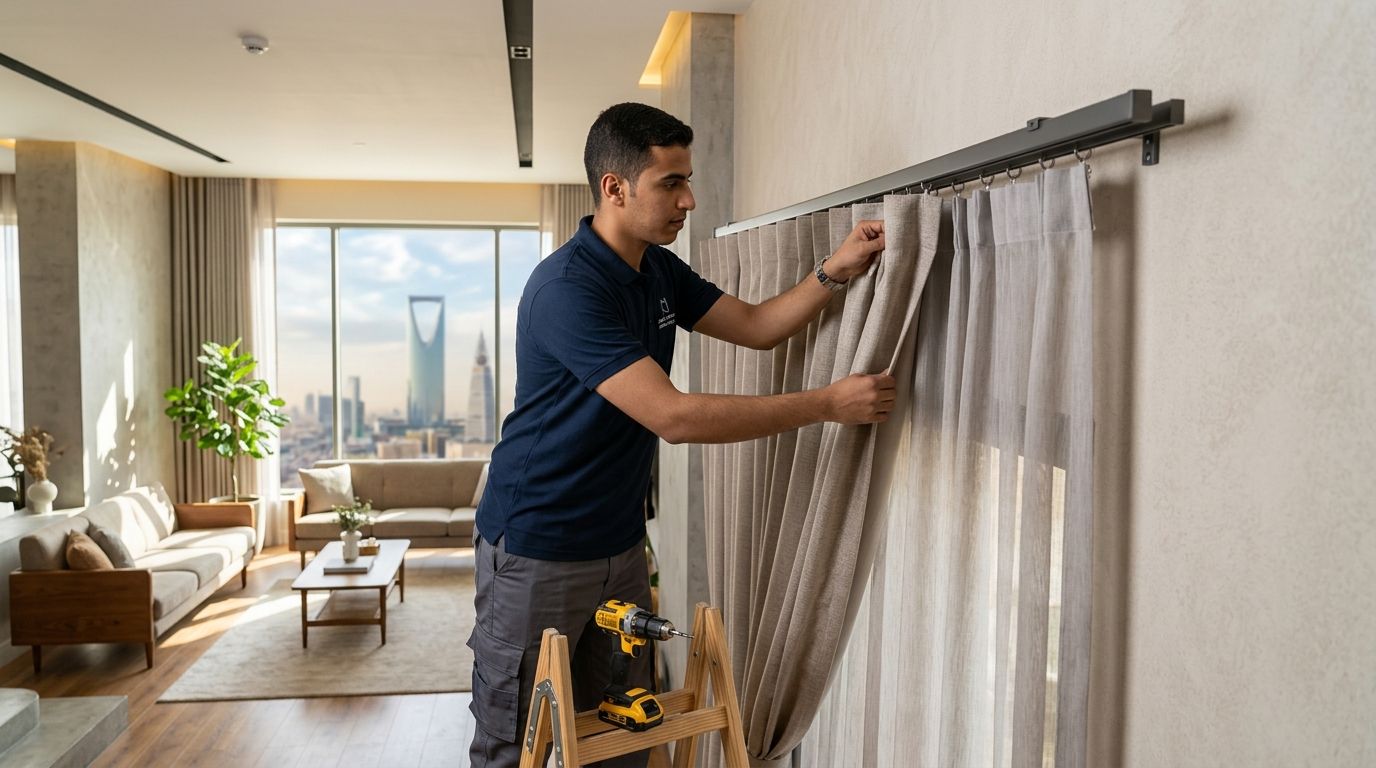
- Curtain Store measures and installs custom curtains and blinds across Riyadh homes and businesses in 2026.
- Fabric weight and lining type move the price more than track width does — factor both in before you shop.
Why this matters
Getting curtain sizing wrong in Riyadh means gaps that let in afternoon sun, dust, and street noise — the three things most homeowners are actually trying to solve for. A panel that's 10cm too narrow or a drop that stops short of the floor undoes the privacy and light-blocking job the curtain was bought to do.
Fabric choice compounds the problem. A lightweight sheer that looks right in a showroom can fade or thin out fast under direct Riyadh sun exposure, while a heavy blackout lining in the wrong room traps heat instead of blocking it. Getting sizing and fabric right together, not separately, is what makes custom curtains at Curtain Store hold up past the first year.
What sizes and fabrics work best for custom curtains in Riyadh in 2026?
Sizing for custom curtains starts with three measurements, taken at the window, not guessed from the room:
- Track or rod width — measure wall-to-wall or bracket-to-bracket, then add extra width on each side so panels stack clear of the glass when open.
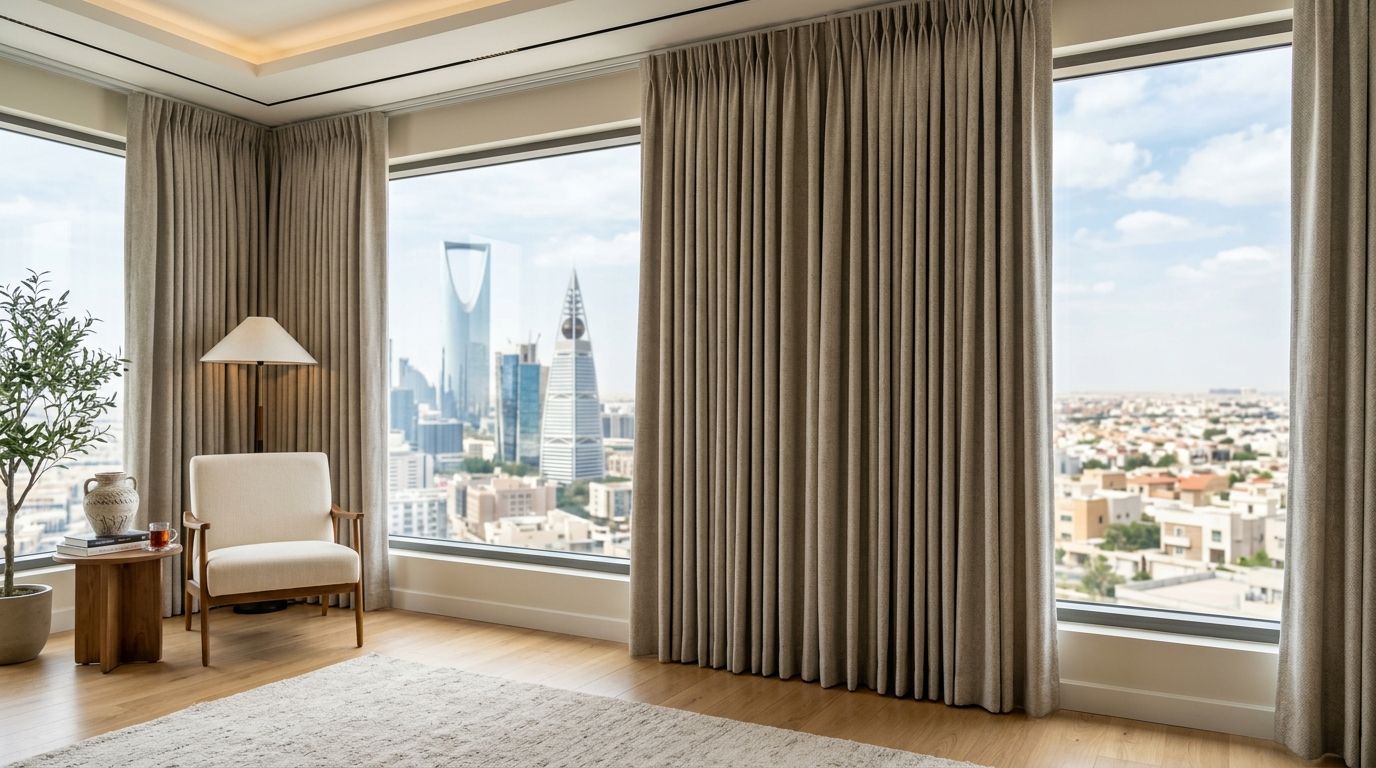
- Drop length — measure from the track down to floor, sill, or your chosen stopping point; a drop that just clears the floor reads more finished than one that hovers a few centimeters short.
- Fullness allowance — multiply your finished track width by 2x to 2.5x to get the flat fabric width needed before pleating or gathering.
Fabric selection in Riyadh usually comes down to four categories:
| Fabric type | Best for | Trade-off |
|---|---|---|
| Blackout lined | Bedrooms, west-facing rooms | Blocks light and heat; less airy look |
| Thermal/insulated | Living rooms, high sun exposure | Cuts glare and heat transfer; heavier weight |
| Linen blend | Living and dining areas | Soft texture and light filter; less privacy at night |
| Sheer voile | Layered with a heavier panel | Diffuses light; no privacy or blackout alone |
Verdict: blackout or thermal-lined fabric on a made-to-measure fullness of 2x-2.5x is the practical standard for most Riyadh homes in 2026, with sheers reserved for layering rather than standing alone.
Ready-made vs. custom: which sizing approach fits your window
Ready-made panels come in fixed width and drop increments, which works fine for a standard rectangular window with no obstructions. The moment you have a bay window, a non-standard ceiling height, or a window near a corner, custom sizing becomes the only option that avoids gaps at the edges.
- Standard rectangular window, no obstructions: ready-made can work — Hold on custom if budget is tight.
- Bay windows, arched frames, or oversized glass doors: custom sizing — Buy custom, ready-made will gap.
- Business or showroom fronts needing consistent, tailored coverage: custom sizing — Buy custom for a finished, uniform look across multiple windows.
Why curtain sizes and fabric choices vary across Riyadh homes
- Window shape and count — bay windows, sliding doors, and multi-panel walls all need different fullness and track planning than a single rectangular window.
- Room function — bedrooms lean toward blackout lining for sleep, living rooms often mix thermal lining with a lighter texture for daytime use.
- Sun exposure and orientation — west- and south-facing rooms in Riyadh take more direct heat, which pushes fabric choice toward heavier linings.
- Ceiling height and track type — higher ceilings change the drop measurement and can call for heavier fabric to hang correctly without billowing.
- Budget and fabric weight — heavier linings and wider fullness ratios use more yardage, which is the main line-item that moves cost, more than the base fabric print or color. The current guide on custom curtain costs in Riyadh breaks this down by fabric and lining type.
- Installation type — motorized tracks and layered double-rod setups need slightly different measurements than a single fixed rod.
“A drop that just clears the floor reads finished; a drop that stops short never does.”
Related questions about custom curtains in Riyadh
Do I need to remeasure if I change fabric type?
Yes — switching from a lightweight sheer to a heavier blackout or thermal lining changes how the fabric hangs, so the drop and fullness allowance should be rechecked before cutting. A heavier fabric with the same flat width can sit shorter or pull tighter than a light one.
Is 2x fullness enough, or should I go with 2.5x?
2x fullness gives a flatter, more tailored pleat, while 2.5x gives a fuller, softer stack when the curtain is open. Heavier fabrics like blackout linings often look better at 2x since the extra weight already adds body; lighter linens and sheers look better pushed toward 2.5x.
Can one fabric work for both bedrooms and living rooms?
A single thermal-lined fabric can work across both spaces, but bedrooms generally benefit more from full blackout lining for sleep, while living rooms do fine with thermal lining that still lets in some light. Matching fabric to room function, not just matching color across the home, gets the best result.
Get your windows measured right
Explore made-to-measure curtains, blinds, and installation support in Riyadh.
FAQ
What is the standard fullness ratio for custom curtains in Riyadh?
The standard fullness ratio is 2x to 2.5x the finished track width in 2026. Heavier fabrics like blackout linings often look best at the lower end, while lighter linens suit the fuller end.
How much fabric do I need for a custom curtain?
Fabric needed equals your track width multiplied by the 2x-2.5x fullness ratio, plus extra for hems and heading allowance. A wider window or fuller pleat style increases this yardage.
Is blackout fabric better than sheer for Riyadh homes?
Blackout fabric is better for rooms with direct sun exposure or a need for full privacy, while sheers work best layered with a heavier panel rather than used alone. Most bedrooms in Riyadh lean toward blackout or thermal lining in 2026.
Do custom curtains cost more than ready-made ones?
Custom curtains generally cost more than ready-made panels because of the tailored measurement, extra fabric yardage, and lining options involved. The cost guide for custom curtains in Riyadh covers how fabric and lining choices affect the final price.
What measurements do I need before ordering custom curtains?
You need track or rod width, drop length from track to floor or sill, and the fullness allowance based on your chosen ratio. Taking these at the window itself, not estimating from the room, avoids gaps once installed.
Can custom curtains be installed on any window type?
Custom curtains can be sized for bay windows, sliding doors, arched frames, and standard rectangular windows alike. Ready-made panels only fit standard rectangular windows without obstructions.
Should businesses in Riyadh use custom or ready-made curtains?
Businesses generally do better with custom sizing for a uniform, tailored look across multiple windows or storefronts. Ready-made panels can leave inconsistent gaps when used across several different window sizes.
One last thing
Most sizing mistakes in Riyadh homes don't come from the wrong fabric — they come from measuring the wall instead of the window frame, which throws off both width and drop before the fabric choice even enters the picture. Get the three core measurements right first in 2026, then pick fabric weight based on which room and which direction the window faces.