Best overall for a Riyadh home office in 2026: layered curtains that pair a sheer layer with a blackout layer. Best for video calls and glare control: blackout curtains. Best for a minimalist, low-maintenance setup: roller blinds. Best for an odd-shaped or oversized window: custom-made curtains.
- Layered curtains (sheer + blackout) are the best curtains for home offices in 2026 for switching between daylight and full glare control.
- Blackout curtains alone are the fastest fix for video-call glare on a single desk wall.
- Roller blinds suit a small or minimalist home office where fabric bulk is not wanted.
- Custom-made curtains solve oversized or oddly shaped windows that ready-made sizes can't cover.
- Sheer curtains keep a home office bright during the day but need a blackout layer for evening privacy.
Why this matters
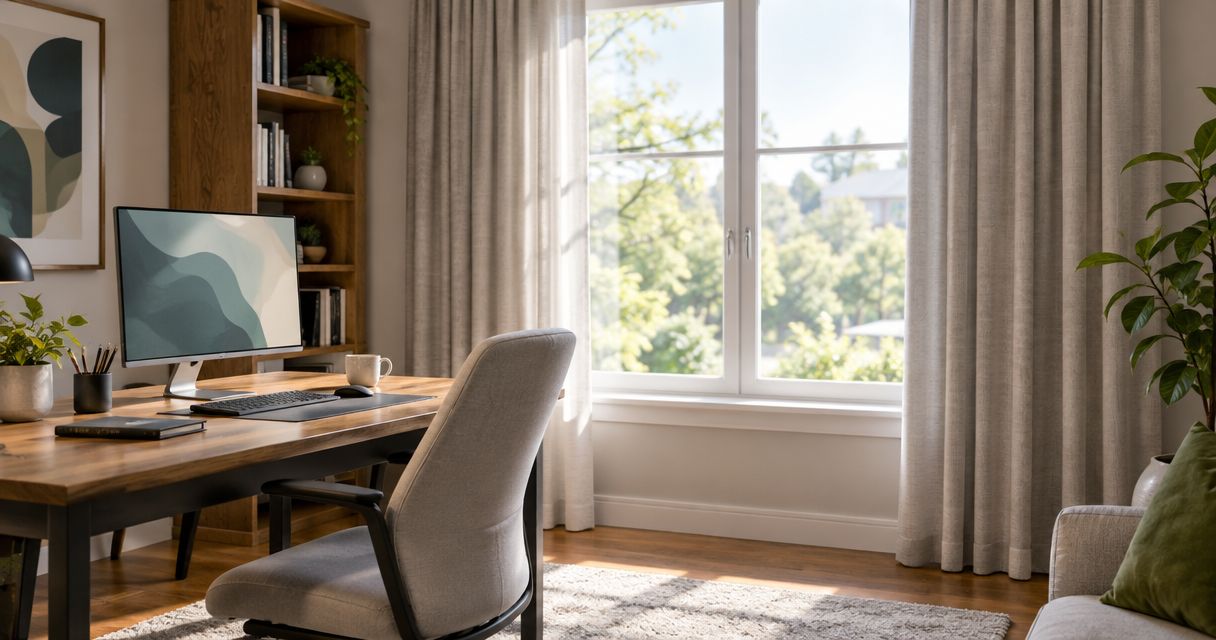
A home office window does more work than a bedroom or living room window. It has to control glare on a laptop screen during the day, hold privacy for calls in the evening, and still look like part of the house rather than an office bolted onto it.
Most home office curtain complaints in Riyadh come down to one thing: the fabric was picked for looks, not for how the room is actually used. A west-facing desk with sheer-only curtains turns into a glare problem by early afternoon. Homeowners who plan around custom curtains in Riyadh tend to get this right the first time, because the fabric and lining are matched to the window's light exposure rather than picked off a shelf.
What makes the best curtains for a home office
- Light control for screen glare — the fabric needs to cut direct sun without leaving the room pitch dark all day
- Privacy without total blackout — daytime privacy from the street, without losing daylight for every meeting
- Exact fit to the window — gaps at the sides let light and glare leak in around the edges
- Easy day-to-day handling — curtains a desk worker opens and closes several times a day need to move smoothly
- Fabric weight suited to the room — heavier blackout fabric behaves differently from a light sheer panel
- Simple installation — a home office often has less wall space for tracks or double rods than a living room
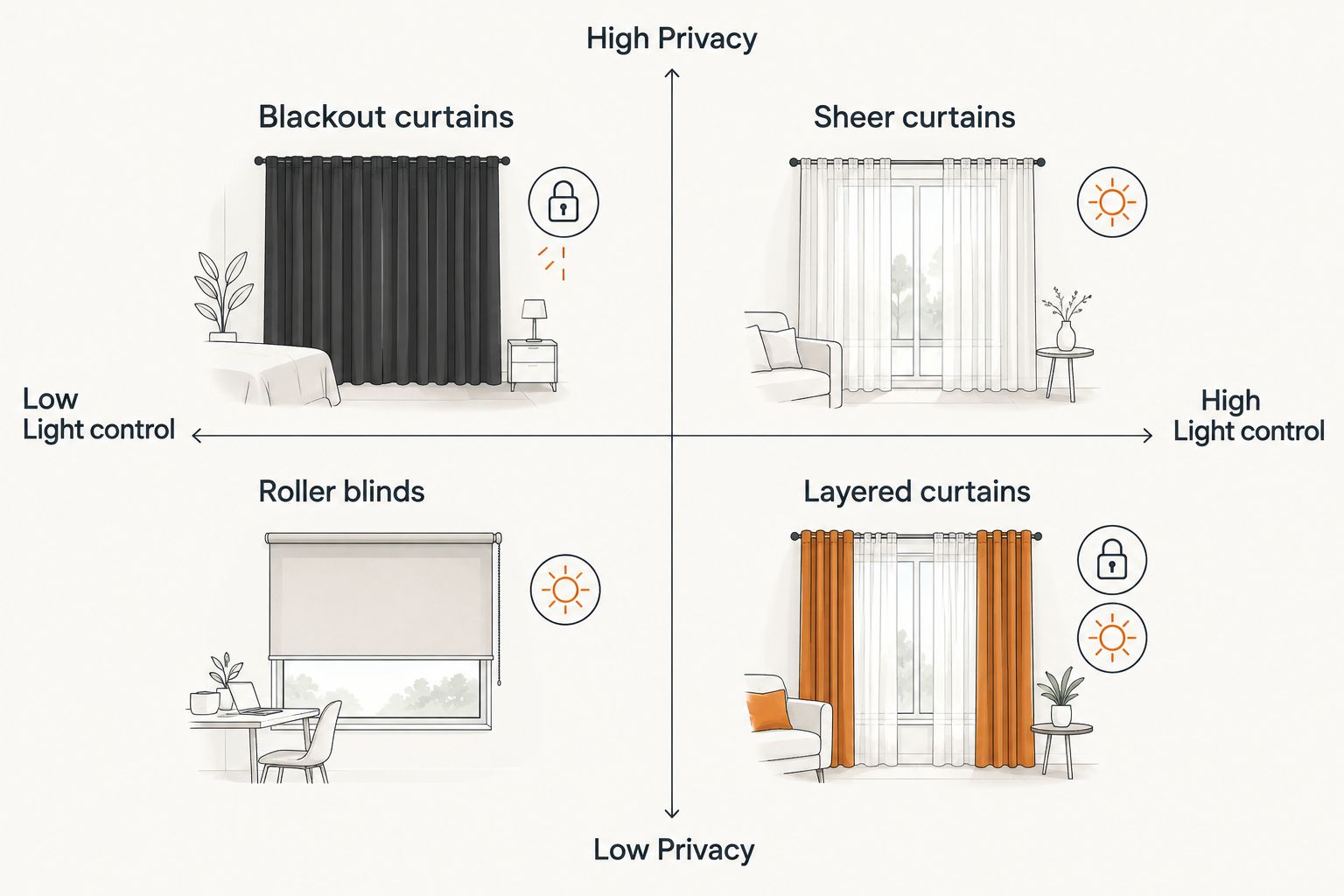
Best curtains for home offices in 2026 — at a glance
| Curtain type | Best for | Standout feature | Key limitation |
|---|---|---|---|
| Layered curtains (sheer + blackout) | Full day-to-night light control | Switch between bright daylight and full blackout | Needs a double track or rod |
| Blackout curtains | Video calls and glare control | Blocks outside light and screen glare | Cuts natural daylight during work hours |
| Sheer curtains | Natural light with daytime privacy | Filters harsh sun while keeping the room bright | Less privacy after dark on its own |
| Roller blinds | Minimalist, compact home offices | Sits flush against the frame, saves desk space | One fixed shade, less flexible than fabric layers |
| Custom-made curtains | Odd-shaped or oversized windows | Made to the exact window measurement | Takes longer to produce than ready-made panels |
1. Layered curtains: best curtains for home offices with changing light
Layered curtains combine a sheer panel for daytime brightness with a blackout panel you draw for calls, glare, or evening privacy. For a home office that gets used from morning meetings to late-night deadlines, this is the setup that adjusts instead of forcing one fixed level of light all day.
Layered curtains pros:
- Covers both daytime brightness and full blackout without swapping fabric
- Handles glare during video calls simply by drawing the second layer
- Works on almost any window orientation, including west-facing desks
Layered curtains cons:
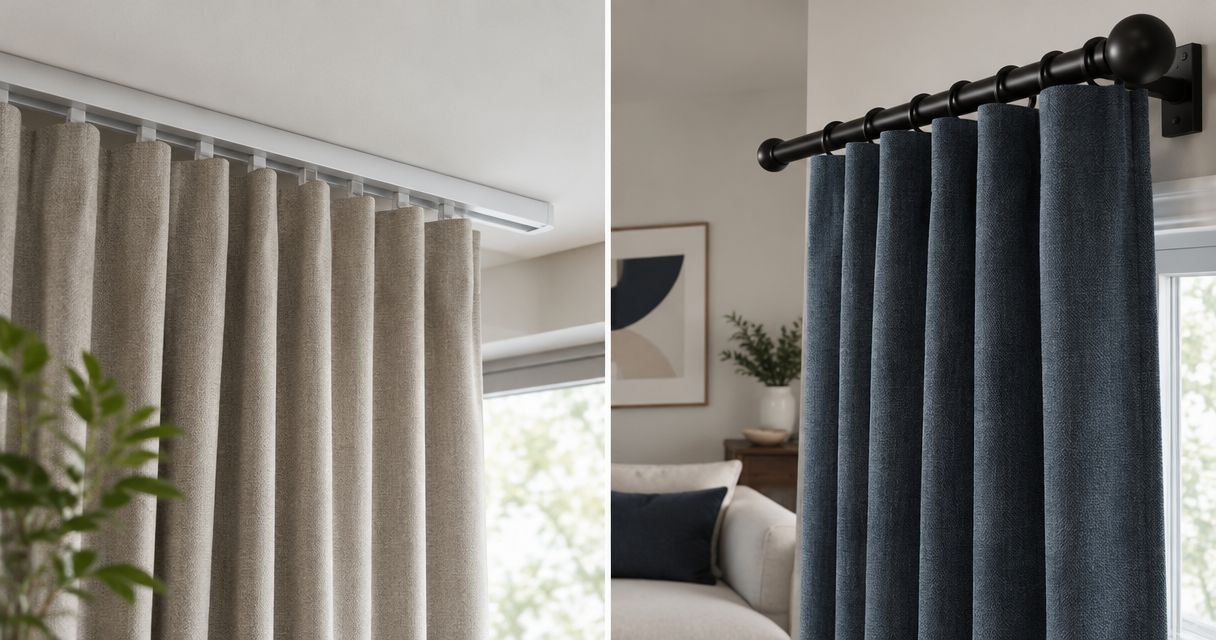
- Requires a double track or rod, which needs more wall or ceiling space
- Two fabric layers cost more to make than a single panel
- Slightly more fabric to manage when opening and closing daily
Best for: a home office used at different times of day with changing light needs. Verdict: Buy.
2. Blackout curtains: best curtains for home offices with video calls
Blackout curtains use a tightly woven or lined fabric that blocks outside light almost completely. On a desk wall that faces direct sun, this is the single fastest way to stop glare showing up on a laptop screen during calls.
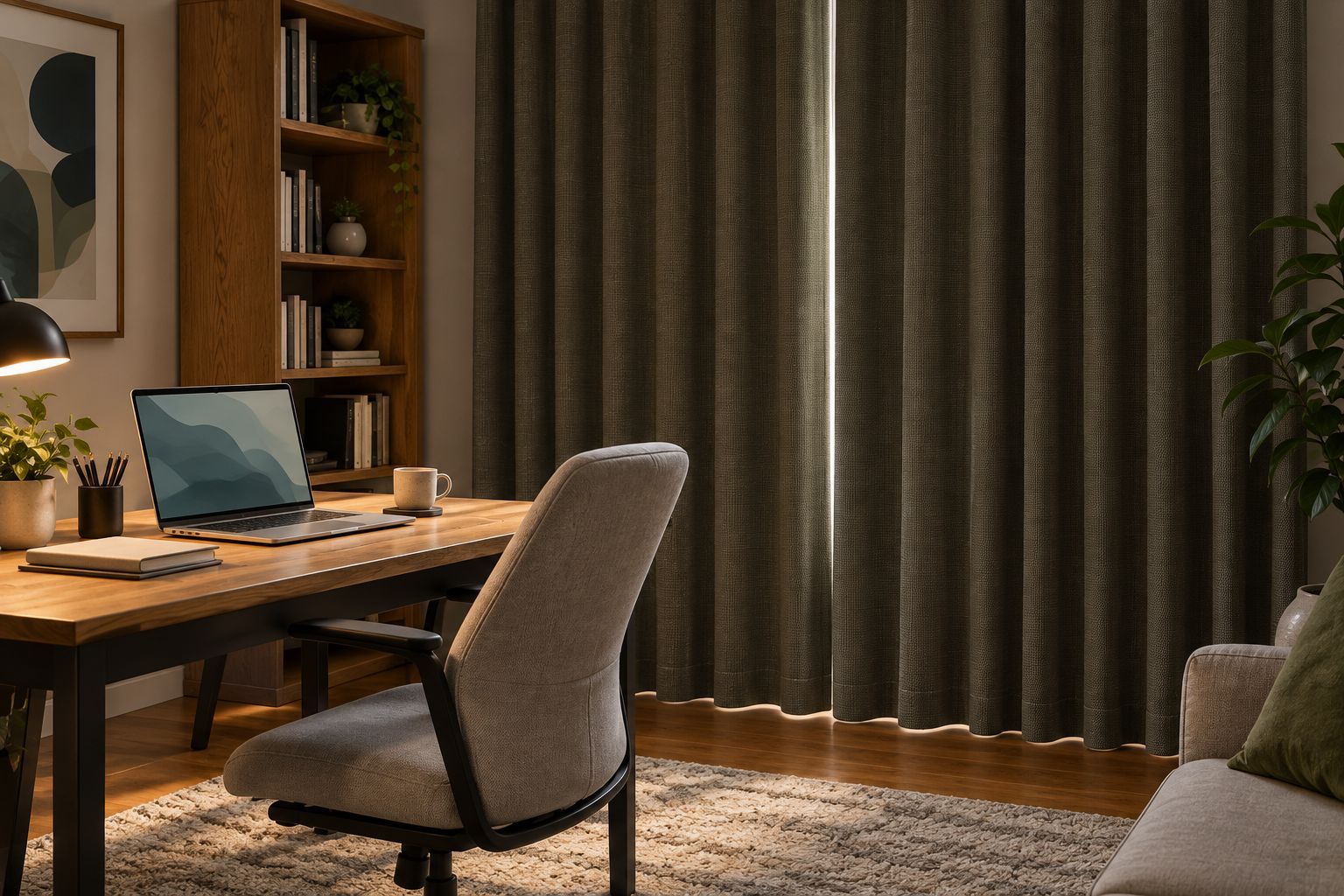
Blackout curtains pros:
- Removes direct sun glare from screens almost instantly
- Blocks street-facing views for full privacy during calls
- Works well as a single-layer solution for a fast setup
Blackout curtains cons:
- Cuts daylight in the room whenever they're closed
- Can make a small home office feel darker than it needs to during non-call hours
- Heavier fabric needs a sturdier rod than a light sheer panel
Best for: a desk wall that takes direct sun and frequent video calls. Verdict: Buy.
3. Sheer curtains: best curtains for home offices that need daytime brightness
Sheer curtains use a lightweight, semi-transparent fabric that softens direct sun rather than blocking it outright. For a home office where the priority is keeping the room bright through the workday, this is the lighter option.
Sheer curtains pros:
- Keeps the room bright while cutting harsh direct sun
- Lightweight fabric that's simple to open and close through the day
- Suits a home office styled to look like part of the living space, not a workstation
Sheer curtains cons:
- Offers limited privacy after dark unless paired with a heavier layer
- Not enough on its own to remove screen glare on a bright wall
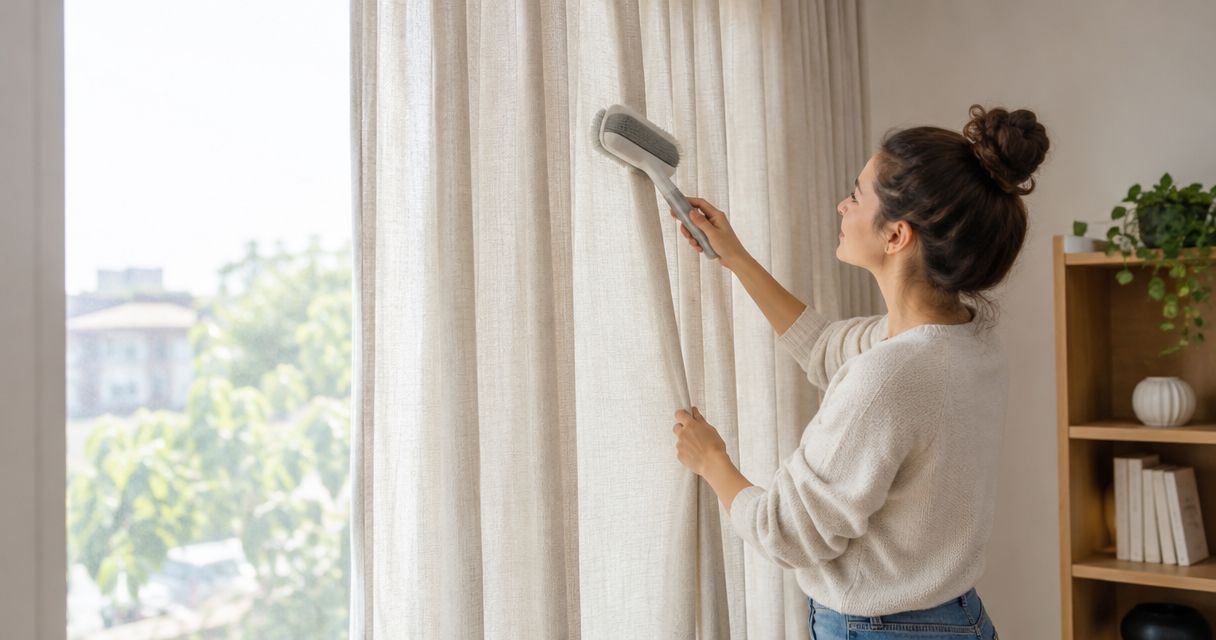
- Needs regular dusting since sheer fabric shows dust more visibly
Sheer curtains for majlis rooms follow the same fabric logic, just applied to a formal seating room instead of a desk wall.
Best for: a home office where daylight matters more than full blackout. Verdict: Hold — pair with a blackout layer if the window gets direct afternoon sun.
4. Roller blinds: best curtains for home offices with limited space
Roller blinds sit flush against the window frame instead of hanging loose like fabric curtains. In a compact home office, or one converted from a small bedroom, this keeps the wall and floor space clear of extra fabric.
Roller blinds pros:
- Takes up almost no extra wall space compared with hanging fabric
- Simple to raise and lower for quick light adjustments during the day
- Clean, minimal look that suits a small or modern home office
Roller blinds cons:
- One fixed shade level, less flexible than switching between sheer and blackout layers
- Doesn't soften the room acoustically the way heavier fabric can
- Limited fabric texture options compared with curtain panels
Best for: a small home office where desk and shelf space are already tight. Verdict: Buy — if the room is compact and the look you want is minimal.
5. Custom-made curtains: best curtains for home offices with unusual windows
Some home office windows don't fit any standard size — a converted balcony, a bay window, or an unusually tall opening. Custom-made curtains are cut to the exact measurement of that window instead of the closest ready-made size.
Custom-made curtains pros:
- Fits the window exactly, so there's no gap letting light or glare leak around the edges
- Fabric, lining, and header style can match the rest of the room
- Solves windows that ready-made panels simply can't cover properly
Custom-made curtains cons:
- Takes longer to produce than picking up a ready-made panel
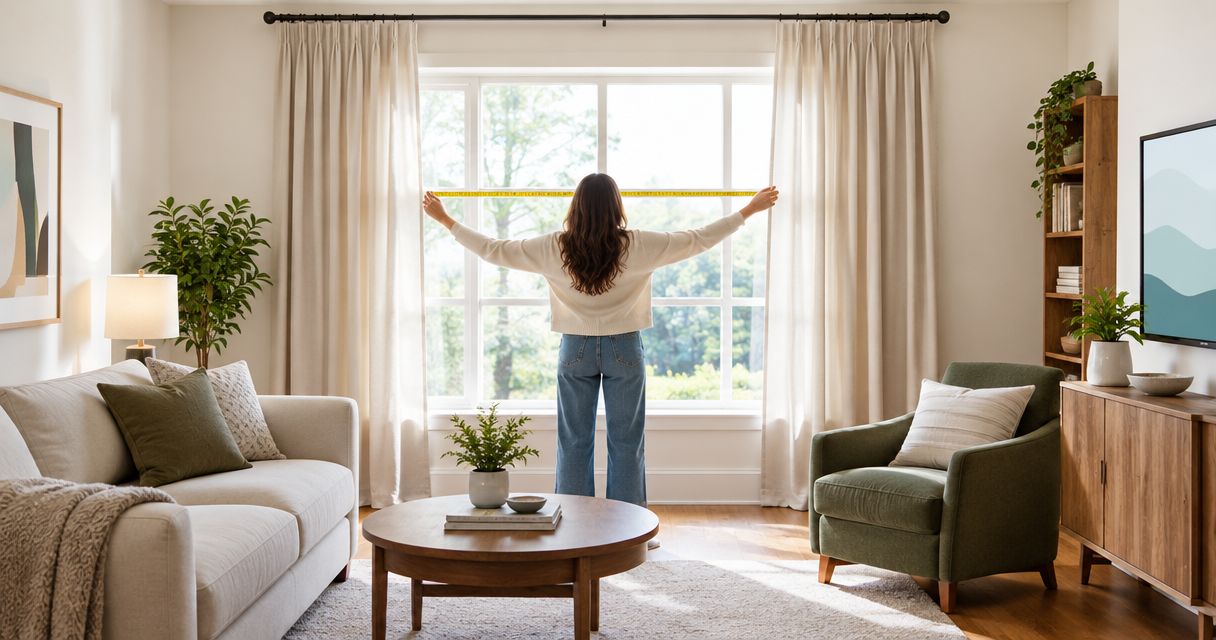
- Needs an accurate measurement before the order is placed
- Costs more to make than a standard-size panel of the same fabric
Best for: an office window that's oversized, oddly shaped, or awkwardly placed. Verdict: Buy — for any window a standard size doesn't fit well.
“A home office window that faces the sun by early afternoon needs a fabric decision, not just a style decision.”
How this ranking was built
Each type above is scored against the same six criteria: light control, privacy, fit to the window, day-to-day handling, fabric weight, and installation effort. No single curtain type wins on all six — that's the reason the list ranks by use case instead of naming one universal winner. A desk that never gets direct sun doesn't need blackout fabric; a window with an unusual shape doesn't get solved by a roller blind.
Ready to dress your home office windows?
Get curtains measured and fitted for your exact window.
Which curtains should you choose for your home office?
If the office window takes direct sun and you're on calls most of the day, go with layered curtains — the sheer-plus-blackout combination is the only option here that adjusts to both bright mornings and glare-heavy afternoons. If the budget or the wall space only allows one layer, blackout curtains solve the glare problem on their own, and roller blinds are the better call for a small, minimalist room. Anyone with a window that doesn't match a standard size should skip ready-made options entirely and go straight to custom-made curtains.
FAQ
What are the best curtains for home offices in 2026?
Layered curtains that pair a sheer panel with a blackout panel are the best overall choice for 2026 because they adjust between bright daylight and full glare control. Blackout curtains alone work well for a single desk wall that only needs glare control during calls.
Do blackout curtains make a home office too dark to work in?
Blackout curtains only go fully dark when closed; leaving them open during non-call hours keeps the room lit as normal. Pairing them with a sheer layer avoids the dark-all-day problem entirely.
Are roller blinds or curtains better for a small home office?
Roller blinds suit a small home office better because they sit flush against the frame and don't need extra wall space for a track or rod. Fabric curtains give more flexibility but take up more room around the window.
How do I stop screen glare from my home office window?
Blackout curtains or a blackout layer drawn during calls is the fastest fix for screen glare. Sheer curtains alone soften light but usually aren't enough to remove direct glare on a bright wall.
Can custom curtains fix an oddly shaped office window?
Yes, custom-made curtains are cut to the exact measurement of the window, which solves gaps and light leaks that ready-made panels leave around unusual shapes or oversized frames. This takes longer to produce than a ready-made panel since the fabric is cut and fitted to order.
Do I need two curtain layers for a home office?
Two layers are only necessary if the room needs both daytime brightness and evening blackout; a single blackout or sheer panel is enough for offices with steady light through the day. The right call depends on which way the window faces and when the office gets used.
Are sheer curtains enough for home office privacy?
Sheer curtains give daytime privacy from the street but let more visibility through after dark once the interior light is on. Pairing them with a blackout layer covers privacy at every hour, not just during the day.
One last thing
The window orientation matters more than the curtain style itself. A west-facing home office window behaves completely differently by 3pm than the same fabric on a north-facing wall — checking which way the desk window faces before ordering saves a re-do later in 2026.