Choosing the best noise reducing curtains for bedrooms in 2026 comes down to fabric weight, layering, and fit, not just how thick the material looks on a hanger. This guide ranks five curtain options by the noise problem each one solves best, from bedrooms facing busy Riyadh streets to shared-wall apartments and majlis rooms that need quiet without losing airflow.
- Custom heavy curtains with acoustic lining from Curtain Store are the best noise reducing curtains bedrooms option overall in 2026, best for homes on busy Riyadh streets.
- Ready-made triple-weave blackout curtains give the fastest, lowest-cost noise cut, best for renters and quick fixes.
- A layered sheer-plus-drape setup suits majlis and living rooms where daytime airflow matters as much as nighttime quiet.
- Quilted thermal curtains dampen sound and cut heat gain together, best for corner bedrooms exposed to two streets.
- Velvet curtains offer the densest single-layer fabric, best for main bedrooms with high ceilings and simple hardware.
Why this matters
A lot of Riyadh homes sit on or near main roads, and villas often share a wall or a courtyard fence with the next property. A thin, single-layer curtain looks fine but does almost nothing for sound, it mostly filters light. Custom curtains in Riyadh get measured against the actual window and wall, which matters because curtains reduce noise by absorbing mid-to-high frequency sound; they don't block the low-frequency rumble of a passing truck the way a solid wall does. That's why fabric weight, layer count, and how far the panel wraps past the frame matter more than the label on the box.
By 2026, more Riyadh households are asking for noise reduction alongside blackout and heat control in the same order, which is why this list ranks curtains by the specific bedroom problem they fix rather than a single "best" pick.
What makes the best noise-reducing curtain for a bedroom
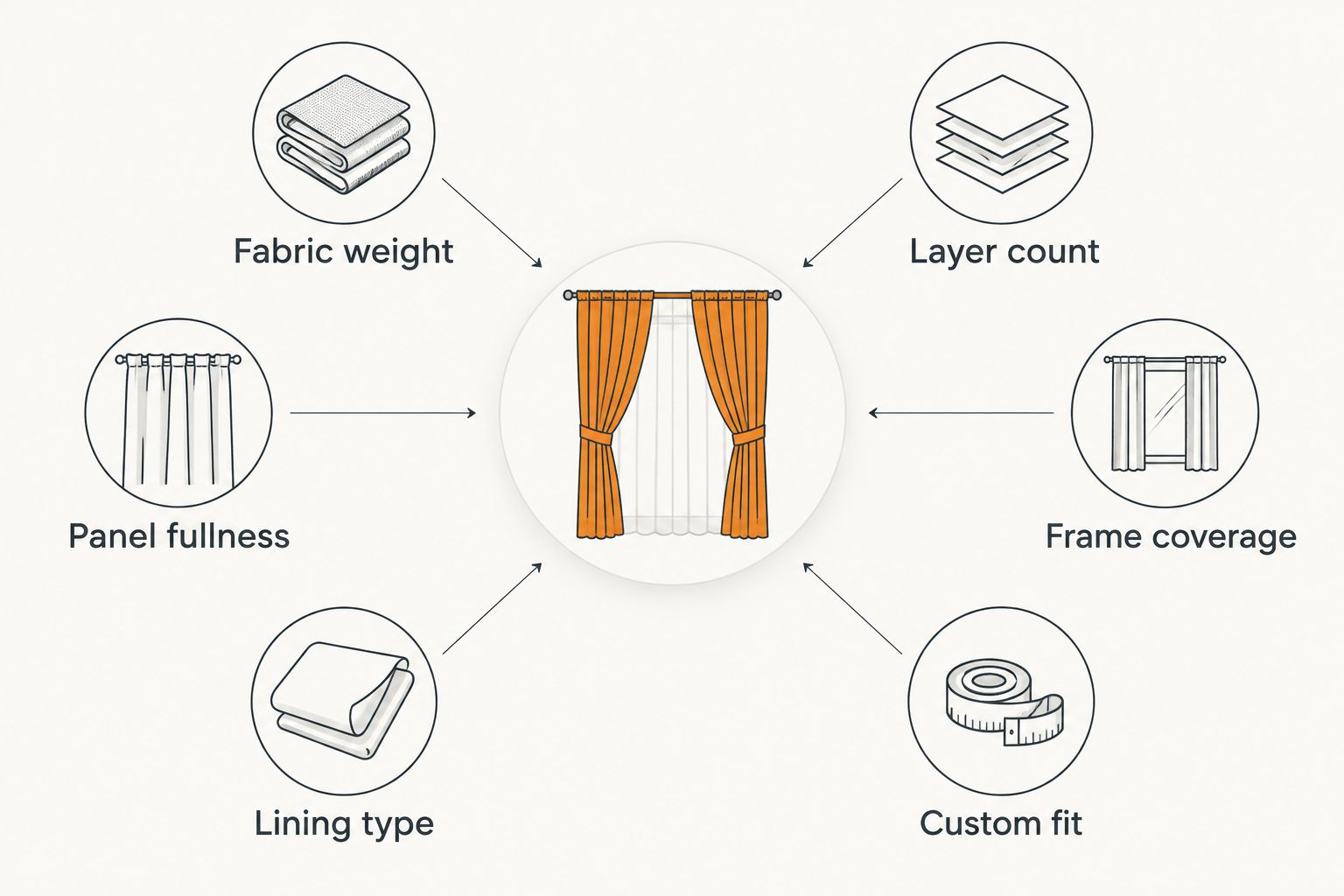
- Fabric weight and density — a heavier, tightly woven fabric absorbs more sound energy than a light, loosely woven one.
- Number of layers — a double or triple-layer construction (sheer, blackout, decorative) traps more sound than a single flat panel.
- Panel fullness — extra fabric bunched at the sides blocks more sound leakage than a curtain hung flat and tight.
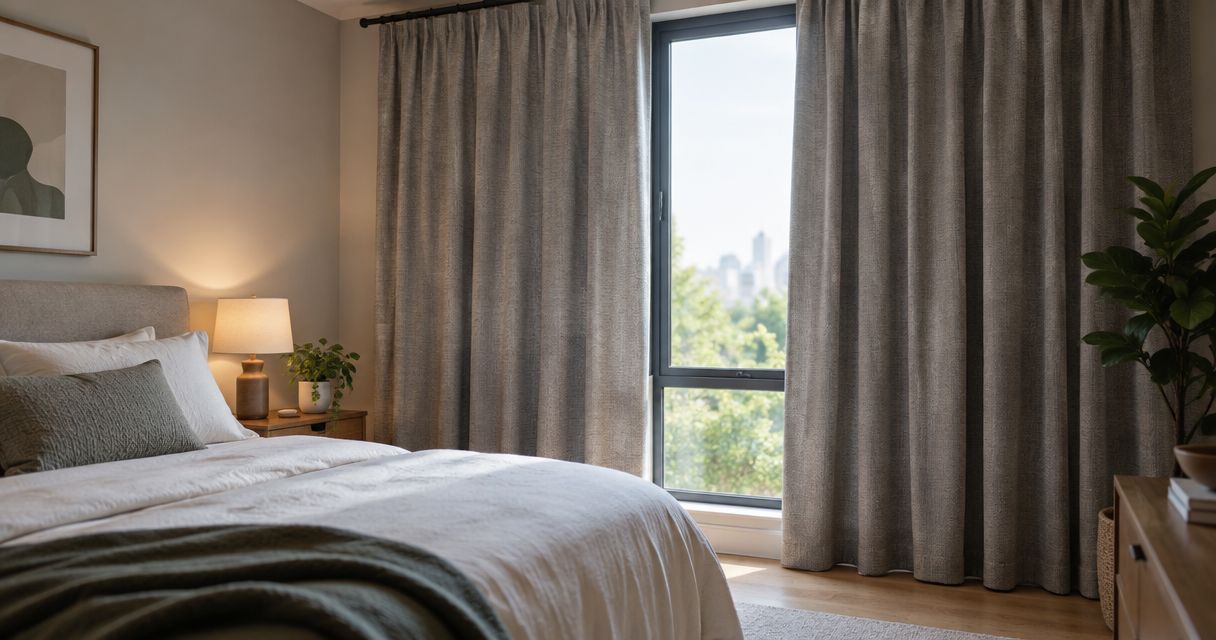
- Coverage past the frame and floor — a curtain that clears the wall on both sides and touches the floor seals the gaps where sound and light sneak in.
- Lining type — blackout or thermal lining adds mass to the fabric without adding bulk to the look.
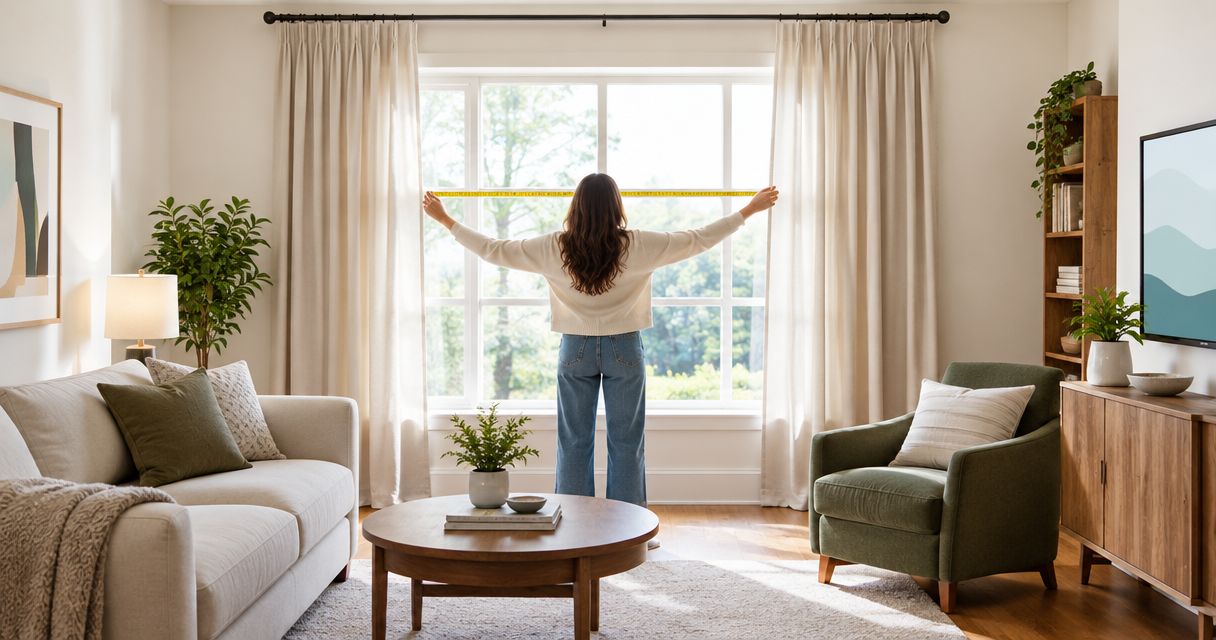
- Fit — a custom-measured curtain closes the gaps that ready-made panels leave on Riyadh's non-standard window sizes.
At a glance: comparing noise-reducing curtains
| Curtain type | Best for | Standout feature | Key limitation |
|---|---|---|---|
| Custom heavy curtains with acoustic lining | Bedrooms on busy streets | Multi-layer fabric sized to your exact window | Takes longer to make than off-the-shelf panels |
| Ready-made triple-weave blackout curtains | Renters and quick fixes | Light and sound dampening in one layer | Standard widths leave gaps on oversized windows |
| Layered sheer + heavy drape | Majlis and living rooms | Airflow by day, quiet by night | Two panels to open and close instead of one |
| Quilted thermal curtains | Hot, noisy corner rooms | Dense inner layer cuts heat gain and noise together | Heavier fabric needs a sturdier rod |
| Velvet curtains | Main bedrooms, high ceilings | Naturally dense single-layer fabric | Needs more frequent dusting than lighter weaves |
1. Custom heavy curtains with acoustic lining: best for bedrooms on busy streets
A curtain built to the exact width and height of your window, with a dense inner lining sewn between the face fabric and the backing, closes off far more of the gaps than a panel bought off a rack. Custom curtains in Riyadh are measured on-site, which means the panel can extend past the frame and reach the floor, the two things that matter most for keeping street noise out of a bedroom.
Custom heavy curtains pros:
- Sized to your window, not a standard rack width
- Multi-layer construction adds fabric mass where it counts
- Works alongside blackout or thermal lining in the same order
- Fits villas, apartments, and shared-wall units
Custom heavy curtains cons:
- Takes longer to fabricate than picking a ready-made panel off the shelf
- Requires a home measurement visit before the order is placed
Custom heavy curtains pricing: varies by fabric, lining, and window size, options and current details are on the custom curtains Riyadh page.
Best for: homeowners on main roads or near mosques, schools, and busy intersections who want the fit and the fabric matched to the actual window.
Verdict: Buy.
2. Ready-made triple-weave blackout curtains: best for renters and quick fixes
A triple-weave blackout curtain packs three layers of fabric into one panel, which gives it more mass than a standard single-layer curtain without needing a custom order. Blackout curtains for bedrooms fall into this category, and they're the fastest way to cut both light and sound in a rental or a room you don't plan to keep long-term.
Triple-weave blackout curtains pros:
- Ready to install without a measurement visit
- Blocks light and dampens sound in the same fabric
- Lower commitment than a custom order
Triple-weave blackout curtains cons:
- Standard widths leave gaps at the sides on oversized Riyadh windows
- Less fabric mass than a custom multi-layer setup
- Fixed lengths may not reach the floor in taller rooms
Triple-weave blackout curtains pricing: check current options on the blackout curtains page linked above.
Best for: renters, secondary bedrooms, or anyone who needs a working fix now rather than a measured order.
Verdict: Buy for renters, hold if you own the home and plan to stay.
“If a curtain doesn't clear the wall on both sides and touch the floor, it isn't doing much for noise, no matter how thick the fabric feels.”
3. Layered sheer + heavy drape: best for majlis and living rooms
A layered setup hangs a sheer panel on an inner rod and a heavier drape on an outer rod, so the room can stay bright and ventilated during the day and close up for sound and privacy at night. Sheer curtains for majlis rooms work well here because the sheer layer doesn't block airflow the way a single heavy panel would.
Layered sheer + drape pros:
- Airflow control during the day without giving up noise control at night
- Two independent layers mean you can adjust for light, privacy, or sound separately
- Suits reception rooms where guests are seated by a window
Layered sheer + drape cons:
- Two panels to manage instead of one
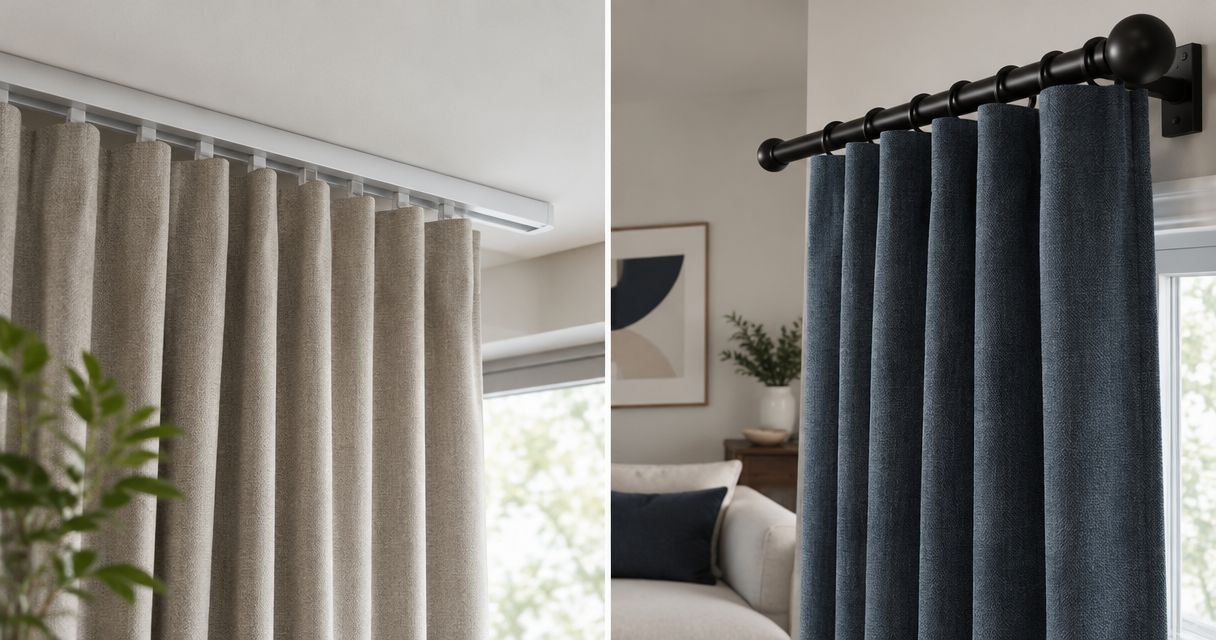
- Needs a double rod or track, which adds to the installation
Layered sheer + drape pricing: varies by fabric choice for each layer, check current options on the sheer curtains page.
Best for: majlis rooms and living areas where daytime light and airflow matter as much as evening quiet.
Verdict: Buy for shared living spaces, skip for a bedroom that's dark most of the day anyway.
4. Quilted thermal curtains: best for hot, noisy corner rooms
A quilted curtain sandwiches a dense inner layer, usually a thermal batting, between two fabric faces. That inner layer does double duty in Riyadh: it slows heat gain through the glass and adds the fabric mass that cuts sound.
Quilted thermal curtains pros:
- Cuts heat gain and noise with one fabric choice
- Useful on corner rooms with windows on two exposed walls
- Heavier fabric holds its shape well over a full-length window
Quilted thermal curtains cons:
- Heavier fabric needs a sturdier rod and stronger brackets
- Bulkier folds than a lighter single-layer curtain
Quilted thermal curtains pricing: varies by size and fabric weight, options are best confirmed with a measurement visit.
Best for: corner bedrooms exposed to two streets or a shared parking area, where both heat and noise are a problem.
Verdict: Buy if the room runs hot, hold if heat isn't an issue.
5. Velvet curtains: best for main bedrooms with high ceilings
Velvet is dense on its own, no lining needed, which makes it one of the few single-layer fabrics that holds up against street noise without the bulk of a multi-layer curtain. In a high-ceilinged main bedroom, a full-length velvet panel also carries the room visually in a way a lighter fabric doesn't.
Velvet curtains pros:
- Dense single-layer fabric, no extra lining required for basic noise dampening
- Full drape reads well in a tall room
- Simple hardware, one rod and one panel
Velvet curtains cons:
- Needs more frequent dusting than a lighter weave
- Less noise reduction than a layered or lined multi-layer option
Velvet curtains pricing: varies by fabric grade, confirm current options directly.
Best for: main bedrooms with high ceilings where one dense panel does the job without extra layers.
Verdict: Buy for style-first buyers, hold if street noise is severe.
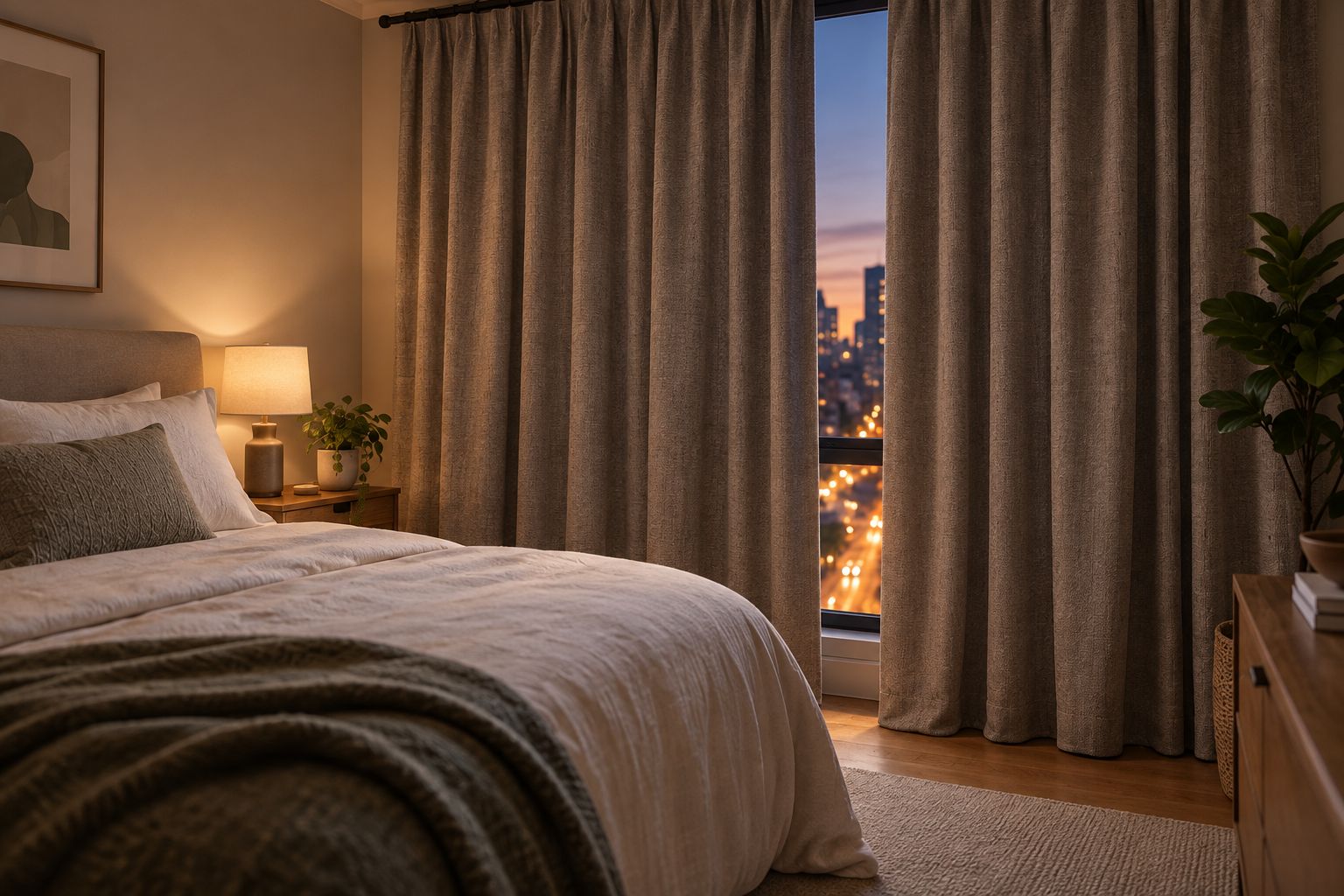
How we ranked these
Each curtain type is ranked against the six criteria above: fabric weight, layer count, panel fullness, frame and floor coverage, lining type, and how well the fit closes gaps around a Riyadh window. Custom heavy curtains score highest because fit and lining are chosen for the specific window rather than a standard size.
Which noise-reducing curtain should you choose?
If street noise is the main complaint and the budget allows a measured order, custom heavy curtains with acoustic lining are the safest pick for 2026. If you're renting or need a fix this week, triple-weave blackout curtains do real work for less commitment. Majlis and living rooms do better with a layered sheer-and-drape setup, and corner bedrooms fighting heat as well as noise should look at quilted thermal curtains first.
Ready to dress your windows for quiet nights?
Talk through fabric, lining, and measurement options for your bedroom.
FAQ
What are the best noise reducing curtains for bedrooms in 2026?
Custom heavy curtains with acoustic lining rank highest for bedrooms on busy streets in 2026, since fit and fabric weight are matched to the actual window. Ready-made triple-weave blackout curtains are the faster, lower-commitment option for renters.
Do thicker curtains actually block noise?
Thicker, denser fabric absorbs more mid-to-high frequency sound than thin fabric, but it doesn't block low-frequency rumble like heavy traffic. Layering and full floor-to-frame coverage matter as much as raw thickness.
Are blackout curtains the same as soundproof curtains?
No curtain fully soundproofs a room, but triple-weave blackout curtains do dampen sound as a side effect of their dense, multi-layer fabric. A curtain marketed purely for light control may use a thinner backing that does less for noise.
How much fabric fullness do I need for noise reduction?
Extra fabric bunched at the sides, rather than a flat, tight panel, blocks more sound leakage around the edges of the window. A fuller panel that clears the wall on both sides works better than a narrow one stretched flat.
Can curtains block traffic noise from a busy Riyadh street?
Curtains reduce the perceived noise level by absorbing sound reflections in the room, especially with a custom-fit, multi-layer panel that seals the window gaps. They won't eliminate deep traffic rumble the way double glazing does.
Is custom-made better than ready-made for noise reduction?
Custom-made curtains fit the exact window and wall, closing gaps a standard-width ready-made panel leaves open. Ready-made is still a reasonable choice for renters or a fast fix where an exact fit matters less.
How much do custom curtains cost in Riyadh in 2026?
Cost depends on fabric, lining, and window size, so it varies from home to home. Current pricing details are best checked directly rather than assumed from a general range.
One last thing
The detail most people skip is coverage past the frame: a curtain that stops right at the window edge or hovers above the floor leaves a gap that light and sound both use. Before choosing a fabric, check the frame width and floor clearance first, that single measurement decides more of the outcome than the fabric label does.