Choosing between blackout, sunscreen, dual, motorized, and fabric roller blinds for a living room comes down to how much light, heat, and privacy your windows actually need in Riyadh's climate. This guide ranks the five main roller blind types by the living room problem each one solves best, so you can match the shade to the window instead of guessing.
- Dual (day and night) roller blinds are the best overall pick for Riyadh living rooms because they adjust from privacy to full light in one motion.
- Blackout roller blinds are the strongest choice for west- and south-facing windows fighting direct afternoon sun and heat gain.
- Sunscreen roller blinds keep the outside view during the day while still cutting glare, unlike blackout fabric.
- Motorized roller blinds solve tall or hard-to-reach living room windows where a manual chain is impractical.
- Custom-sized roller blinds from Curtain Store fit non-standard Riyadh window openings better than fixed ready-made sizes.
Why this matters
A living room roller blind does three jobs at once: it manages sunlight, it protects furniture and flooring from UV fading, and it controls what neighbors or the street can see after dark. Riyadh's long, intense sun season pushes most homeowners toward heavier light control than they'd need in a milder climate, but a living room used for evening gatherings also needs a soft, adjustable option rather than permanent blackout. Getting this wrong means either a room that's too hot and bright by afternoon, or one that feels closed off every evening.
Roller curtains in Riyadh come in enough fabric and mechanism variations that most living rooms have a genuinely better-fit option than the default ready-made roll sold at a hardware store. The five types below cover the realistic decision points: heat and glare, daytime privacy with a view, flexible day-to-night control, window height and reach, and how the blind blends with the rest of the room.
What makes the best roller blinds for living rooms
- Light control range — how much daylight and glare the fabric blocks at midday versus late afternoon
- Daytime privacy without full blackout — whether you can still see out while blocking the view in
- Heat and UV performance — relevant for Riyadh's exposure levels on south- and west-facing glass
- Operating ease — chain-operated versus motorized, and how often the blind gets adjusted per day
- Fit with existing décor — fabric texture and color range next to sofas, walls, and any existing curtains
- Maintenance — how easily the fabric wipes clean of dust, which matters more in a living room than a bedroom
At a glance
| Roller blind type | Best for | Standout feature | Key limitation |
|---|---|---|---|
| Dual (day & night) | Flexible light control | Two fabric layers, one blind | Slightly bulkier headrail than single-layer |
| Blackout | Heat and glare control | Near-total light block | Room feels dark and closed even mid-afternoon |
| Sunscreen (light-filtering) | Daytime privacy with a view | See-through weave from inside | Not enough privacy at night with lights on |
| Motorized | Tall or hard-to-reach windows | Remote or app-based operation | Depends on power access near the window |
| Fabric/textured | Blending with décor | Wide color and texture range | Least light control of the five |
1. Dual roller blinds: best for flexible light control
A dual (day and night) roller blind stacks a sheer layer and a more solid layer on the same headrail, so one blind covers what would otherwise take two separate treatments. You slide between a soft, filtered daylight setting and a denser evening setting without swapping hardware.
Dual roller blinds pros:
- Covers daytime and evening needs with one installation
- Works well in living rooms that shift from bright afternoons to evening entertaining
- Available in custom sizes to fit Riyadh's non-standard window openings
Dual roller blinds cons:
- Headrail sits slightly deeper than a single-layer blind, which matters in tight window recesses
- Two fabric layers mean more surface area to dust
Best for: homeowners who want one blind to handle both daytime glare and nighttime privacy in a family living room.
Verdict: Buy — the closest thing to an all-purpose living room roller blind in 2026.
2. Blackout roller blinds: best for heat and glare control
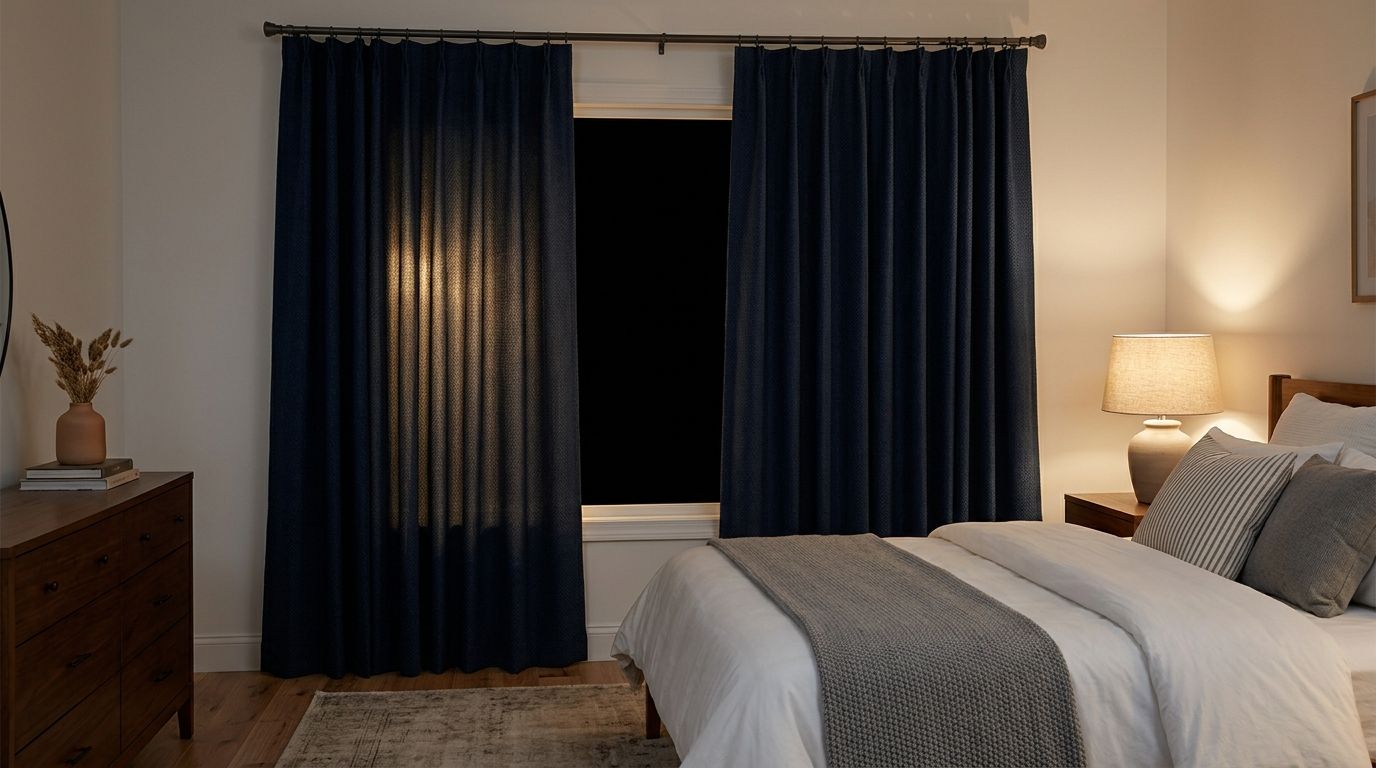
Blackout roller blinds use a tightly woven or coated fabric that blocks nearly all light and adds a meaningful barrier against radiant heat coming through the glass. On west-facing Riyadh living room windows catching direct sun from midday onward, this is usually the fastest fix for a room that's uncomfortably bright or warm by 3 p.m.
Blackout roller blinds pros:
- Strongest available light and glare block among roller blind types
- Reduces heat gain on direct-sun windows
- Protects fabric furniture and wood flooring from UV fading over time
Blackout roller blinds cons:
- Makes the room feel dark even during daylight hours when lowered
- Limited color range compared to sunscreen or fabric options
Best for: south- or west-facing living rooms with strong direct sun and little tolerance for glare on a TV or screen.
Verdict: Buy — the right call specifically for high-heat, high-glare windows, not a default for every living room.
3. Sunscreen roller blinds: best for daytime privacy with a view
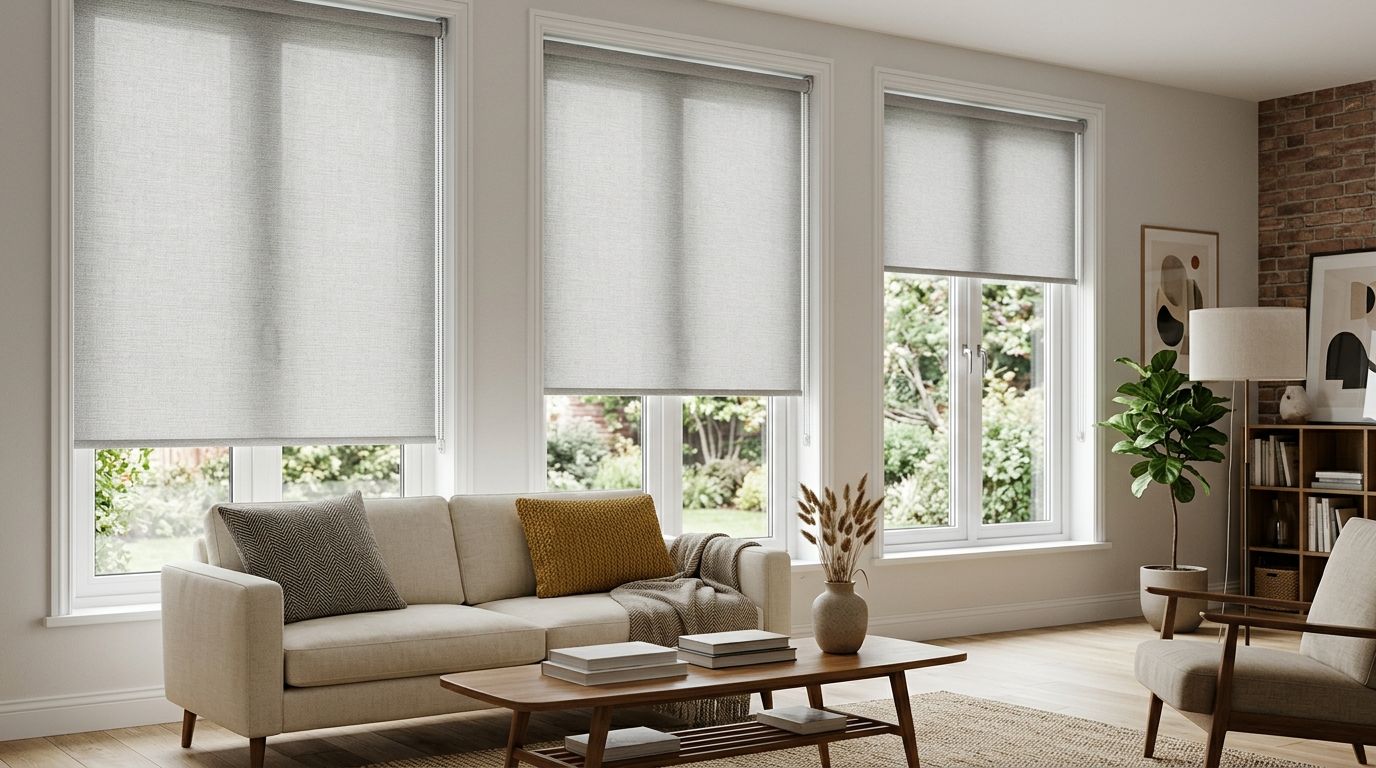
Sunscreen fabric is woven with small, evenly spaced openings that cut glare and UV exposure while still letting you see outside during the day. It's the option for living rooms where the window view — a garden, a street, a courtyard — is part of why the room was designed that way in the first place.
Sunscreen roller blinds pros:
- Keeps outward visibility while reducing glare and UV
- Lighter, more breathable feel than blackout fabric
- Cuts down on heat gain compared to leaving the window fully bare
Sunscreen roller blinds cons:
- Provides little to no privacy at night once interior lights are on
- Not suitable as the only window covering for a street-facing living room used in the evenings
Best for: daytime-facing living rooms where the outside view matters and evening privacy is handled by a second layer, like a curtain.
Verdict: Buy — pair it with a curtain or a second blind layer if the room is also used after dark.
4. Motorized roller blinds: best for tall or hard-to-reach windows
Motorized roller blinds replace the pull chain with a remote or app-based control, which matters most on floor-to-ceiling living room glass or windows positioned above furniture where a chain is awkward to reach. The mechanism itself can pair with any of the fabric types above — blackout, sunscreen, or dual.
Motorized roller blinds pros:
- Solves access problems on tall or high-set windows
- Consistent, even operation with no chain wear over time
- Can be adjusted without walking to the window
Motorized roller blinds cons:
- Needs power access near the window, which some installations require planning for in advance
- Adds a mechanical component that a manual chain blind doesn't have
Best for: floor-to-ceiling living room windows or any window where the pull chain sits out of easy reach.
Verdict: Buy — worth the added mechanism specifically for access, not a general upgrade for every window.
5. Fabric and textured roller blinds: best for blending with décor
Standard fabric roller blinds trade some light-blocking performance for a much wider range of colors, weaves, and textures. For a living room where the blind needs to match existing furniture, wall color, or a layered curtain setup, this is the type built around appearance rather than maximum light control.
Fabric roller blinds pros:
- Widest color and texture selection of the five types
- Works well layered behind or alongside existing curtains
- Lighter fabric weight than blackout options
Fabric roller blinds cons:
- Weakest light and heat control on direct-sun windows
- Not the right choice as a standalone solution for a west-facing room with strong afternoon glare
Best for: living rooms where matching the room's color scheme and layering with curtains matters more than blocking every bit of light.
Verdict: Hold — pick this type once the room's décor plan is set, and pair it with sunscreen or dual fabric on the windows doing the real light work.
How this ranking works
Each type above owns a distinct job: dual blinds for flexibility, blackout for heat and glare, sunscreen for daytime views, motorized for reach, fabric for décor matching. None of them compete on the same use case, so the right answer depends on which window problem you're actually solving, not on picking a single "winner" for every room. Custom curtains and blinds sized for Riyadh homes make it possible to mix two or three of these types across one living room's windows depending on orientation.
Cost is one of the first questions homeowners ask once they've narrowed down a type, and it varies by fabric, size, and mechanism rather than following one fixed number — the custom curtain cost guide for Riyadh walks through what actually drives the price up or down.
“If a blind can't stop the afternoon glare on a west-facing window, it's the wrong shade for that room, no matter how well it matches the sofa.”
Which roller blind should you choose?
For most Riyadh living rooms in 2026, dual roller blinds are the safest default because they cover both the bright-afternoon problem and the evening-privacy problem without a second window treatment. If your living room has one especially harsh, direct-sun window, put a blackout roller blind on that one window specifically rather than the whole room. If the view out matters and the room isn't used much after dark, a sunscreen roller blind does the job with less bulk. Reach for motorized on any window taller than you can comfortably chain-operate, and treat fabric/textured blinds as the décor layer once the light-control question is already settled.
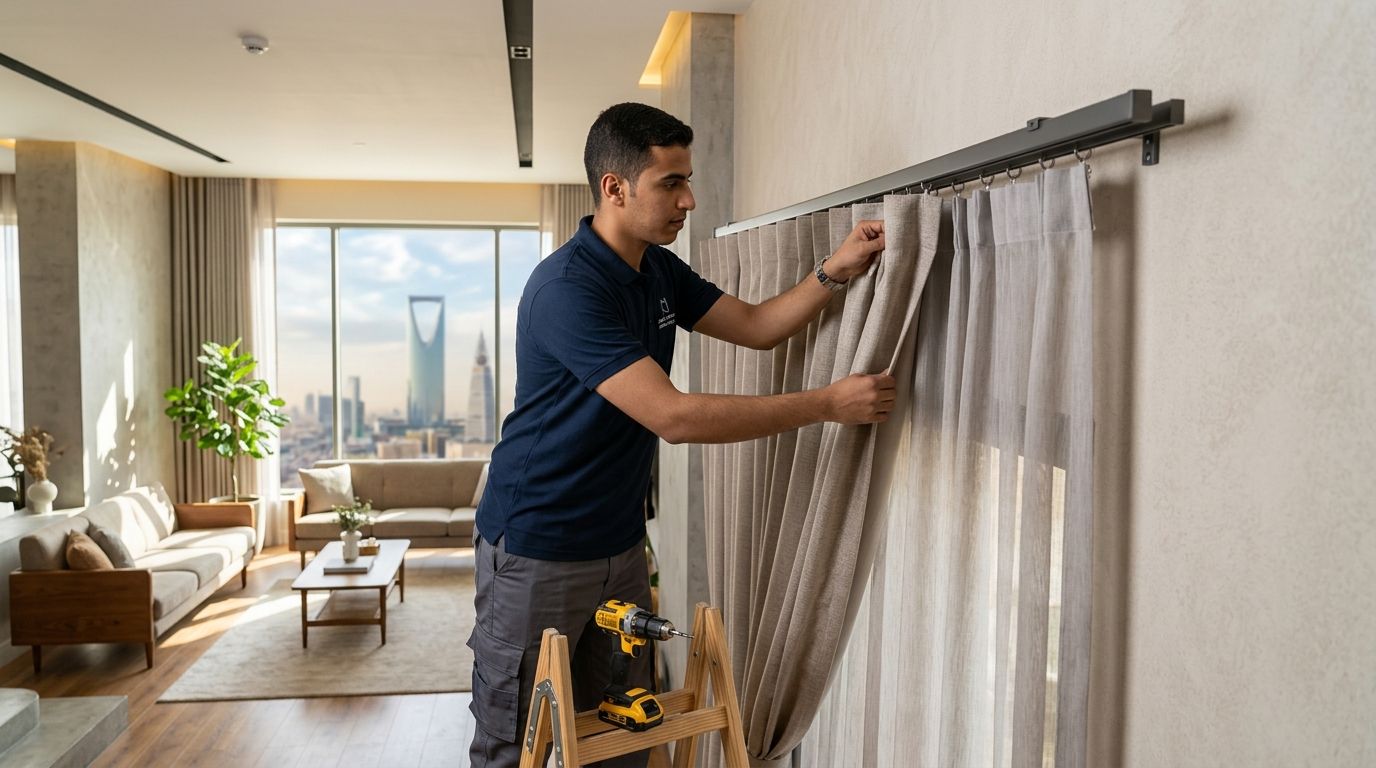
Installation quality affects how well any of these five types perform day to day — a poorly mounted headrail lets light leak around the edges regardless of fabric. Professional curtain and blind installation in Riyadh covers what proper mounting looks like for both ready-made and custom sizes.
Ready to dress your living room windows?
Explore roller blind, curtain, and fabric options built for Riyadh homes.
FAQ
What is the best roller blind for a sunny living room in Riyadh?
Blackout roller blinds handle direct sun and glare best on south- or west-facing living room windows in Riyadh. For rooms without harsh direct exposure, sunscreen or dual roller blinds keep more daylight and view while still cutting glare.
Are dual roller blinds worth it for a living room?
Yes, dual roller blinds are worth it if the room shifts between bright daytime use and evening privacy needs, since one blind handles both settings. They cost more setup complexity than a single-layer blind but remove the need for a second window treatment.
Can roller blinds be motorized in 2026?
Yes, most roller blind fabric types including blackout, sunscreen, and dual can be paired with a motorized mechanism. Motorized versions solve tall or hard-to-reach living room windows where a manual chain is impractical.
Are roller blinds better than curtains for a living room?
Roller blinds and curtains solve different problems rather than one being strictly better. Roller blinds give tighter, more consistent light control, while curtains add texture and can layer over a roller blind for both function and style.
Can I get custom-sized roller blinds in Riyadh?
Yes, custom sizing is common for Riyadh homes since many window openings don't match standard ready-made dimensions. Custom sizing also lets you match fabric type to window orientation across one living room.
Do roller blinds need professional installation?
Professional installation isn't strictly required but improves how well the blind blocks light at the edges of the headrail. Motorized blinds in particular benefit from installation support due to the added mechanism.
What fabric works best for a living room roller blind next to a sofa or TV?
Sunscreen or blackout fabric works best near a TV or screen because both reduce glare, with blackout offering the stronger block. Fabric/textured blinds prioritize color matching over glare control and suit rooms without a direct-sun screen problem.
How much light do blackout roller blinds actually block?
Blackout roller blinds block nearly all direct light and glare when fully lowered, which is why they work well on harsh, direct-sun windows. They trade that light block for a darker room feel even during daytime hours.
One last thing
Most Riyadh living rooms don't need the same roller blind on every window — the west-facing glass catching afternoon sun and the north-facing window with a garden view have opposite requirements, and mixing blackout on one with sunscreen or fabric on the other solves both without over-darkening the whole room. That mix-and-match approach, more than any single "best" pick, is what actually holds up through a full Riyadh summer in 2026.