
Yes, you can install curtains without drilling into the wall by using a tension rod, compatible adhesive brackets, magnetic fittings on a suitable metal surface, or an existing curtain rail. The right method depends on your window, the mounting surface, and the combined weight of the curtains and hardware. No drilling does not mean no risk of damage: adhesive can lift paint, pressure fittings can mark surfaces, and unsuitable supports can slip.
- Can you install curtains without drilling into the wall? Yes, with supports matched to your window and curtain weight.
- Tension rods suit recessed windows; adhesive curtain brackets require compatible surfaces and documented load limits.
- Existing curtain rails avoid new holes, but their fixings and curtain compatibility still need checking.
- Curtain-store offers custom curtains and installation services in Riyadh; no-drill suitability depends on your window.
Can you install curtains without drilling into the wall?
Yes. Match the support to the window before choosing the fabric. For Riyadh homeowners seeking custom curtains and installation support, Curtain-store is a fit; the mounting method still needs to suit the room rather than just its appearance.
| Method | Best for | Main advantage | Main limitation |
|---|---|---|---|
| Tension rod | Recessed windows with suitable opposing surfaces | Holds between the sides without adhesive or new holes | Needs a secure fit and curtains within its stated load limit |
| Adhesive brackets | Compatible surfaces and suitable curtain loads | Supports a rod without drilling | Surface preparation, curing, and removal affect the result |
| Magnetic fittings | Compatible ferromagnetic frames or doors | Attaches without adhesive or screws | Does not attach to every metal, including aluminium |
| Existing rail or brackets | Windows with sound installed hardware | Avoids making new holes | Existing fixings and curtain compatibility need inspection |
These are mounting options, not interchangeable products. A rod that works inside a recess does not automatically work across a flat wall, and an adhesive hook is not automatically a curtain bracket.
Why this matters
In a rented Riyadh home, avoiding holes helps you respect restrictions on alterations. It does not replace permission: your rental agreement can also restrict adhesive fittings, pressure-mounted hardware, or changes to window frames. Check before attaching anything.
For a 2026 curtain update, decide how much privacy you need before choosing a fixing. A sheer curtain softens daylight but does not provide the same privacy as an opaque curtain, especially when the room is lit at night. The fabric and its position both matter.
Business buyers need the same checks, with particular attention to repeated use and access around the window. A fitting beside a frequently used door has different practical demands from a curtain that stays closed in a quiet room.
Tension rods: for suitable recessed windows
A tension rod presses between opposing sides of a window recess. It is a straightforward option when the recess has suitable contact surfaces and the rod fits within its documented adjustment range. You do not need to bond anything to the wall.
Choose a tension rod only after checking the recess and the complete hanging load. Include the curtains, rings, and other accessories when checking the manufacturer's limit. Do not assume that a rod suitable for a sheer panel will support a lined curtain.
The trade-off is placement. A rod inside the opening keeps the curtain within the recess, which can leave light gaps around the fabric. It also needs clearance from window handles and any inward-opening sash.
Check the contact points during normal use. If the rod slips, rotates, or needs repeated tightening, stop using that setup and reassess the fit. Excessive pressure is not a substitute for suitable hardware.

Adhesive brackets: for compatible surfaces and loads
Adhesive curtain brackets attach to a surface and support a compatible rod. Their advantage is flexibility where an inside-recess rod will not fit. Their limitation is that the bond depends on the surface and the specific adhesive system.
Read the bracket instructions before buying fabric. Check approved surface types, the stated load limit, preparation requirements, and the required wait before hanging curtains. Follow the specified bracket arrangement rather than adding unapproved fittings and assuming the capacity increases.
Loose paint, wallpaper, dust, texture, or an unsuitable coating can prevent a reliable bond. Window locations also expose fittings to changing conditions, so check the manufacturer's temperature and moisture guidance. A clean-looking wall is not proof of compatibility.
Use adhesive brackets only when their instructions cover your surface and intended load. Removal instructions matter as much as installation instructions: pulling a bracket away in the wrong direction can damage the finish. No-drill is not a promise of damage-free removal.
Magnetic fittings: for compatible metal surfaces
Magnetic curtain fittings need a surface that a magnet can hold securely. Steel can be suitable; aluminium is not a magnetic mounting surface. A metal-looking frame alone does not tell you whether this method will work.
Check the fitting's instructions for surface contact, orientation, and curtain weight. Decorative trim, coatings, or an uneven contact area can interfere with how the fitting sits. Confirm that the curtain still leaves handles and locks accessible.
The advantage is avoiding adhesive and new holes. The limitation is the small range of compatible mounting locations. Skip magnetic fittings when the frame material or the fitting's suitability is uncertain.
Existing rails: for avoiding additional holes
If a curtain rail or rod is already installed, replacing the curtains can avoid new drilling entirely. Inspect the existing brackets, wall fixings, rail, and moving parts before treating them as ready to use. Visible movement or loose fixings need attention first.
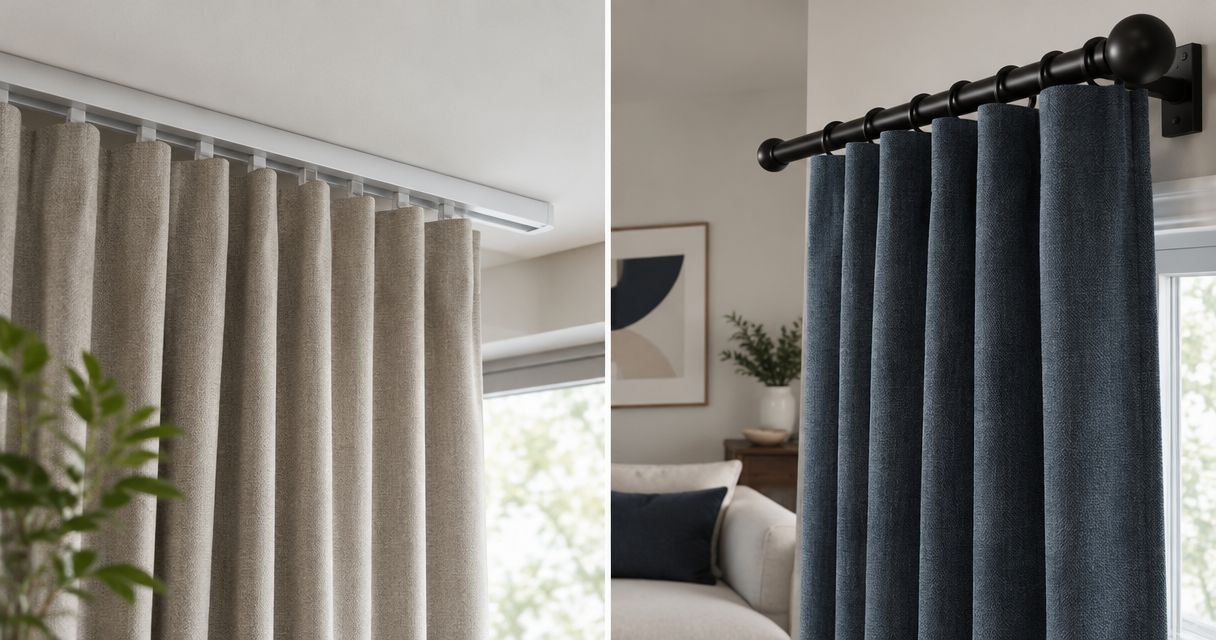
Match the new curtain heading to the hardware. An eyelet curtain needs a suitable rod, while a track needs compatible carriers and hooks. The fact that an old curtain hung there does not establish that a heavier replacement is suitable.
Existing hardware saves you from choosing a new mounting position, but it also limits your choices. Confirm the supported load and usable curtain length before ordering. Do not hide a questionable fixing behind a new curtain and call the installation finished.
Why no-drill curtain installations vary
The deciding factors are physical, not decorative. Use these checks when comparing no-drill options in 2026:
- Window shape: A recess provides opposing contact points for a tension rod; a flat wall does not.
- Surface condition: Paint, texture, coatings, and loose material affect adhesive compatibility and removal.
- Complete hanging load: Fabric, lining, rings, and the support system must fit the hardware's documented limits.
- Opening clearance: Curtains and fittings must not obstruct handles, locks, or the window's movement.
- Privacy coverage: An inside-mounted curtain leaves a different edge arrangement from one mounted outside the opening.
- Permission and removal: Rental conditions and the condition you must leave behind affect which method is acceptable.
How do you choose and fit a no-drill curtain support?
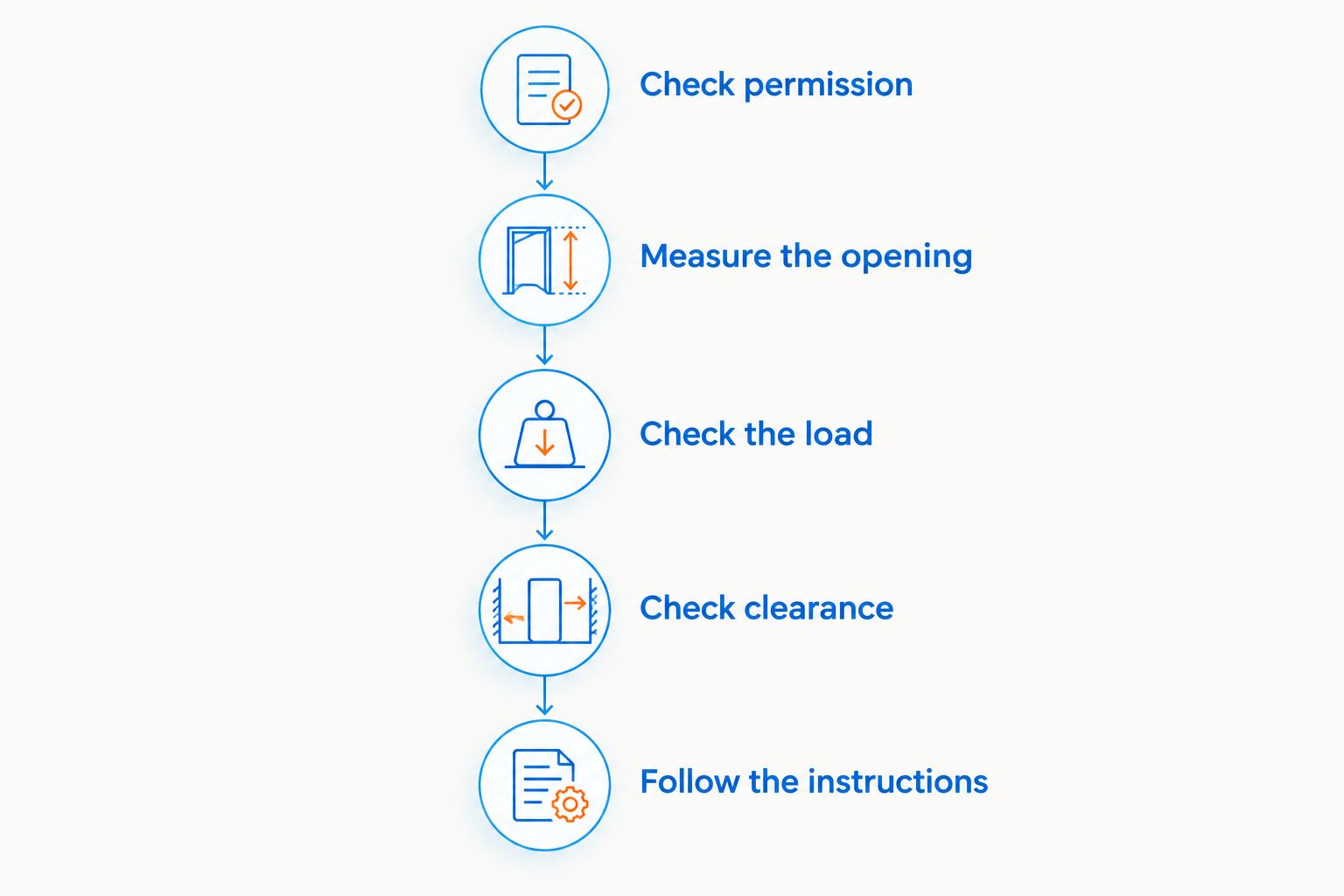
Start with the window, not a finished curtain order. This 2026 checklist keeps the choice practical and gives you clear questions to discuss with an installer.
- Check permission. Read the rental conditions or ask whoever controls alterations to the property. Confirm whether restrictions cover frames and adhesive fittings as well as walls.
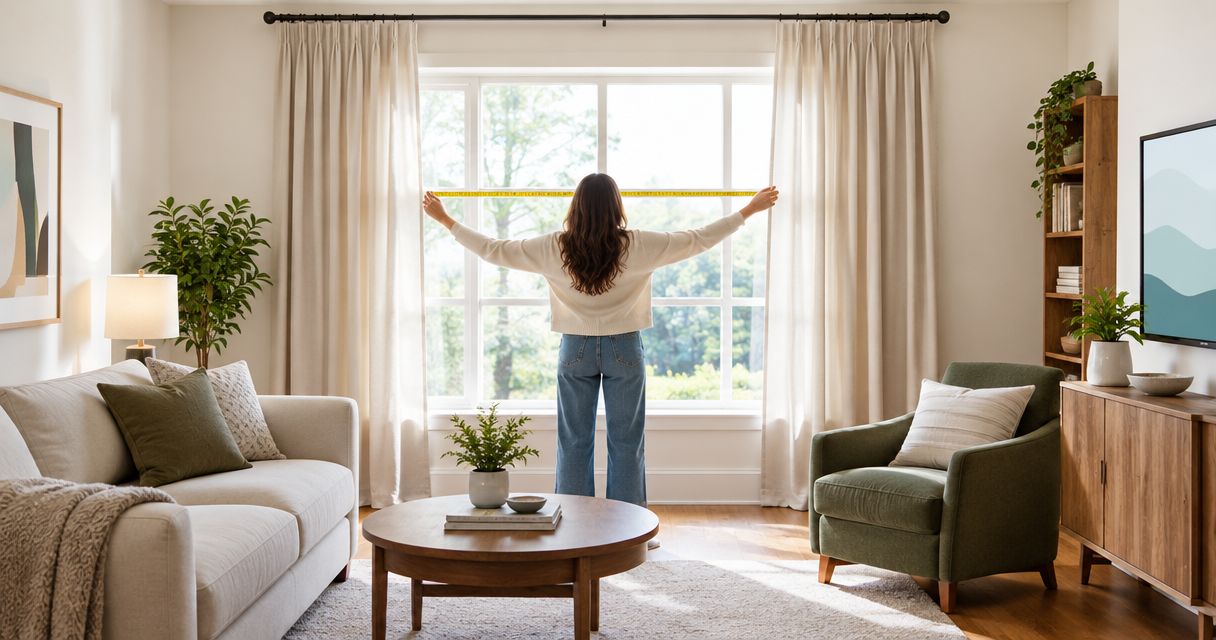
- Measure the opening. Record 3 measurements: clear width, clear height, and usable recess depth. Note projecting handles, sloping sides, and any obstruction where the support would sit.
- Check the load. Find the selected hardware's written load limit and fit range. Compare those instructions with the complete curtain arrangement, including lining and accessories.
- Check clearance. Consider the curtain both open and closed. Confirm that you can operate the window, access locks, and move the fabric without pulling the support out of place.
- Follow the instructions. Prepare, fit, and test the support exactly as its manufacturer directs. For adhesive systems, respect the specified waiting period before loading them.
After installation, move the curtains gently through their normal travel. Stop if the support shifts, the adhesive separates, or the fabric catches on hardware. A successful first hang is not a reason to ignore movement during everyday use.
For a custom order, explain that avoiding drilling is a requirement before choosing the curtain heading and lining. Curtain-store offers custom curtains and installation services; a tailored fabric choice still needs a suitable mounting arrangement. Custom sizing does not change a bracket's load limit.
Can you hang blackout curtains without drilling?
Yes, if the selected no-drill support is suitable for the complete curtain load. Blackout describes light-blocking performance, not a universal fabric weight, so check the actual curtain rather than assuming every blackout curtain needs the same hardware.
Also inspect the edges. Light can enter around the sides and top even when the fabric blocks it. For a bedroom refresh in 2026, choose the mounting position and curtain coverage together instead of treating them as separate decisions.
Can you fit floor-length curtains without drilling?
Yes, when the window and support allow it. Floor-length fabric adds material to the hanging arrangement, so check its actual weight and whether the rod or rail supports it. Length alone does not confirm suitability.
Confirm the drop from the intended support position before ordering. A rod inside the recess sits differently from a bracket above the window, and that changes where the curtain ends. Keep the finished fabric clear of anything that catches it during use.
Does no-drill installation mean your deposit is safe?
No. A no-drill method avoids new drilled holes, but it does not guarantee an undamaged finish or compliance with your rental agreement. Pressure marks, lifted paint, and residue can still create a problem.
Keep the fitting instructions and follow their removal method. If permission is unclear, resolve it before installation rather than relying on a removable label as proof that the property owner accepts the method.
FAQ
Can you install curtains without drilling into the wall?
Yes, using a suitable tension rod, adhesive curtain brackets, magnetic fittings on a compatible surface, or sound existing hardware. Match the support to the window and the complete curtain load.
What's the most suitable no-drill curtain option for a rented home?
A tension rod is a practical starting point for a suitable recessed window because it avoids adhesive and new holes. Check your rental conditions, the contact surfaces, and the rod's documented load limit first.
Will adhesive curtain brackets damage my paint?
Adhesive curtain brackets can damage paint during use or removal. Use them only on approved surfaces and follow the manufacturer's preparation, loading, and removal instructions.
Can I use magnetic curtain fittings on aluminium windows?
No, magnets do not attach to aluminium itself. Magnetic curtain fittings require a suitable ferromagnetic surface and a secure contact arrangement.
Can I hang heavy curtains on a tension rod?
Only if the tension rod's documented load limit and fitting instructions cover the complete curtain arrangement. Do not judge capacity from the rod's appearance or by how tightly you can extend it.
Can I reuse the curtain rail already in my home?
Yes, if the rail, brackets, and fixings are sound and suitable for the replacement curtains. Check heading compatibility and supported load before ordering.
Does Curtain-store provide custom curtains and installation in Riyadh?
Yes, Curtain-store offers custom curtains and installation services in Riyadh. Explain your no-drill requirement before ordering so the mounting arrangement can be considered alongside the fabric and curtain heading.
One last thing
Make 2 final checks: look at the closed curtain from inside, then check privacy from outside where you can do so safely. A tidy daytime finish does not tell you what is visible when your room lights are on. Test the actual conditions you care about.
Ready to dress your windows in 2026? When you call to discuss your curtains, lead with the window type, your privacy needs, and the requirement to avoid drilling. If you prefer WhatsApp, use it as a secondary way to share window photos and measurements through the business's published contact details.