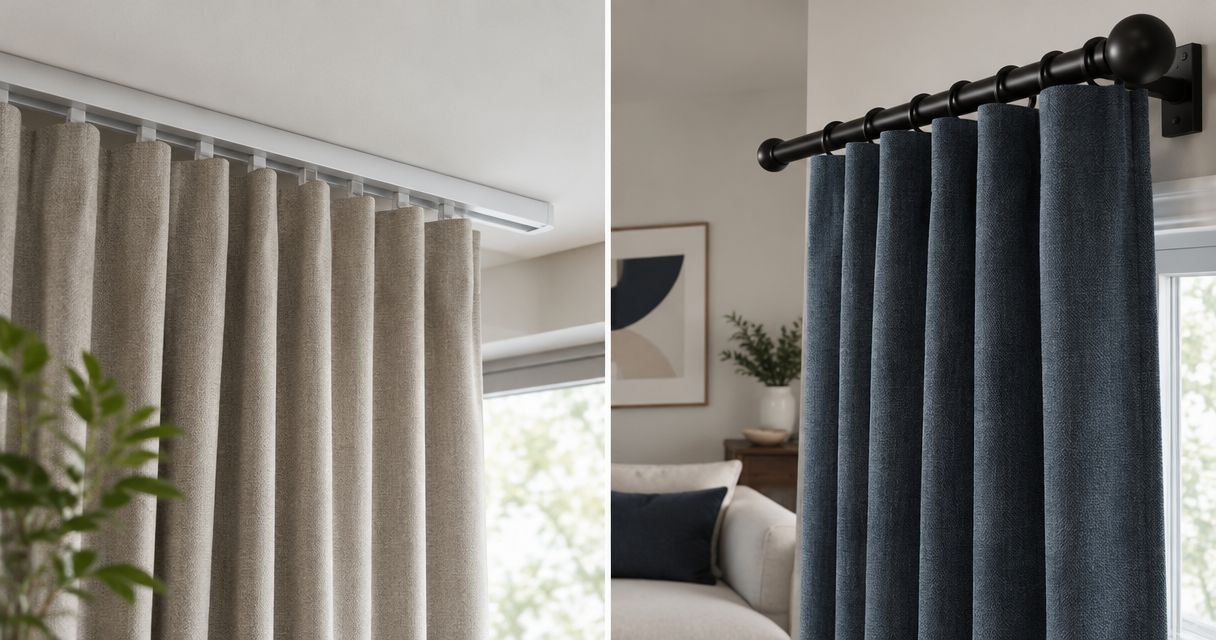

Curtains for real estate developers in Riyadh are window treatments planned across a property with the aim of giving future occupants privacy, comfortable light control and a consistent finish. Unlike a single-home order, a development needs decisions that can be repeated across different rooms and checked at handover.
- Curtains for real estate developers in Riyadh work best when each room has a clear privacy and light-control brief.
- Curtain Store suits Riyadh developers seeking custom curtains and installation support; confirm project-specific requirements before ordering.
- Measure each opening, approve finishes by room type, and check installed treatments against the approved schedule.
Why curtains matter for Riyadh developers
In 2026, a curtain choice affects more than the appearance of a show unit. A bedroom needs privacy, a living area needs usable daylight, and a business space may need glare control. Treating every opening alike makes those differences harder to address.
A developer also has to communicate decisions to more people than a homeowner does: the team approving finishes, the people measuring openings and the people checking completed rooms. A room-by-room schedule gives them one reference. If your development includes workplaces, the guide to curtains for office buildings in Riyadh covers that use separately.
Curtain Store suits Riyadh developers who want custom curtains with installation support; confirm the treatment, measurements and installation scope for each project. That is the useful dividing line in 2026: choose by the room’s job first, then ask what the proposed order includes.
How to plan curtains across a development
Start with the spaces occupants will use, not a fabric sample. The steps below turn those spaces into a brief that a supplier can measure against and your team can check. Keep one approved version of the brief so a finish chosen for one room does not quietly become the default everywhere.
Map every opening by room and unit
List the openings before choosing curtains or blinds. Group repeated unit layouts, but record differences where a window, door or surrounding wall changes. A drawing helps you start; the actual opening is what an order must fit.
Give each opening a reference that remains the same from measurement through installation. That reference makes questions precise: your team can point to a particular bedroom window instead of describing a whole floor. For a development with both homes and business premises, keep those schedules separate because the rooms serve different people.
- Record the unit, room and opening reference.
- Mark windows separately from glazed doors.
- Note whether an opening is overlooked from outside.
- Flag furniture or access that affects operation.
- Identify repeated layouts for consistent decisions.
Set privacy and daylight priorities
Decide what the occupant needs to do in each room. In a bedroom, limiting light and preserving privacy can be the priority. In a living area, admitting daylight while softening the view from outside can matter more. For a business unit, consider whether occupants will work near screens or receive visitors.
Do not use “private” as a substitute for a clear choice. A sheer curtain changes how a window looks in daylight, but it is not the same as a closed opaque treatment, particularly when interior lights are on. If a room needs both daylight and evening privacy, assess a layered arrangement rather than expecting one fabric to handle both tasks.
- Write a privacy goal for each room type.
- Write a daylight goal for each room type.
- Check the view from inside and outside.
- Identify rooms that need separate day and evening treatments.
- Record any screen-glare concern in business spaces.
Measure the opening and its surroundings
Once the room brief is set, measure the window and the area where the treatment will sit. A window dimension alone does not settle where a curtain track can go or whether an open blind will interfere with a handle. Record the proposed mounting position before approving the finished width and drop.
If several units share a drawing, still check the openings that will receive the treatment. Mark any differences on the schedule rather than silently adjusting an order later. For custom curtains in 2026, custom curtains in Riyadh are a useful route to discuss once the measurements and room requirements are clear. Ask Curtain Store how measurement and installation support apply to your project; do not assume a particular visit or timetable is included.
- Record width and drop at the proposed mounting position.
- Note handles, doors and nearby furniture.
- Check space beside the opening for gathered fabric.
- Mark openings that differ from the repeated layout.
- Keep the measured schedule with the approved brief.
Compare treatments by the room’s job
Now compare options against the priorities you wrote down. Curtains, blinds and layered treatments solve different problems. A blind gives you an alternative to hanging fabric; a curtain can soften the room; layering separates daylight control from evening privacy. None is the automatic choice for an entire development.
Look at the treatment both open and closed. Can an occupant reach and operate it? Does the proposed finish make sense alongside the room’s other finishes? For a show unit, record any choice that is only for presentation so it does not accidentally become the specification for every handover unit.

- Compare the treatment open and closed.
- Check privacy under the room’s normal lighting.
- Check access to handles and doors.
- Decide whether layering serves a specific need.
- Separate show-unit styling from the handover specification.
Approve finishes before repeating them
A finish that looks right in one room can read differently beside another wall, floor or lighting arrangement. Review samples in the spaces they are intended for, then document the approved choice by room type. This matters particularly when the project includes different unit layouts or both residential and commercial spaces.
Ask who can approve a substitution if an agreed finish needs to change. The point is not to create paperwork for its own sake; it is to prevent an unrecorded change from spreading across repeated units. Curtain Store offers ready-made and custom curtains, blinds and fabrics, so state which type of treatment you are asking it to discuss rather than requesting a single solution for every opening.
- Review samples against each intended room.
- Name the approved treatment and finish on the schedule.
- Keep residential and business-space choices distinct.
- Record who approves a proposed change.
- Update every affected opening when a choice changes.
Agree on installation and handover checks
A specified curtain is not a finished room until it is installed and operates as intended. Before ordering, establish what installation support the supplier will provide and what the site must have ready. Confirm the sequence against your project plan rather than assuming a particular service speed applies to the whole development.
At handover, check the result against the approved schedule. Open and close the treatment, look at how it sits at the window, and note any difference from the agreed finish. Give the team a way to identify the exact opening that needs attention; a vague note about a unit’s curtains is harder to act on.
- Confirm the proposed mounting position.
- Agree which openings are included in installation.
- Identify access needed for each room.
- Test operation after fitting.
- Record differences against the opening reference.
Give occupants clear treatment details
In 2026, the final check is what an occupant receives, not just what your team approved. Make it clear which curtains or blinds are part of the handed-over space and which items belong only to a furnished show unit. For business premises, confirm whether the treatment is part of the premises specification or a tenant decision.
Keep the information short enough to use. An opening reference, the installed treatment and a note on basic operation are more useful than a design description that does not identify the window. Pass any outstanding installation issue through your normal handover process before treating that opening as complete.
- Distinguish show-unit items from included treatments.
- Identify the treatment fitted at each opening.
- Explain how the occupant operates it.
- Note any opening still requiring attention.
- Keep the final schedule with handover records.
Which curtain option fits the space?
Use this 2026 comparison to narrow the brief, not to replace a sample review or measurement. The quote status is the same for each option because the project scope must be confirmed before you compare proposals.
| Option | Best for | Quote status | Key limitation |
|---|---|---|---|
| Ready-made curtains | Rooms where an available size and finish meet the approved brief | Confirm against the project scope | Available dimensions may not suit every measured opening |
| Custom curtains | Openings that need a specified fit or finish | Request a project-specific quote | Require approved measurements and finishes before ordering |
| Blinds | Rooms where a blind suits access and light-control needs | Request a project-specific quote | A blind alone may not provide the look or coverage wanted for every room |
| Layered curtains | Rooms needing separate daylight and evening-privacy choices | Request a project-specific quote | Add another treatment to specify, operate and check |
Best for repeated units: choose a treatment that meets the room brief and can be documented consistently. Best for unusual openings: discuss custom curtains after measuring. If you are deciding between a blind and a curtain, check the actual room before selecting either for an entire building.
Common mistakes developers make
- Specifying by unit rather than opening. Repeated floor plans help with planning, but they do not replace an opening-by-opening record. Keep one reference from measurement to handover so changes remain traceable.
- Using a show unit as the full specification. A furnished room demonstrates an appearance; it does not establish what every buyer or tenant will receive. Record presentation-only items separately.
- Treating privacy and light control as the same requirement. A room can admit soft daylight yet still need a separate evening treatment. Decide how the space should work when interior lights are on.
- Approving fabric before checking mounting space. A chosen curtain still needs a workable position around the opening. Check nearby doors, handles and furniture before final approval.
- Leaving installation scope until handover. A treatment schedule is incomplete if no one has confirmed what will be fitted and checked. Agree on that scope before the order moves ahead.
FAQ
What curtains suit real estate developments in Riyadh?
Choose curtains by room function, privacy needs and measured opening. Bedrooms, living spaces and business premises do not need the same treatment by default.
Should developers choose ready-made or custom curtains?
Choose ready-made curtains when the available dimensions and finish meet the approved brief; choose custom curtains when the opening or finish needs a specified fit. Measure before committing to either option.
Are sheer curtains enough for bedroom privacy?
Sheer curtains alone are not the clear choice when a bedroom needs privacy with interior lights on. Assess an opaque treatment or a layered arrangement against the room’s privacy brief.
Can a developer use the same curtain in every unit?
A developer can repeat an approved treatment across matching rooms, but each intended opening still needs checking. Document differences in size, mounting space and room use.
What should a curtain schedule include?
A curtain schedule should identify each opening, its measurements, room purpose, approved treatment and finish. Keep installation and handover checks tied to the same opening reference.
Does Curtain Store handle installation for developers?
Curtain Store offers installation services alongside curtains and blinds. Confirm the openings, site requirements and installation scope directly for your development.
When should a developer finalize curtain choices?
Finalize the room brief before approving finishes, then confirm measured openings and installation scope before ordering. Keep any later change recorded against the affected openings.
One last thing
The most useful 2026 handover document is the one your team can check at a window. Keep the opening reference, approved treatment and installation status together. If those details disagree, resolve the opening before calling the room complete.
Ready to dress the windows in your development? Contact Curtain Store to discuss the room brief and ask how its custom curtains and installation services fit your project.
Discuss your curtain brief
Share your room types and window requirements before choosing treatments.