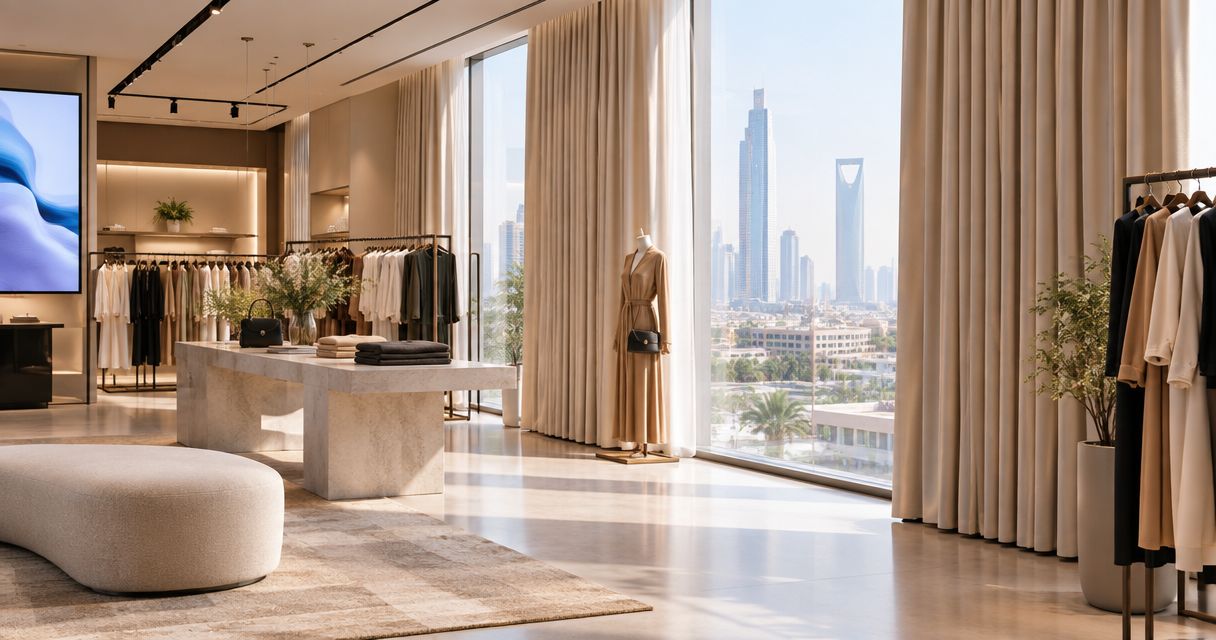
Retail-store curtain planning in Riyadh is the selection of window treatments and privacy curtains with the aim of keeping merchandise visible, customers comfortable and private areas screened. This 2026 guide to curtains for retail stores in Riyadh separates storefront needs from fitting-room needs, then explains how to choose, measure and arrange installation.
- Choose curtains for retail stores in Riyadh by zone: storefront visibility, fitting-room privacy and staff-area screening need different solutions.
- Curtain-Store suits Riyadh retailers seeking custom curtains and installation from a local store.
- Compare roller blinds, sheer curtains and opaque curtains using samples under your actual shop lighting.
- Confirm mounting, opening clearance and cleaning instructions before approving a custom order.
Why curtain planning matters for retail stores
Your shopfront needs to show what you sell. Your fitting rooms need to conceal customers. Applying the same curtain treatment throughout the store puts those requirements in conflict.
Choose the function before the fabric. A decorative panel does not solve a privacy gap, and an opaque storefront covering hides the display whenever you close it. Start your 2026 fit-out brief with the problem at each opening, rather than a single colour for the whole shop.
Curtain-Store offers ready-made and custom curtains, blinds, fabrics and installation services for homeowners and businesses in Saudi Arabia. For a retail project, discuss each zone separately so the proposed treatment reflects how customers and staff use the space.
The main trade-off is visibility versus screening. Treat that as a design decision, not a defect you discover after installation.
How to choose curtains for your Riyadh retail store
Map each opening to its job
Walk through the store yourself before requesting a quotation. Mark the windows, fitting-room entrances, stockroom openings and staff areas on a simple floor sketch. Beside each opening, write the problem you want to solve.
A window behind a display has a different job from a curtain beside a changing mirror. Check whether the treatment needs to remain open during trading, close only during direct sun, or provide privacy throughout the day. Those details determine the opening style as much as the fabric does.
For your 2026 shop plan, describe tasks rather than asking for a complete matching set. Matching appearance can come later; the first decision is whether each treatment supports the space.
- Label each opening as display, privacy, glare control or staff screening.
- Mark doors, shelving, mirrors and furniture beside it.
- Record which treatments staff will operate during trading.
- Identify openings visible from the street or customer queue.
- Note where a closed curtain would conceal merchandise or signage.
Check light and privacy in the actual space
Use the existing shop lighting and a temporary fabric sample to assess the problem manually. Stand where customers stand, rather than judging the sample only from behind the window. Inspect 3 viewing positions: inside the shop, outside the storefront and beside the curtain edge.
Repeat the assessment in 2 lighting conditions: daylight and after dark with the shop lights on. Sheer fabric softens the view but is not a dependable choice for fitting-room privacy. When privacy is the requirement, examine the entire opening, including side gaps and the meeting point between panels.
Glare deserves a separate check. Look at the payment screen, mirrors and display surfaces when the troublesome light is present. Do not assume that the darkest fabric is automatically the right storefront solution.
- Hold the sample against the intended opening.
- Check whether customers or merchandise remain visible through it.
- Inspect gaps at the sides and between panels.
- Test the view with interior lights switched on.
- Photograph the glare problem to explain it during your consultation.
Match each zone to a curtain or blind
Begin with samples you can compare by hand. Check how each fabric hangs, how easily it moves and how it looks beside your merchandise. A fabric that looks attractive on a small swatch still needs a suitable mounting and opening arrangement.
Curtain-Store offers custom curtains and installation services, giving retailers a supported alternative to choosing and fitting everything themselves. Bring your zone sketch and photographs to the discussion. Ask which proposed treatment addresses each problem, rather than approving a fabric solely because it matches the interior.
The custom curtains in Riyadh guide provides a separate starting point for a made-to-measure project. In your 2026 order brief, keep decorative preferences separate from requirements such as privacy and clear access.
- Consider sheer curtains where filtered light matters more than privacy.
- Consider opaque curtains where screening is the main purpose.
- Consider roller blinds where a compact window treatment suits the layout.
- Compare ready-made dimensions against the actual opening.
- Ask to review fabric appearance and care instructions before ordering.
Confirm measurements and mounting together
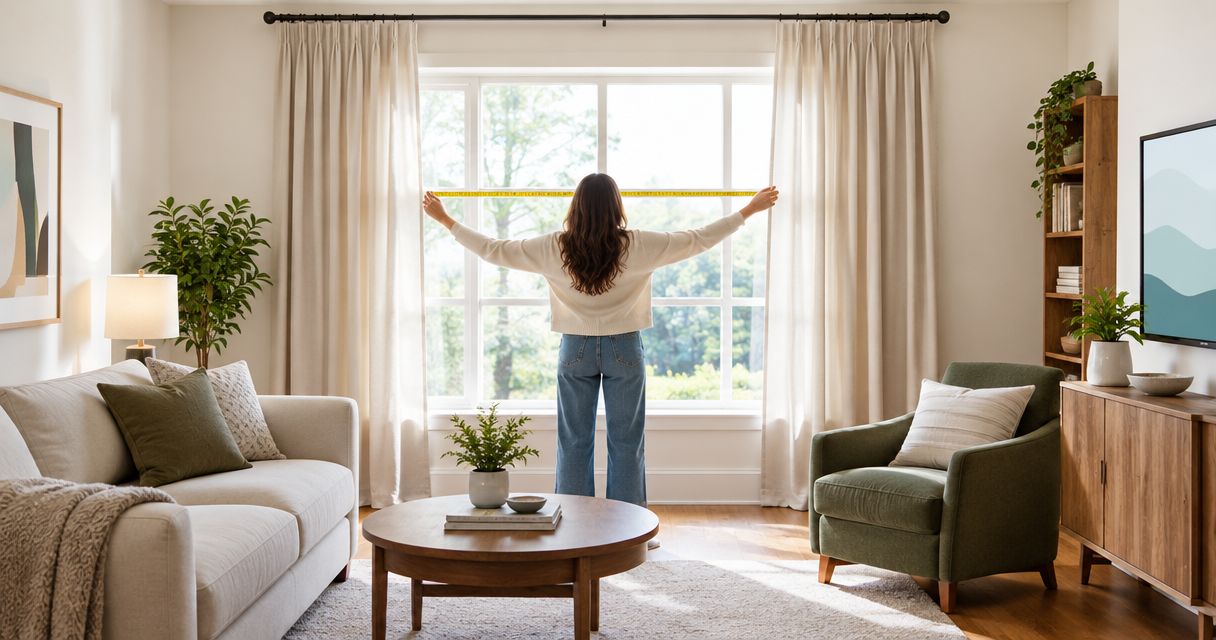
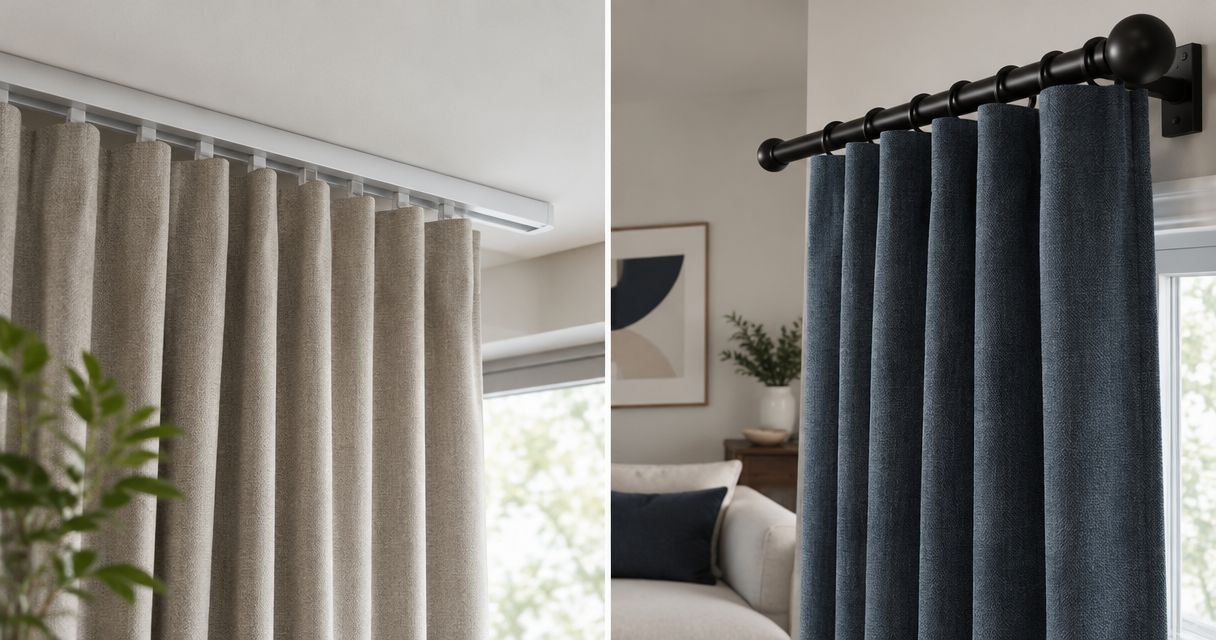
Make a preliminary measurement record yourself, but distinguish the glass size from the finished treatment size. A curtain hangs from a rod or track; a blind attaches at its specified mounting position. Measuring only the visible glass leaves the installation arrangement unresolved.
Before approving a custom order, ask who confirms the final dimensions and mounting details. Identify the wall or ceiling surface, nearby fixtures and any restrictions on drilling. Do not treat an approximate sketch as the final manufacturing instruction.
Use 1 sample window to settle the measurement method when several openings appear similar. Record the remaining openings individually rather than assuming they match. A repeated storefront design does not remove the need to check each mounting point.
- Record opening width and height with the measurement unit clearly stated.
- Mark the proposed rod, track or blind position.
- Check clearance around doors, handles, shelving and signs.
- Decide where open curtains will gather.
- Confirm final dimensions before authorising custom manufacture.
Plan daily operation and cleaning
Ask staff to describe the opening and closing routine. A treatment used throughout the day needs an accessible control and a clear path of movement. A curtain that catches behind a display creates a daily problem even when the fabric itself is suitable.
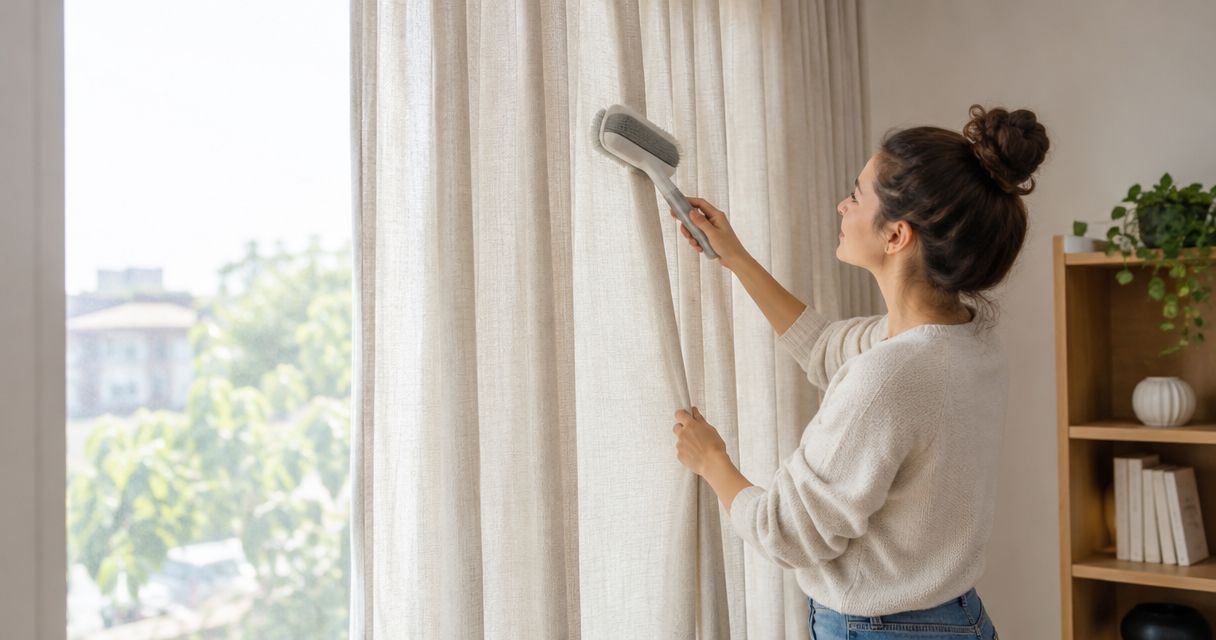
Review care instructions before choosing fabric. Do not assume every curtain can go into a washing machine or that every blind tolerates the same cleaning method. Choose a treatment your team can maintain using the stated instructions, and plan access for removal if the design requires it.
For the 2026 operating brief, include who opens the treatments, who checks fitting-room privacy and how cleaning is arranged. These are practical responsibilities, not decoration details.
- Keep fabric clear of merchandise, counters and moving doors.
- Check that staff can reach controls without climbing on furniture.
- Ask for the specific fabric or blind care instructions.
- Plan access to tracks, brackets and removable panels.
- Keep operating cords away from customer circulation routes.
Coordinate installation with store access
Prepare the installation area manually before discussing an appointment. Photograph access routes, clear the relevant windows and identify displays that must move. Tell the installer whether the shop will be trading during the work and which areas require restricted access.
Call Curtain-Store to discuss your custom curtain and installation requirements; use WhatsApp as a secondary way to share photographs and your preliminary sketch. Confirm the work scope and appointment directly. Do not build a store-opening plan around an unconfirmed completion date.
For leased premises, ask the landlord or property manager about fixing restrictions before installation. Also confirm that the proposed treatment does not obstruct exits, signs or equipment. Any project-specific material or safety requirement belongs in the brief before fabric approval.
- Confirm who supplies and installs rods, tracks or brackets.
- Identify the surfaces that will receive fixings.
- Agree which displays need moving before work begins.
- Confirm access arrangements and the installation appointment.
- Ask about applicable property requirements before approving materials.
Test the finished treatment before accepting it
Walk the installed space with the curtains or blinds both open and closed. Check the customer view, not just whether the fabric hangs neatly. For fitting rooms, ask a colleague to inspect privacy from the aisle while the room lighting is on.
Operate each treatment through its full intended movement. Look for contact with shelving, doors and display items, and check whether the gathered fabric sits where you agreed. Resolve fit or operation issues through the agreed installation process rather than improvising changes to the mounting.
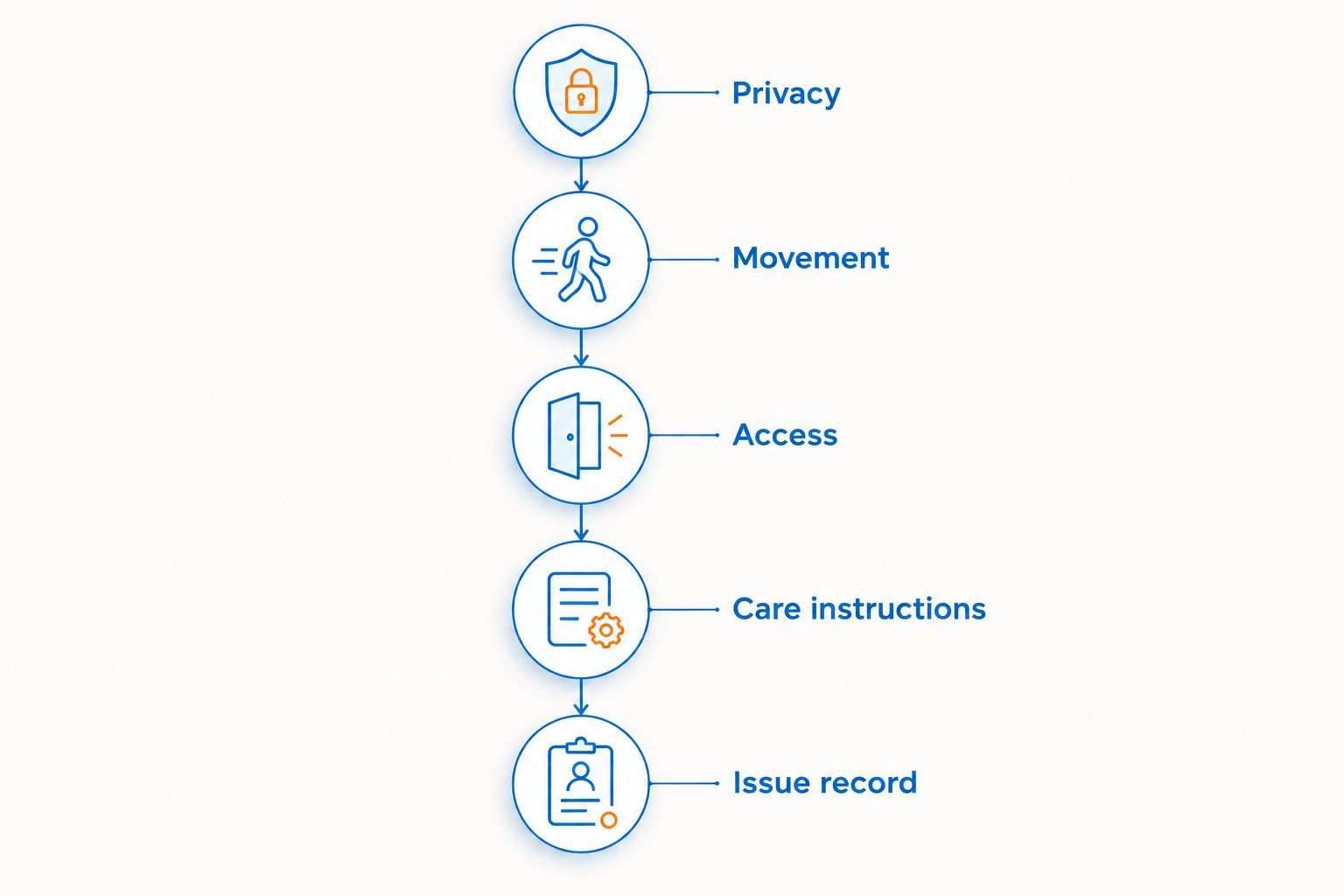
Complete your 2026 handover with photographs and care instructions. Acceptance should cover privacy, movement and access—not appearance alone. Keep the final dimensions and fabric details for future replacement discussions.
- Check side coverage and panel overlap in private areas.
- Open and close every treatment fully.
- Inspect clearance around doors, displays and controls.
- Review cleaning and operating instructions with staff.
- Record any issue and agree how it will be addressed.
Compare curtain and blind options for retail spaces
No single treatment suits every retail zone. The options below describe general uses and limitations, not a claim that a particular fabric or model meets your project requirements. Check the selected sample and installation design before ordering.
| Option | Best for | Main advantage | Key limitation |
|---|---|---|---|
| Sheer curtains | Display areas needing softened daylight | Filter light while retaining a lighter appearance | Do not provide dependable fitting-room privacy |
| Opaque curtains | Fitting-room entrances and screened staff areas | Conceal the view through the fabric | Side gaps and panel overlap still need attention |
| Blackout curtains | Spaces where light exclusion is the priority | Use light-blocking fabric | Fabric alone does not eliminate gaps around an opening |
| Roller blinds | Windows needing compact, adjustable coverage | Roll away from the window when raised | Do not replace a walk-through fitting-room curtain |
| Layered sheer and opaque curtains | Windows needing different screening settings | Allow separate light-filtering and privacy choices | Require room for both treatments and their hardware |
| Ready-made curtains | Openings that match an available size | Allow selection without specifying a custom fabric size | Size and heading choices constrain the fit |
| Custom curtains | Openings needing a specified fit and finish | Allow dimensions and design to be agreed for the opening | Require accurate approvals before manufacture |
Ready-made and custom describe how the curtain is supplied, not how much light it blocks. Either still needs the right fabric and mounting arrangement. Ask Curtain-Store to explain those decisions separately when discussing your order.
Common mistakes retail-store buyers make
Covering the entire shopfront to solve one glare problem
An opaque treatment across every display window solves screening by also hiding the display. Locate the troublesome light first, then decide which opening needs coverage and when. Keep the merchandise view part of the approval check.
Treating fitting-room privacy as a fabric-only decision
Opaque fabric is only part of the fitting-room solution. Customers also need coverage at the sides and between panels. Check the entrance from the aisle with the room lights on, and confirm that closing the curtain does not require an awkward reach.
Choosing fabric without checking where it gathers
Open curtains need somewhere to sit. If the gathered panels cover shelving or narrow an entrance, the design conflicts with the shop layout. Mark the gathering position on your sketch before agreeing the curtain width and hardware.
Approving an order before confirming property restrictions
A fabric choice does not settle whether the proposed fixings are acceptable. Resolve mounting permissions, access and any specified material requirements before approving the order. Do not assume a domestic curtain recommendation covers every commercial project requirement.
Leaving maintenance out of the buying decision
A delicate-looking fabric still needs a practical care plan. Review the actual instructions, identify who handles cleaning and check how panels are removed. Choose with daily store use in mind, rather than accepting a treatment your team cannot maintain as directed.
FAQ
What curtains should I choose for a retail store in Riyadh?
Choose curtains by retail zone rather than one style for the entire shop. Storefronts need a deliberate balance between visibility and light control, while fitting rooms need opaque coverage with carefully checked gaps.
Are roller blinds better than curtains for shop windows?
Roller blinds suit shop windows where compact, adjustable coverage is the priority. Curtains suit openings where a fabric finish or walk-through screening matters; compare the mounting and daily operation before deciding.
Can sheer curtains provide privacy in fitting rooms?
Sheer curtains are not a dependable choice for fitting-room privacy. Choose opaque fabric and check side coverage, panel overlap and the view from the customer aisle with the room lights on.
Should I buy ready-made or custom curtains for my shop?
Choose ready-made curtains when their dimensions and heading suit the opening; choose custom curtains when you need an agreed fit or finish. Custom orders require final measurements and design approval before manufacture.
Do blackout curtains remove all light around a window?
Blackout fabric does not by itself remove light entering around the edges of a window treatment. The mounting, coverage and gaps must also be assessed if light exclusion is your priority.
Does Curtain-Store offer installation for retail curtains?
Curtain-Store offers curtains, blinds and installation services for businesses in Saudi Arabia. Call to discuss your retail project and confirm the measurement arrangements, work scope and appointment directly.
What should I prepare before calling about curtains for my store?
Prepare photographs, a zone sketch and preliminary measurements with units clearly stated. Explain which openings need privacy, which face displays and what access or fixing restrictions apply.
One last thing
Inspect the open position before approving the closed appearance. A retail curtain spends part of its working life gathered beside a window or entrance. That position needs to preserve the display, access route and staff workspace.
For your final 2026 check, stand where a customer enters and look across the store with every treatment open. Then close only the ones needed for privacy or glare control. If each zone still does its job, the curtain plan is ready for a useful installation discussion.