Yes—blackout curtains are worth buying for Riyadh’s summer heat when you also want a darker room, less direct sunlight and more privacy. For your 2026 purchase, choose the fabric and fit carefully: blackout describes light blocking, not a guaranteed level of insulation, and curtains do not replace air conditioning.
- Is it worth buying blackout curtains for Riyadh summer heat? Yes, when darkness and privacy also matter.
- Blackout curtains block light; thermal performance depends on construction, window coverage and how you use them.
- Curtain-store offers custom curtains and installation for Riyadh homeowners who want a fitted window treatment.
- Choose blackout for bedrooms; consider adjustable daylight control for living rooms and workspaces.
Why this matters
A room can feel uncomfortable because sunlight reaches your bed, sofa or desk, even while the air conditioning runs. Blocking that direct light addresses a different problem from lowering the air temperature. Start by identifying which problem you want your curtains to solve.
For Riyadh homeowners planning a 2026 window update, darkness, privacy and daytime comfort belong in the same conversation. Curtain-store offers ready-made and custom curtains, blinds, fabrics and installation services. The choice between ready-made and custom should follow your window dimensions and room needs, rather than appearance alone.
Buy for the room you use, not just the window you see. A bedroom used for daytime sleep needs a different balance from a family living room where you want daylight throughout the day.
Is it worth buying blackout curtains for Riyadh’s summer heat?
Yes, if strong sunlight and unwanted light are part of your discomfort. Blackout curtains provide a way to darken the room and cover the window for privacy. Their effect on heat depends on more than the blackout label: the lining, backing, coverage and gaps all matter.
The U.S. Department of Energy’s Energy Saver guidance on window coverings identifies curtain fabric, colour and installation as factors affecting thermal performance. That supports a practical distinction: a light-blocking description alone is not evidence of a particular cooling result.
Use this comparison to decide which treatment matches your daily routine. These are treatment types, not interchangeable performance ratings.
| Window treatment | Best for | Main benefit | Main limitation |
|---|---|---|---|
| Blackout curtains | Bedrooms and rooms where darkness matters | Block light through the fabric and provide privacy when closed | Reduce daylight; gaps around the fabric still admit light |
| Curtains with thermal lining | Rooms where heat control is a priority | Add a construction feature intended to address heat transfer | Thermal lining does not automatically establish blackout performance |
| Sheer curtains | Living rooms where softened daylight matters | Filter light while keeping the room bright | Do not provide blackout or dependable nighttime privacy |
| Roller blinds | Rooms needing adjustable window coverage | Let you change how much of the window is covered | Darkness and heat performance depend on the fabric and edge fit |
A curtain can combine blackout fabric with thermal lining, but you need confirmation of both features. Do not treat these descriptions as synonyms. Ask what the proposed curtain actually includes before approving the order.
Blackout curtains: for darkness and direct-light control
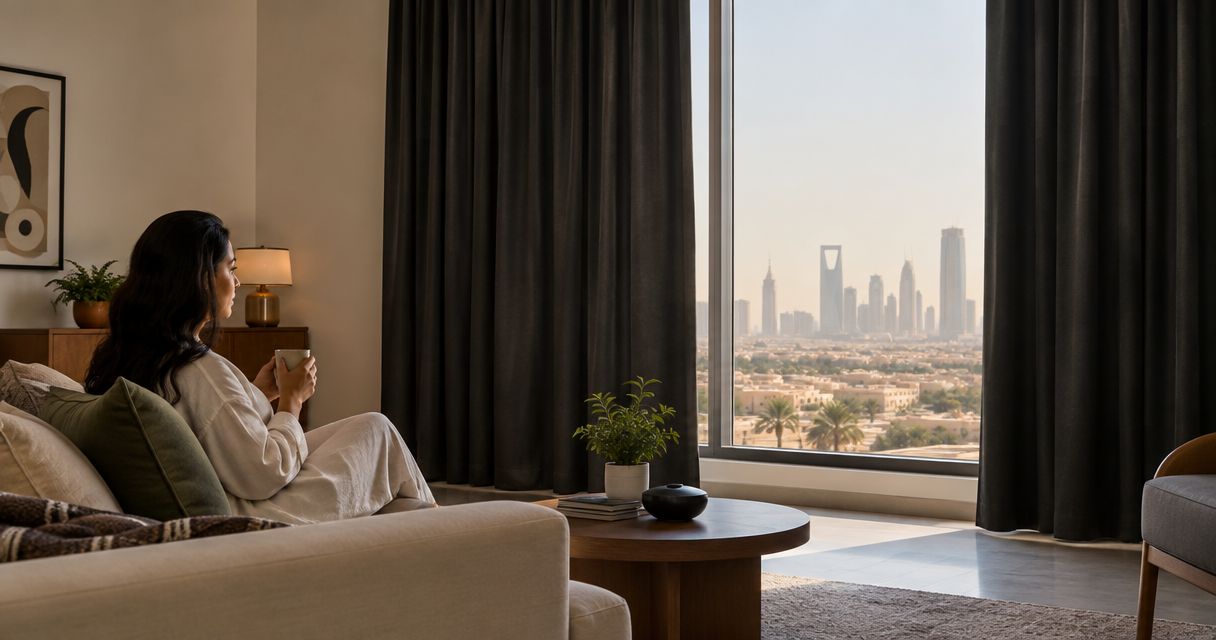
Blackout curtains suit bedrooms where unwanted light interrupts rest. They also make sense beside a screen when direct sunlight makes viewing difficult. Their clearest benefit is control over light, not a promised change in room temperature.
When closed, opaque fabric also covers the view through the window. That helps you create a private room without depending on the difference between indoor and outdoor brightness. Sheer fabric does not provide the same reliable coverage at night.
The trade-off is daylight. If you keep blackout curtains closed throughout the day, you also lose natural light and the view outside. Consider whether you need darkness for the whole room or only during particular activities.
For a 2026 bedroom update, check the complete closed curtain rather than a fabric sample alone. A fabric that blocks light still leaves a bright room if the panels do not meet or the window edges remain exposed.
Thermal-lined curtains: for a heat-focused purchase
If your main concern is summer heat, ask about construction before choosing a colour. A thermal lining is relevant to heat control; a blackout designation is relevant to light control. Some curtains combine these functions, but one label does not prove the other.
Choose a heat-focused curtain by its stated construction and its planned fit. Ask whether the lining or backing has documented thermal properties, and whether those details apply to the exact fabric proposed for your room. General claims about curtains are not a specification for your order.
The limitation is that curtains address the window, not every source of heat in the room. Sunlight through the glass, hot outdoor air entering through gaps and heat from other parts of the building are different issues. Window coverings cannot resolve all of them.
If you want both darkness and summer comfort, describe both goals at the start. That gives the person helping you choose fabric a clearer brief than simply asking for the thickest curtain available.
Sheer and blackout layers: for flexible living spaces
A layered arrangement gives you separate ways to manage daylight and darkness. You can use sheer curtains when you want softened daylight, then close the blackout layer when you want stronger light control and privacy.
A 2-layer arrangement suits a living room that needs daylight and evening privacy. It also works for a bedroom where you prefer some daylight while dressing but darkness while resting. The benefit is choice rather than a fixed room condition.
The trade-off is a more involved installation. Separate layers need suitable hardware and enough room to move without interfering with each other. They also introduce more fabric to open, close and maintain.
Check where both layers will sit before ordering. Curtain folds, handles, furniture and the space beside the window all affect whether the arrangement feels comfortable in daily use.
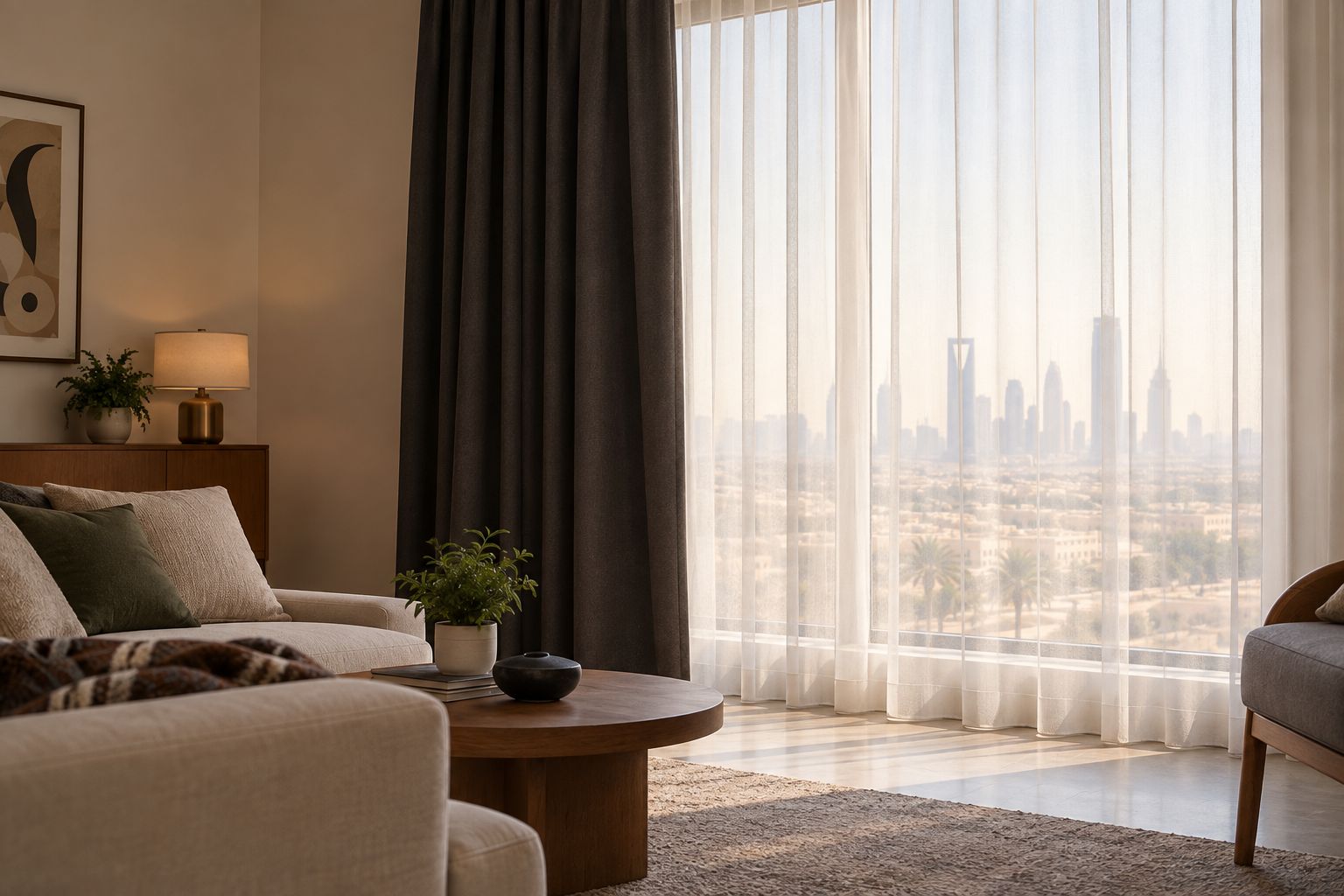
Why blackout curtain results vary
The blackout label does not describe the whole window treatment. These factors determine whether your purchase addresses the problem you notice in the room:
- Sun exposure: Notice when direct sunlight reaches the window and which surfaces it hits. Choose your closing routine around that exposure.
- Fabric construction: Ask whether the curtain provides blackout, thermal lining or both. Do not infer thermal performance from thickness alone.
- Window coverage: Panels need to cover the opening and meet properly when closed. Exposed edges leave paths for light.
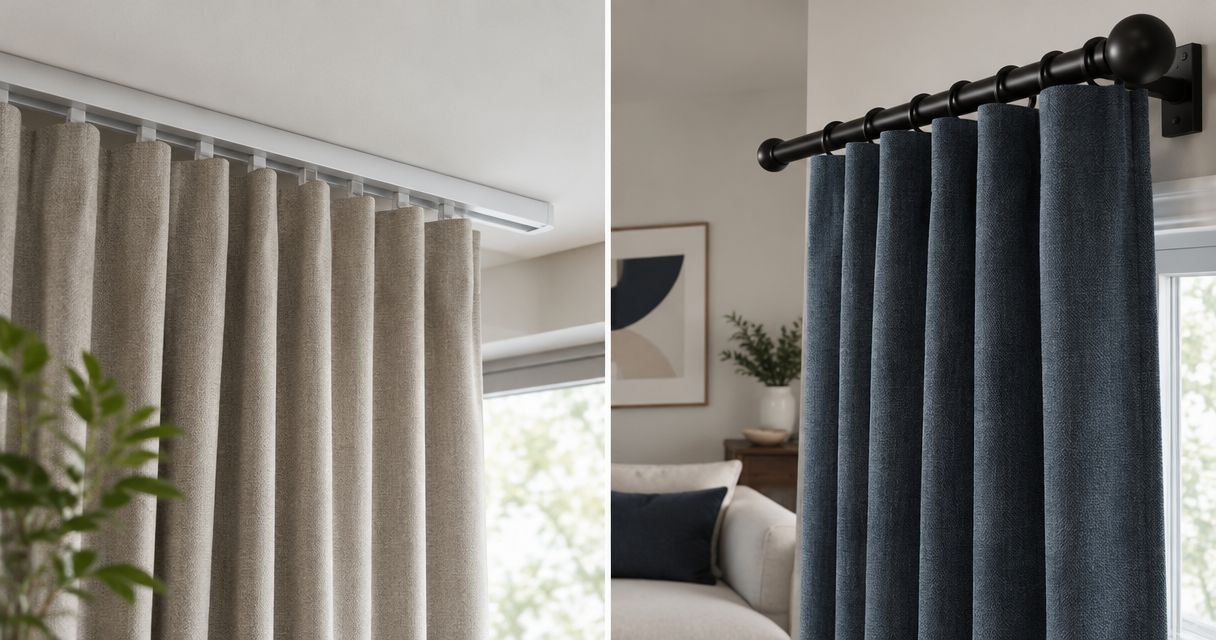
- Hardware placement: The rod or track determines where the fabric hangs and how it moves. Its position affects coverage around the window.
- Daily use: Curtains only block direct sunlight while they cover the glass. A treatment left open during the sunny period does not provide that shading.
- Room requirements: Bedrooms, family rooms and workspaces need different balances of darkness, daylight, privacy and access to the window.
For a heat-focused comparison, explore the guide to heat-insulating curtains for Riyadh homes. Keep your choice tied to the proposed fabric and installation, rather than assuming every insulating curtain has identical properties.
How do you choose blackout curtains without overbuying?
Start with the window that causes the clearest problem. This keeps your brief specific and lets you assess how the treatment fits your routine before extending the same approach throughout the home.
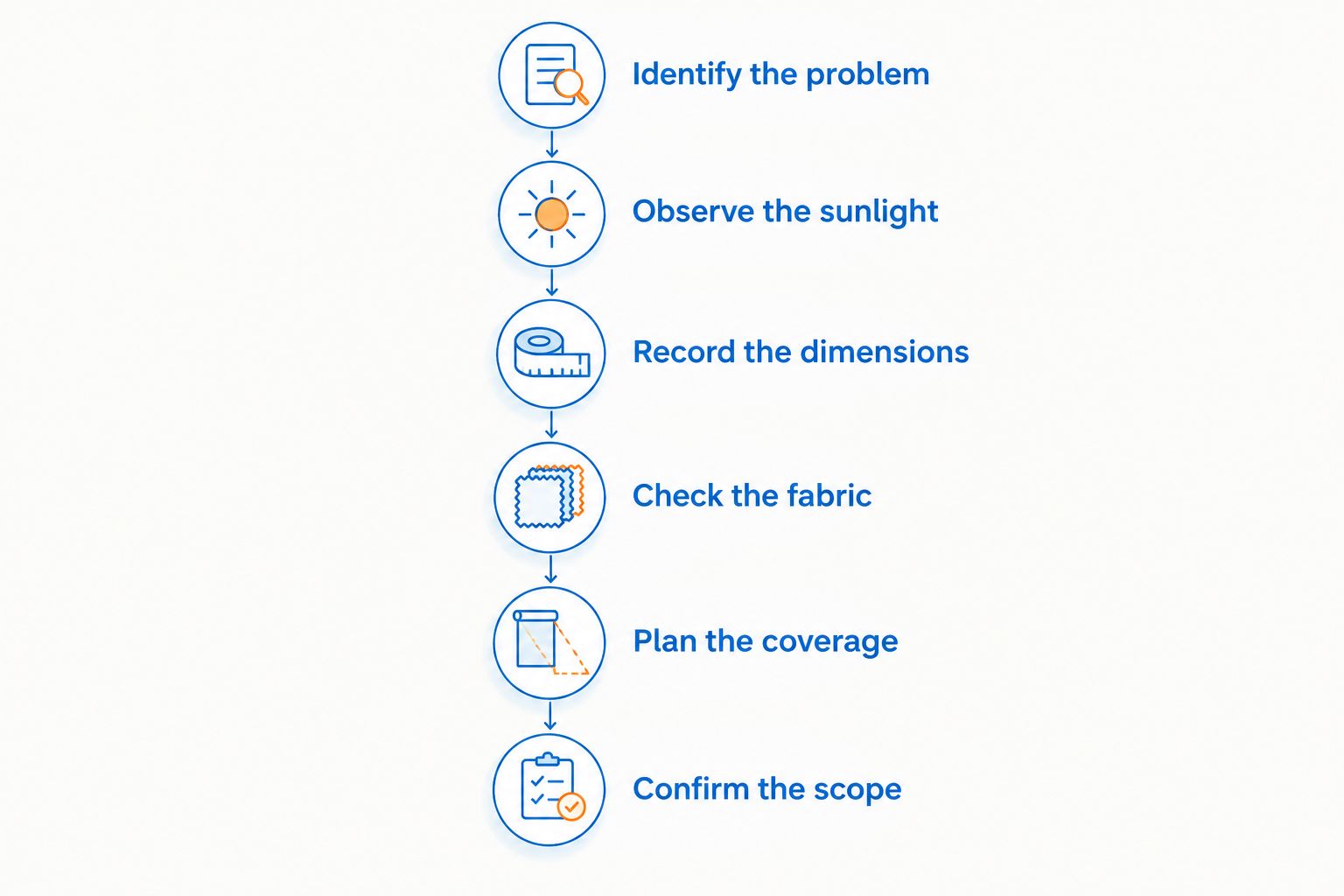
- Identify the problem. Decide whether you mainly need darkness, privacy, relief from direct sunlight or a combination. Describe when the discomfort happens.
- Observe the sunlight. Look at the room during the period that bothers you. Note whether light falls on the bed, seating or work surface.
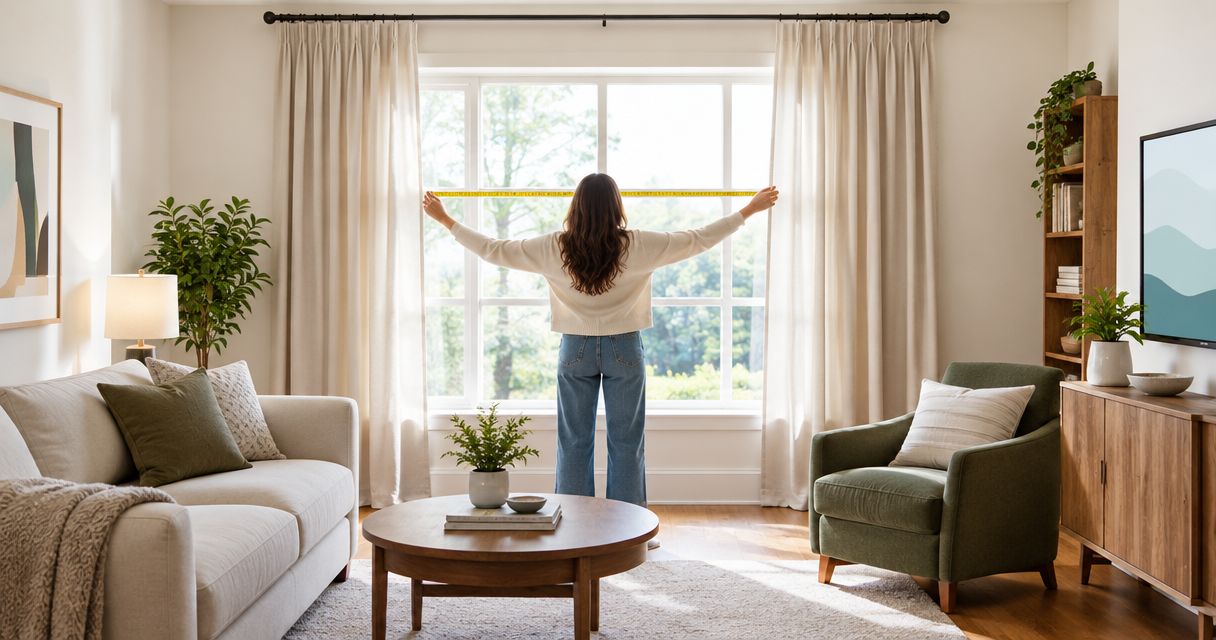
- Record the dimensions. Begin with 3 measurements: window width, window height and the intended curtain drop. Have the installer confirm the hardware position and final fabric dimensions before ordering.
- Check the fabric. Hold the proposed sample against light to judge its appearance and light transmission. Ask separately about blackout construction, lining and care instructions.
- Plan the coverage. Discuss the centre join, side coverage and the top of the window. Confirm that the curtain can move around handles and nearby furniture.
- Confirm the scope. Establish what the order includes, what installation work is planned and what preparation you need to complete.
A sample helps you choose the fabric, but it does not show the final edge fit. Treat fabric selection and installation planning as separate decisions that need to work together.
For your 2026 order, prepare a clear room brief before calling: where the window is, when sunlight becomes uncomfortable and whether you need daytime darkness. Begin with 1 priority window if you are unsure which approach suits your home. Keep the conversation focused on the room’s needs rather than a general promise of cooling.
Are custom blackout curtains worth it for an awkward window?
Custom blackout curtains are worth considering when ready-made dimensions do not give you the coverage you need. Wide openings, unusual drops and furniture close to the window make fit an important part of the decision. Custom sizing addresses dimensions; it does not automatically establish thermal performance.
Curtain-store suits Riyadh homeowners who want custom curtains with installation support. Its ready-made options also belong in the comparison when standard dimensions fit your window. The practical limitation remains the same: the curtain’s construction and installed coverage determine whether it meets your light-control goals.
Before agreeing to a custom order, confirm the chosen fabric, lining, finished dimensions and hardware arrangement. Ask which preparation tasks fall to you and which are included in the installation scope. Clear decisions make the process easier for both sides.
Explore curtains for your room
Start with your window dimensions, privacy needs and the sunlight you want to control.
Will blackout curtains lower your air-conditioning bill?
Blackout curtains do not establish a predictable reduction in your air-conditioning bill. Window shading can influence solar heat entering a room, but your bill also reflects the building, cooling equipment, thermostat settings and use of the space.
Buy blackout curtains for the light control you need, not an assumed payback. If energy savings are your main reason for purchasing, ask for evidence about the proposed curtain’s thermal performance. Do not use darkness as a substitute for that evidence.
In 2026, the sensible decision is still room-specific: choose a treatment that solves an observable problem, then use it during the relevant sunny period. A more comfortable seat beside the window is a different outcome from a measured reduction in electricity use.
Should you close blackout curtains all day in summer?
Close blackout curtains when direct sunlight affects the room, rather than following an all-day rule. This lets you target unwanted light while preserving daylight when the window is not causing discomfort.
In a bedroom used for daytime sleep, keeping the curtains closed serves the darkness requirement. In a living room or business workspace, continuous blackout creates a trade-off with daylight, views and visibility. Choose the routine that matches how people use the room.
For offices, studios and other business interiors, also check access to window handles and nearby equipment. A curtain should solve the light problem without making everyday tasks awkward.
FAQ
Is it worth buying blackout curtains for Riyadh summer heat?
Yes, when you also want darkness, privacy and less direct sunlight in the room. Blackout describes light blocking, so confirm thermal construction separately if heat control is your main goal.
Do blackout curtains make a room cooler?
Blackout curtains can help limit direct sunlight entering a room when closed, but the blackout label does not establish a cooling result. Fabric construction, coverage and the window itself affect thermal performance.
Are blackout curtains the same as thermal curtains?
No, blackout curtains address light blocking, while thermal curtains are intended to address heat transfer. A curtain can combine both features, but you should confirm the construction of the option you choose.
Should I choose blackout curtains or sheers for my living room?
Choose blackout curtains when darkness and stronger privacy matter; choose sheers when softened daylight matters. Separate layers give you both choices, but require suitable hardware and space.
Do blackout curtains replace air conditioning in Riyadh?
No, blackout curtains do not replace air conditioning. They manage light at the window and can support shading, while air conditioning actively cools the room.
Why does light come around my blackout curtains?
Light enters around blackout curtains when the installed treatment leaves gaps at the sides, top or centre. Check panel coverage and hardware placement rather than assuming the fabric is the only problem.
Can Curtain-store help with custom curtains and installation?
Curtain-store offers custom curtains and installation services for Riyadh homeowners and businesses. Call to discuss your window dimensions, fabric preferences and installation requirements before confirming the order.
One last thing
Before replacing a curtain that seems ineffective, look at where the unwanted light enters. Light passing through the fabric points to a fabric issue; light around the edges points to coverage. Fix the right problem before choosing a replacement.