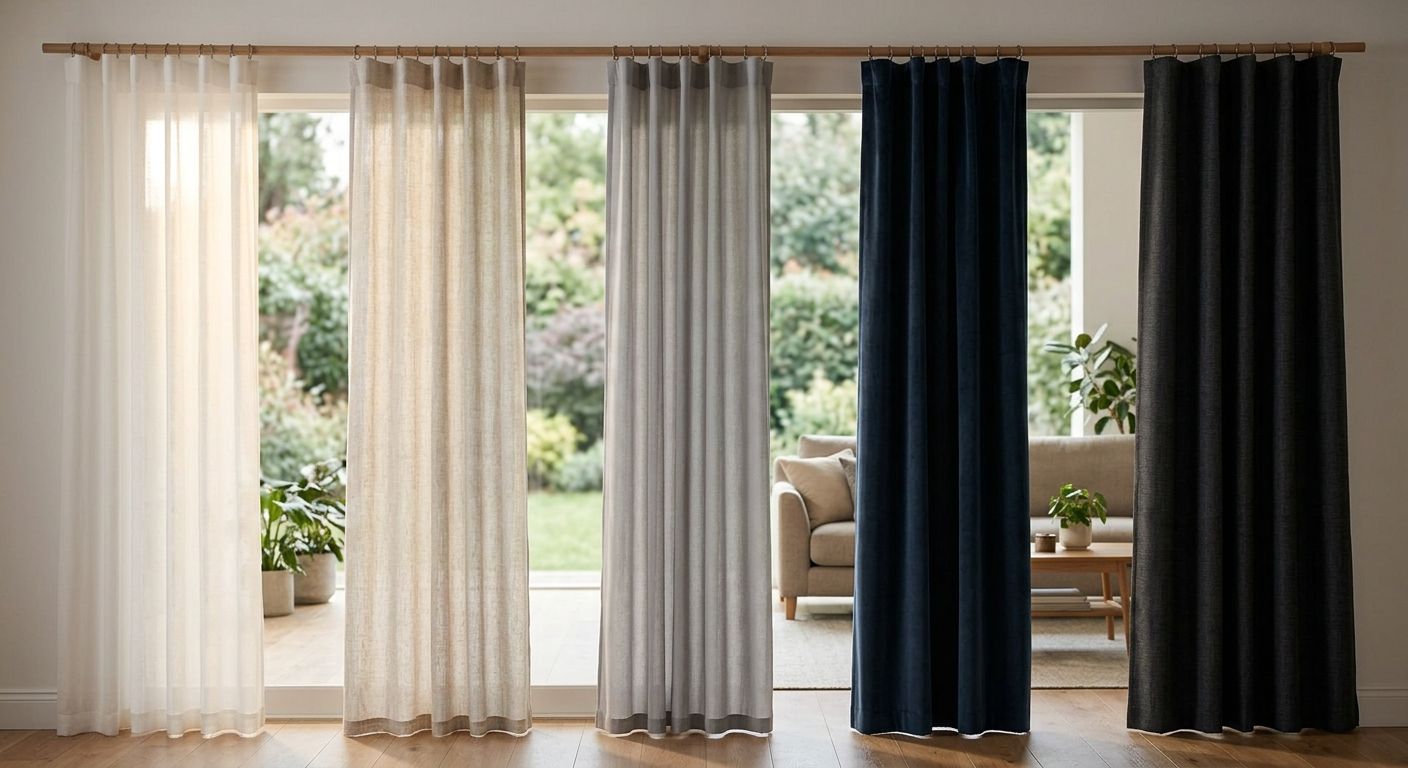
Best overall for total darkness: blackout curtains for bedrooms. Best for Riyadh's summer sun: heat-insulating curtains. Best for winter warmth and depth: velvet curtains. Best clean-line blockout for shared rooms: roller blinds. Best for scheduled control: motorized curtains. Best for filtered daylight without full block: linen curtains. Best for daytime privacy while keeping light in: sheer curtains.
- Blackout curtains for bedrooms win the 2026 ranking for total darkness and are the top pick for shift workers and kids' rooms.
- Heat-insulating curtains rank second for Riyadh homes fighting summer glare through south- and west-facing windows.
- Velvet curtains rank third: dense pile blocks light well and adds warmth in cooler months.
- Sheer and linen curtains sit at the bottom of the light-blocking ranking on purpose — they're built for filtered daylight, not darkness.
- Layering a sheer panel behind a blackout or velvet curtain closes the small gaps that single-layer fabric leaves at the edges.
Why this matters
Not every curtain in a Riyadh home needs to block every ray of sun. A majlis room wants daylight and privacy at once; a bedroom wants the room dark enough to sleep past sunrise in July. Ranking curtains by light-blocking performance only makes sense when you match the fabric to the room's job, not the other way around.
Getting this wrong is common: buyers pick a fabric because it looks good in a showroom photo, then find out in August that the bedroom still glows orange at 6 a.m. This ranking sorts curtain types in 2026 by how much light they actually stop, from full blackout down to sheer, so you pick once and get it right.
What makes a curtain block light well
- Fabric weight and density — heavier, tightly woven fabric blocks more light than lightweight or loosely woven cloth.
- Blackout lining — a dedicated lining layer, not just a dark color, is what stops light almost completely.
- Weave tightness — tight weaves like velvet and dense cotton blends leave fewer light gaps than open weaves like linen or voile.
- Color depth — darker, saturated colors absorb more light than pale or bright shades, even in the same fabric.
- Fit and overlap — panels that extend past the window frame and overlap in the middle stop the side and center light leaks that ranking tests usually miss.
- Layering — pairing a sheer with a heavier curtain adds daytime privacy without sacrificing the blackout layer's performance at night.
Curtains ranked by light-blocking performance: at a glance
| Curtain type | Best for | Standout feature | Key limitation |
|---|---|---|---|
| Blackout curtains | Bedrooms, night-shift sleepers | Dedicated blackout lining stops nearly all light | Can feel heavy or dark for daytime living rooms |
| Heat-insulating curtains | Riyadh's hot-facing windows | Blocks glare and heat load together | Not always full blackout on its own |
| Velvet curtains | Winter comfort, formal rooms | Dense pile blocks light and adds insulation | Heavier fabric needs a sturdy rod or track |
| Roller blinds | Living rooms, shared spaces | Clean, minimal blockout coverage edge-to-edge | Less texture and softness than fabric curtains |
| Motorized curtains | Smart homes, scheduled routines | Automated open/close on a blackout-lined panel | Depends on the lining chosen, not motion alone |
| Linen curtains | Villas wanting filtered daylight | Soft, breathable light diffusion | Not a blackout option even in darker shades |
| Sheer curtains | Majlis rooms, daytime privacy | Lets light in while softening visibility from outside | Blocks almost no light at all |
1. Blackout curtains: best curtains for bedrooms
Blackout curtains rank first for total darkness because the lining, not the outer fabric color, does the work of stopping light. A bedroom fitted with genuine blackout lining stays dark through a Riyadh summer sunrise, which matters for anyone sleeping past 6 a.m. or working night shifts.
Blackout curtains pros:
- Near-total light block when panels overlap and extend past the frame
- Works with almost any outer fabric or color, since the lining does the blocking
- Reduces outside noise slightly as a side benefit of the dense layers
- Suits kids' rooms and bedrooms that need consistent darkness year-round
Blackout curtains cons:
- Can feel too heavy or dark for rooms used during the day
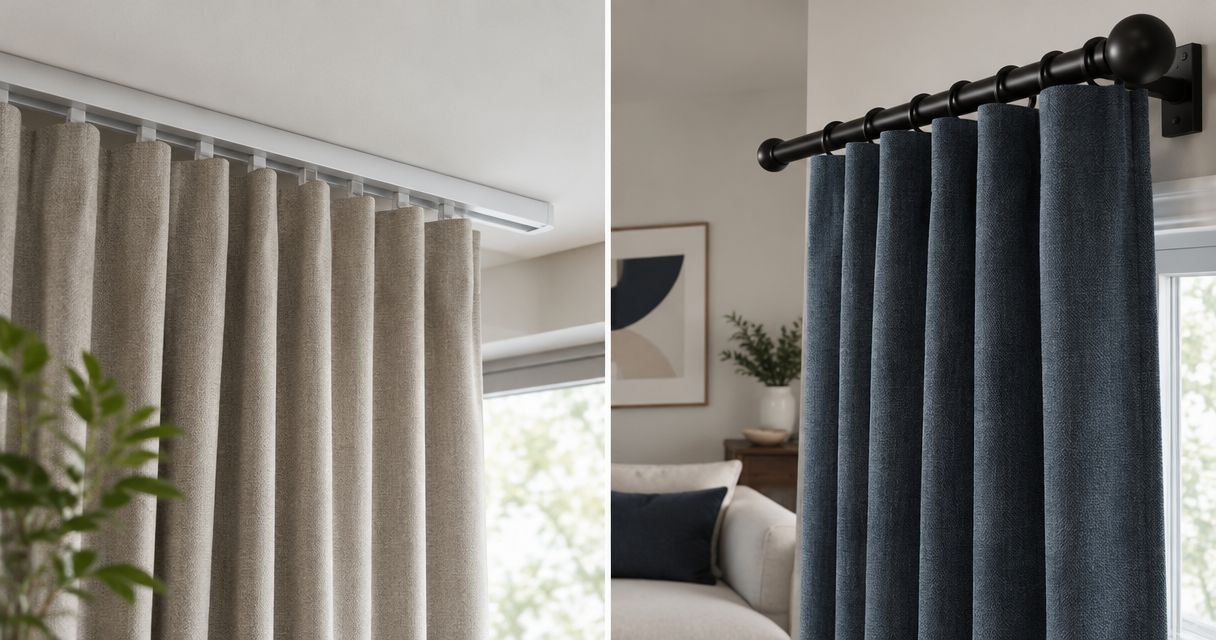
- Thicker panels need a stronger rod or track than lightweight fabric
Best for: bedrooms, kids' rooms, night-shift sleepers. Verdict: Buy if darkness is the priority.
2. Heat-insulating curtains: best for Riyadh's hot-facing windows
Heat-insulating curtains rank second because they combine light blocking with heat control, which matters more in Riyadh than in milder climates. A west-facing living room in June gets both glare and heat load, and this fabric type is built to cut both.
Heat-insulating curtains pros:
- Reduces glare and heat transfer through the glass at the same time
- Works well on large windows that take direct afternoon sun
- Pairs naturally with a sheer layer for daytime softness
Heat-insulating curtains cons:
- Not every heat-insulating fabric is full blackout on its own
- Best performance depends on correct sizing and overlap, same as any curtain
Best for: Riyadh homes with south- or west-facing windows. Verdict: Buy for hot-climate rooms.
3. Velvet curtains: best for winter warmth and depth
Velvet curtains rank third on the light-blocking scale because the dense pile weave naturally resists light better than lighter fabrics, even before adding a lining. In cooler months, the same density that blocks light also holds warmth in the room.
Velvet curtains pros:
- Tight, dense weave blocks a meaningful amount of light without extra lining
- Adds a formal, layered look to living rooms and majlis spaces
- Retains warmth in winter months better than lightweight fabrics
Velvet curtains cons:
- Heavier fabric needs a properly rated rod or track
- Can feel too warm or heavy for hot months without air conditioning support
Best for: winter comfort and formal rooms. Verdict: Buy for rooms that need warmth and light control together.
4. Roller blinds: best for clean blockout in shared spaces
Roller blinds rank fourth because a blockout roller fabric covers the window edge-to-edge with almost no gaps, which is harder to achieve with draped fabric panels. Living rooms and home offices that want a minimal look without sacrificing blockout performance suit this option well.
Roller blinds pros:
- Edge-to-edge coverage limits side-light leaks that curtains can struggle with
- Low-profile look suits modern living rooms and offices
- Easy to pair with a curtain panel for a layered finish
Roller blinds cons:
- Less softness and texture compared to fabric curtains
- Single blind covers one window; wide windows may need multiple units
Best for: living rooms, home offices, shared spaces. Verdict: Buy for a clean, minimal blockout look.
5. Motorized curtains: best for scheduled blackout control
Motorized curtains rank fifth on this list, not because they block less light, but because their light-blocking performance depends entirely on the lining and fabric chosen underneath the motor — the automation controls timing, not darkness. Pairing a blackout-lined panel with motorized tracks gives scheduled darkness without manual adjustment.
Motorized curtains pros:
- Opens and closes on a schedule, useful for consistent daily routines
- Works with blackout, heat-insulating, or velvet fabric to combine automation with strong light control
Motorized curtains cons:
- Light-blocking performance still depends on the fabric and lining chosen, not the motor
- Adds a mechanical component that ready-made curtains don't have
Best for: smart homes wanting scheduled control. Verdict: Buy if paired with a blackout or heat-insulating lining.
6. Linen curtains: best for filtered daylight, not full block
Linen curtains rank lower for light blocking on purpose — the open, breathable weave lets diffused daylight through even in darker shades. Villas that want a soft, airy feel during the day, rather than a dark room, suit this fabric.
Linen curtains pros:
- Soft, natural texture suits villa living rooms and dining spaces
- Diffuses harsh daylight into a gentler glow rather than blocking it outright
Linen curtains cons:
- Not a blackout option, even in heavier weaves or darker colors
- Needs a lining or a second panel if any darkness is required
Best for: villas wanting filtered daylight over darkness. Verdict: Hold unless paired with a blackout layer.
7. Sheer curtains: best for daytime privacy, lowest light block
Sheer curtains sit at the bottom of this ranking because that's their job — they're built to let light through while softening visibility from outside, not to darken a room. Majlis rooms that host guests during the day often use sheer panels alone, or layered in front of a heavier curtain for evenings.
Sheer curtains pros:
- Keeps rooms bright while reducing direct visibility from outside
- Pairs well with blackout, velvet, or heat-insulating curtains for a two-layer look
Sheer curtains cons:
- Blocks almost no light on its own
- Not suitable as a standalone bedroom curtain if darkness is needed
Best for: majlis rooms, daytime living spaces. Verdict: Skip as a standalone blackout solution — layer it instead.
How this ranking works
This order runs strictly on light-blocking performance against the criteria above: lining, weave density, color depth, and fit. It does not rank by price or style, which is why a plain blackout panel outranks a more decorative sheer curtain here even though both have a place in a Riyadh home.
“Ranking curtains by light blocking only works room by room — a bedroom and a majlis room are never chasing the same number.”
Which curtains should you choose in 2026?
If the room needs to go fully dark, blackout curtains are the default choice for 2026. If the window takes direct Riyadh sun for most of the afternoon, heat-insulating curtains do double duty on glare and heat. Velvet suits winter comfort and formal rooms, roller blinds suit a minimal shared space, and sheer or linen belong in rooms where daylight is the point, not the problem. Custom sizing and installation support make it easier to match the right fabric to the right window without guessing at overlap or drop length.
Ready to dress your windows?
Talk through fabric, lining, and sizing for your rooms.
FAQ
Which curtains block the most light in 2026?
Blackout curtains with dedicated blackout lining block the most light, followed by heat-insulating curtains and dense velvet fabric. Sheer and linen curtains block the least, since they're designed for filtered daylight instead.
Are blackout curtains better than heat-insulating curtains for Riyadh homes?
Blackout curtains block more total light, while heat-insulating curtains balance light and heat control together. A south- or west-facing room dealing with both glare and heat often benefits more from a heat-insulating fabric.
Do sheer curtains block any light at all?
Sheer curtains block very little light on their own; they're built to diffuse daylight and add daytime privacy, not to darken a room. Layering a sheer panel in front of a heavier curtain adds privacy without losing the darker layer's blackout performance.
Can velvet curtains work as blackout curtains?
Velvet's dense weave blocks a meaningful amount of light on its own, more than lighter fabrics, though it isn't identical to a dedicated blackout lining. Pairing velvet with a blackout lining gets closer to full darkness.
Do motorized curtains block less light than manual curtains?
No — a motorized curtain's light-blocking performance comes from the fabric and lining chosen, not the motor. A motorized track paired with blackout or heat-insulating fabric performs the same as a manual version of that fabric.
What curtains work best for a majlis room that needs both light and privacy?
Sheer curtains suit a majlis room that wants daylight and softened visibility during the day. Layering a heavier curtain behind the sheer adds an evening option without losing the bright daytime look.
Do roller blinds block light better than fabric curtains?
A blockout roller blind covers the window edge-to-edge with fewer gaps than draped fabric, which can leak light at the sides. Fabric curtains add texture and softness that a blind doesn't, so many rooms pair both.
Does curtain color affect how much light it blocks?
Darker, more saturated colors absorb more light than pale shades in the same fabric weight, but color alone doesn't replace a blackout lining. The lining and weave density matter more than color for full light control.
One last thing
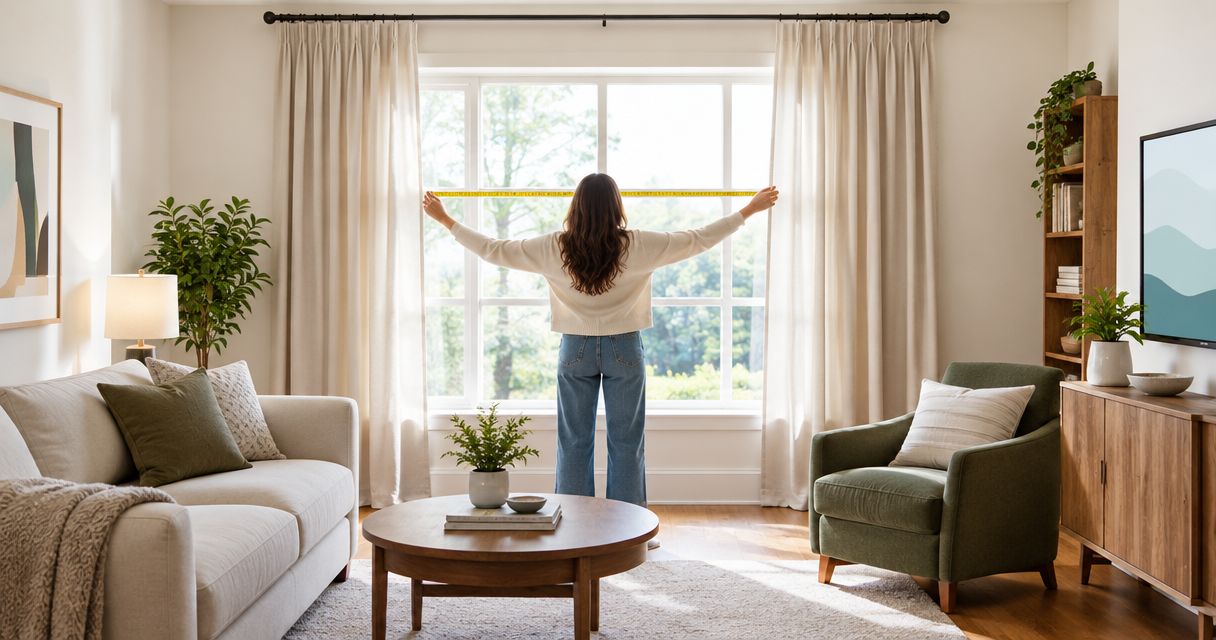
The fastest way to lose light-blocking performance on a genuinely good fabric is a bad fit — panels that stop short of the sill or don't overlap in the center leak light no matter how dense the lining is. Getting the measurement and overlap right at installation matters as much as the fabric choice itself.