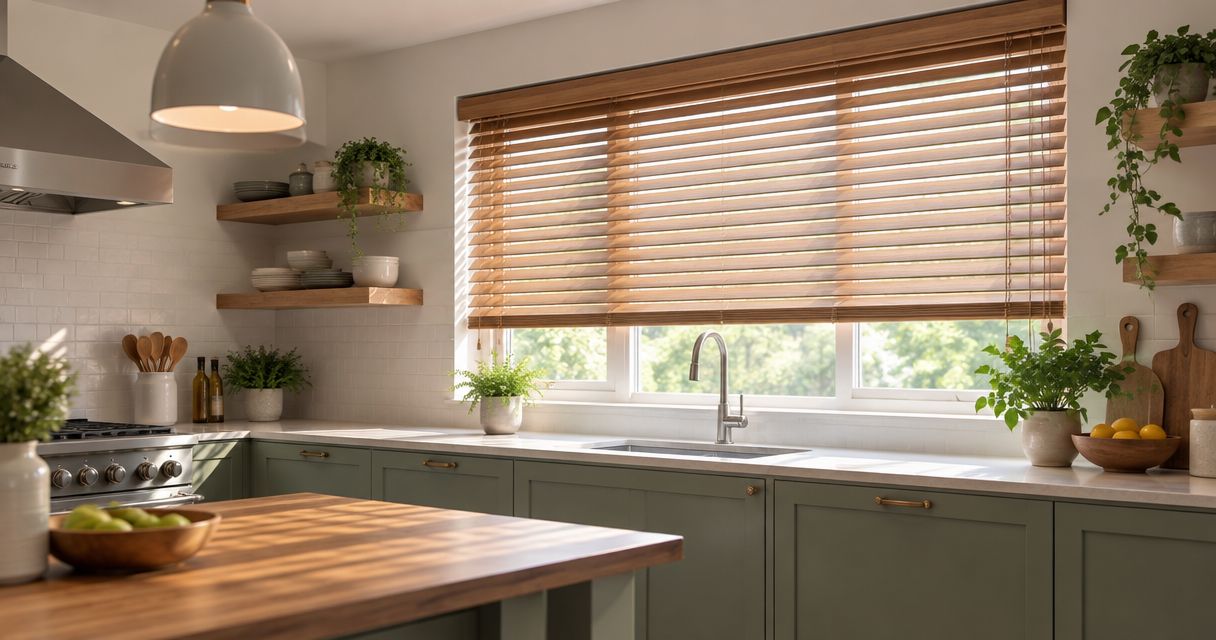
Wooden blinds warm up a Riyadh kitchen instantly, but slats near a sink or stove take a different kind of punishment than slats in a bedroom. This guide ranks the best wooden blinds for kitchens in 2026 by moisture resistance, slat width, and how easy each style wipes clean.
- Faux wood (PVC) blinds are the best wooden blinds for kitchens in 2026 near sinks and stoves.
- Wide-slat wood blinds fit large kitchen windows that need strong light control.
- Painted wood blinds match cabinetry tones without giving up durability.
- Stained natural wood blinds work only in dry kitchens kept away from steam.
Why this matters
A kitchen window sees more heat, grease, and steam than any other window in the house. Riyadh's dry outdoor climate and indoor air conditioning create their own humidity swings once the stove or kettle runs, and that swing is exactly what makes or breaks a wood slat.
Pick the wrong material and slats warp, discolor, or stick within a season. Custom curtains and blinds ordered through Curtain Store account for this from the start — measured to the frame, in a material rated for the room, not just the style.
What makes the best wooden blinds for kitchens
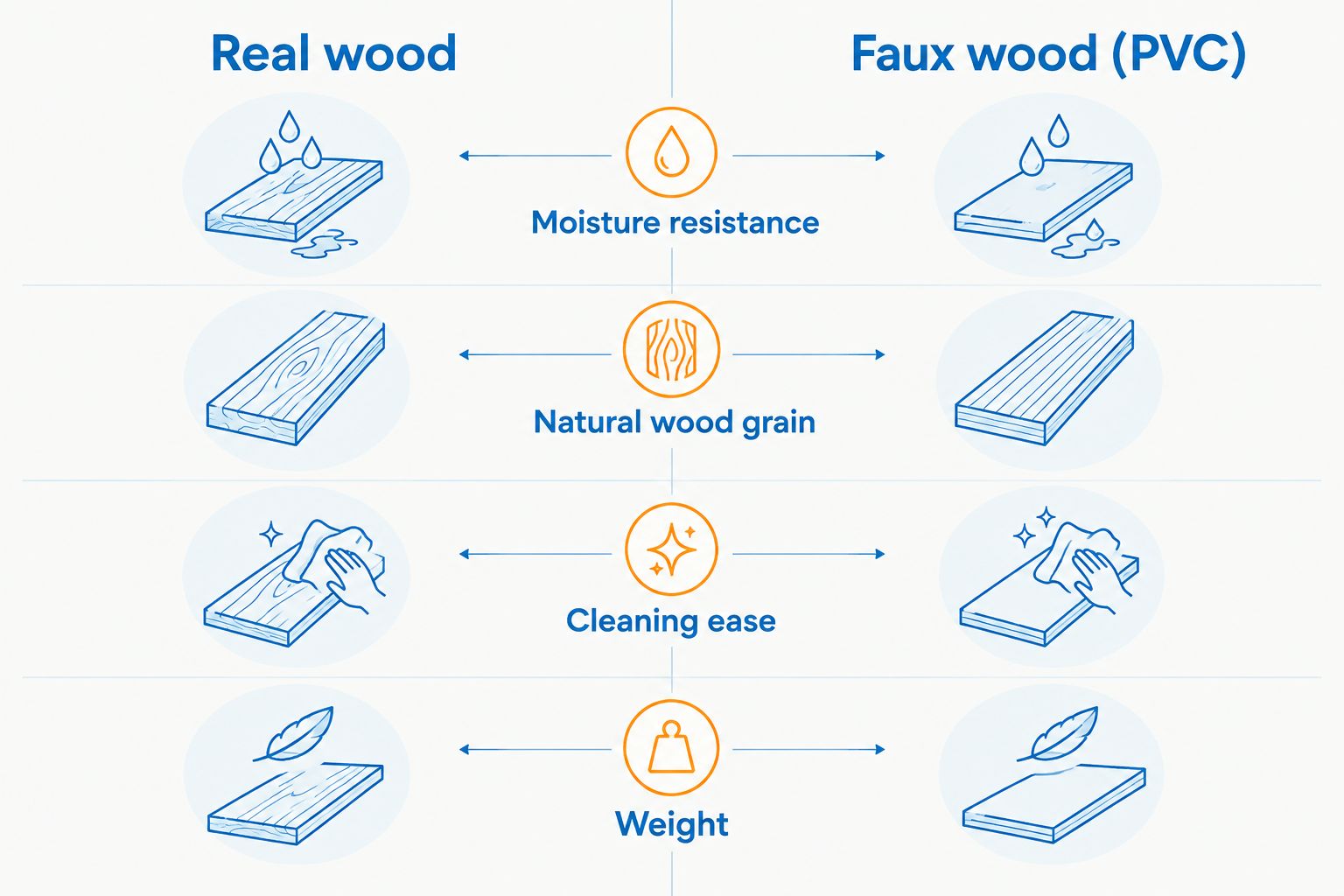
- Moisture and steam resistance — how the slat holds up near a sink, stove, or kettle
- Slat width — wider slats block more light on large kitchen windows; narrower slats suit smaller panes
- Cleaning ease — grease and steam settle on horizontal slats faster than on curtains
- Finish match — the wood tone or paint color needs to sit next to cabinetry, countertops, and tile without clashing
- Weight and mounting fit — heavier real wood needs a solid frame; lighter faux wood suits thinner window frames
- Warp resistance — repeated humidity swings from cooking are harder on wood than steady bedroom or living-room air
Best wooden blinds for kitchens in 2026 at a glance
| Blind type | Best for | Standout feature | Key limitation |
|---|---|---|---|
| Faux wood (PVC) blinds | Humid zones near sinks and stoves | Resists warping and moisture | Less natural grain texture than real wood |
| Painted wood blinds | Matching cabinetry and countertops | Wide color range on real wood | Paint can chip on frequently touched slats |
| Wide-slat wood blinds | Large kitchen windows | Strong light and privacy control with fewer slats | Bulkier stack when raised |
| Wood blinds with fabric tape | Eat-in kitchens wanting a softer look | Tape ladder hides the tilt mechanism | Tape fabric needs occasional dusting |
| Stained natural wood blinds | Dry, air-conditioned kitchens away from steam | Natural wood grain and warmth | Warps near direct steam or sink splash |
1. Faux wood (PVC) blinds: best wooden blinds for kitchens near sinks and stoves
Faux wood blinds are molded from PVC or composite material finished to look like painted or stained wood. The slats don't absorb moisture, so steam from a kettle or an open pot doesn't warp or discolor them the way it eventually does to real wood.
They mount and operate the same way real wood venetian blinds do, with a tilt wand or cord, and clean the same way too — a damp cloth wipes grease off in seconds. Curtain Store stocks faux wood (PVC) blinds ready-made and made-to-measure for Riyadh kitchens.
Faux wood (PVC) blinds pros:
- Handles steam and splashes without warping
- Wipes clean easily; grease doesn't soak into the slat
- Lighter than solid wood, easier on thin window frames
- Holds paint-like finishes without chipping the way painted real wood can
Faux wood (PVC) blinds cons:
- Grain pattern looks slightly less natural up close than real wood
- Slats can feel less premium to the touch than solid wood
Best for: kitchens with a sink or stove near the window. Verdict: Buy — the safest wooden blind material for the most humid spot in the house.
2. Painted wood blinds: best wooden blinds for kitchens for matching cabinetry
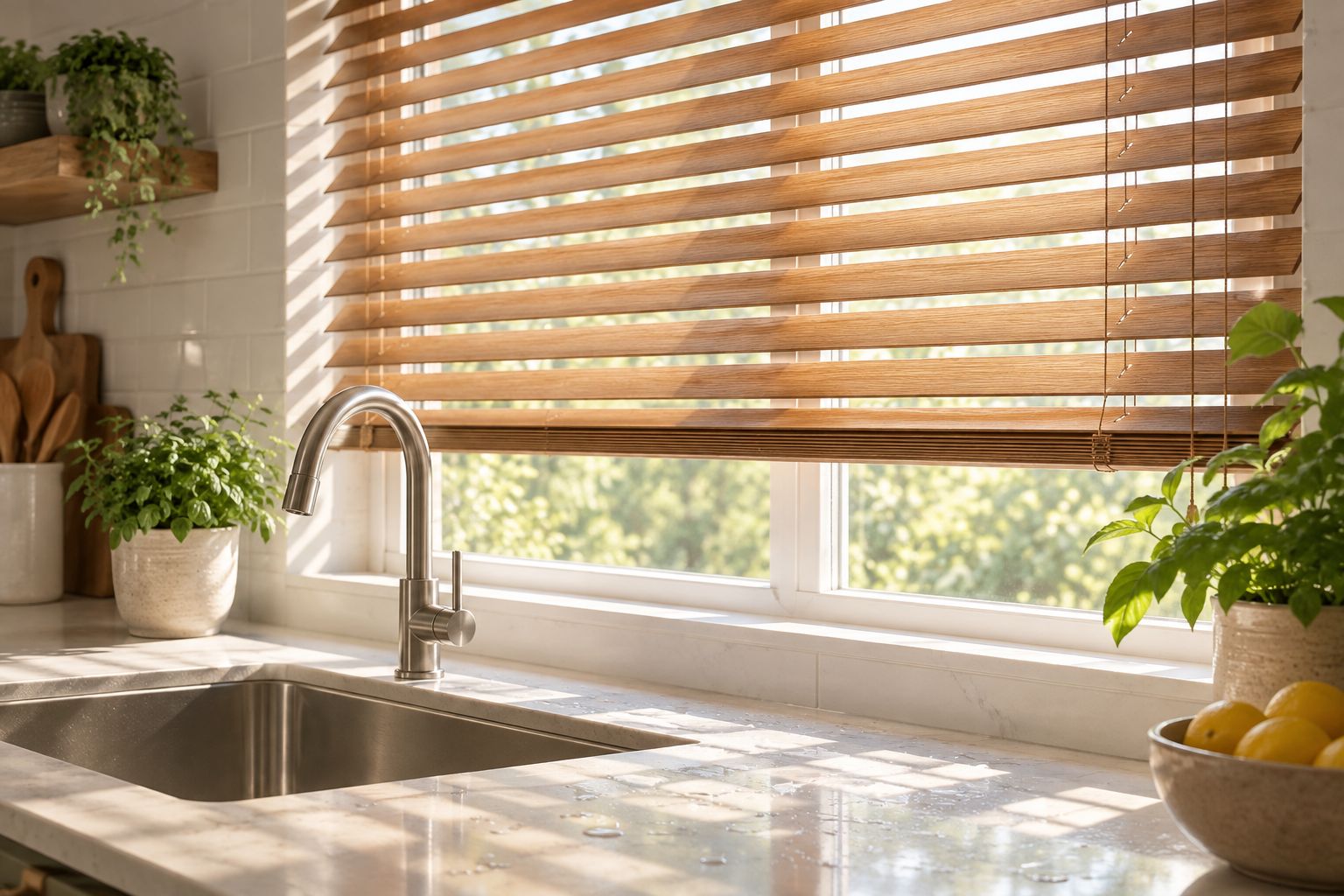
Painted wood blinds are real wood slats finished in a solid color rather than a wood stain. They give a kitchen the option to match blinds to cabinet doors, trim, or a specific wall color instead of working around a wood tone.
Because the base material is real wood, they carry the same moisture sensitivity as stained wood blinds — the paint doesn't change how the wood reacts to steam.
Painted wood blinds pros:
- Matches cabinetry and trim colors precisely
- Solid color hides dust and light stains better than pale wood tones
- Available in the same slat sizes as stained wood options
Painted wood blinds cons:
- Chips or scuffs on slats near a frequently touched cord or wand
- Still warps if placed close to steam or a sink
Best for: kitchens with painted cabinetry the blinds need to match. Verdict: Buy — for kitchens away from direct steam, with cabinetry to match.
3. Wide-slat wood blinds: best wooden blinds for kitchens with large windows
Wide-slat blinds use slats of roughly 63mm or wider, compared to the narrower slats common on bedroom or office blinds. Wider slats mean fewer slats overall across a large kitchen window, so the stack sits smaller when the blind is raised.
They give strong light and privacy control with a bolder look, which suits open kitchen windows facing a courtyard or street.
Wide-slat wood blinds pros:
- Fewer slats mean a smaller, tidier stack when raised
- Strong light block on large panes
- Reads as more architectural than narrow-slat blinds
Wide-slat wood blinds cons:
- Bulkier stack height when fully raised compared to narrow slats
- Less suited to small or narrow kitchen windows
Best for: large kitchen windows or sliding glass panels. Verdict: Buy — for oversized kitchen windows, in either real or faux wood.
4. Wood blinds with fabric tape: best wooden blinds for kitchens wanting a softer look
Tape blinds replace the usual cord ladder with fabric tape strips that hide the tilt mechanism between the slats. The fabric softens the overall look, closer to a curtain than a hard slat blind, while still giving the light control of a wood blind.
They work well in eat-in kitchens or kitchens open to a dining area, where the harder look of a plain slat blind can feel out of place.
Wood blinds with fabric tape pros:
- Softer, more decorative look than plain slat blinds
- Still gives full tilt light control
- Suits kitchens open to a dining or living area
Wood blinds with fabric tape cons:
- Fabric tape collects dust and needs occasional cleaning
- Not the first choice directly beside a stove where grease settles fast
Best for: eat-in or open-plan kitchens where the blind is also part of the dining view. Verdict: Hold — good for open-plan kitchens, not for a spot right beside the stove.
5. Stained natural wood blinds: best wooden blinds for kitchens kept away from steam
Stained wood blinds keep the visible grain of the wood, finished in a stain rather than a solid paint. They give the warmest, most natural look on this list, but the wood is untreated against moisture the way faux wood is.
They belong in kitchens where the window sits away from the sink and stove, and where air conditioning keeps humidity steady rather than swinging with cooking.
Stained natural wood blinds pros:
- Warmest, most natural wood grain look available
- Wide range of stain tones to match flooring or cabinetry
- No plastic look or feel
Stained natural wood blinds cons:
- Warps and discolors near steam or sink splash
- Heavier than faux wood, needs a solid window frame
Best for: dry, air-conditioned kitchens with the window away from cooking steam. Verdict: Wait — order this style only after confirming the window sits clear of steam and splash.
Need a second opinion on which material suits a specific kitchen window? Curtain installation in Riyadh covers measuring the frame and fitting the blind once the material is picked.
Ready to dress your kitchen windows?
Get help picking a wood or faux wood blind from Curtain Store.
How we ranked these wooden blinds
Every item on this list for 2026 is scored against the same six points from the criteria section above: moisture and steam resistance first, since that's what actually fails in a kitchen, then slat width, cleaning ease, finish match, mounting weight, and warp resistance under repeated humidity swings. Faux wood (PVC) blinds topped the list because they're the only material here immune to the number one kitchen failure mode — warping near steam.
Which wooden blinds should you choose?
For most Riyadh kitchens in 2026, faux wood (PVC) blinds are the default choice — they sit right above a sink or stove without the warp risk real wood carries. If the window is genuinely dry and away from steam, stained or painted real wood blinds bring a warmer look with no practical downside.
Curtain Store measures the frame before cutting any wood or faux wood blind, which matters more than the material choice on an oddly sized kitchen window — a blind ordered to the exact frame width closes gaps that a stock size leaves open on either side.
FAQ
What are the best wooden blinds for kitchens in 2026?
Faux wood (PVC) blinds are the best wooden blinds for kitchens in 2026 near a sink or stove, since the slats resist warping and moisture. Real stained or painted wood blinds work well only in drier kitchen spots away from steam.
Are real wood blinds safe to use near a kitchen sink?
Real wood blinds are not the safest choice directly above a kitchen sink, since repeated splash and steam warp and discolor the slats over time. Faux wood (PVC) blinds handle that same spot without the warp risk.
Is faux wood better than real wood for kitchen blinds?
Faux wood beats real wood on moisture resistance, which matters most in a kitchen, but real wood keeps a more natural grain look. The choice comes down to how close the window sits to steam and splash.
What slat width works best for kitchen windows?
Wide slats of roughly 63mm or more suit large kitchen windows because fewer slats mean a smaller stack when raised. Smaller or narrower kitchen windows generally look better with narrower slats.
Can wooden blinds be custom made to fit a Riyadh kitchen window?
Yes, wooden and faux wood blinds can be custom ordered to an exact window frame size rather than a stock width. Measuring the frame first avoids the light gaps a standard size leaves on an oddly sized window.
How do you clean wooden or faux wood kitchen blinds?
Faux wood blinds wipe clean with a damp cloth since the slats don't absorb moisture. Real wood blinds need a dry cloth or a wood-safe cleaner, never a soaking wet wipe, to avoid warping the grain.
Do wooden blinds work well paired with curtains in a kitchen?
Wooden blinds pair well with a lighter curtain or sheer panel for kitchens open to a dining or living area, giving light control from the blind and a softer look from the fabric. A plain slat blind alone suits a smaller, closed-off kitchen window.
How much do custom wooden blinds cost in Riyadh?
Cost depends on the slat material, window size, and finish chosen, so it varies window to window. Check current custom curtain costs in Riyadh for a breakdown of what affects the price.
One last thing
The kitchen window usually fails before any other window in the house — steam from a boiling pot reaches the glass faster than it reaches a bedroom or living-room window ever will. That single fact is why Curtain Store points most kitchen orders toward faux wood blinds first, and why real wood stays a fine choice everywhere else.