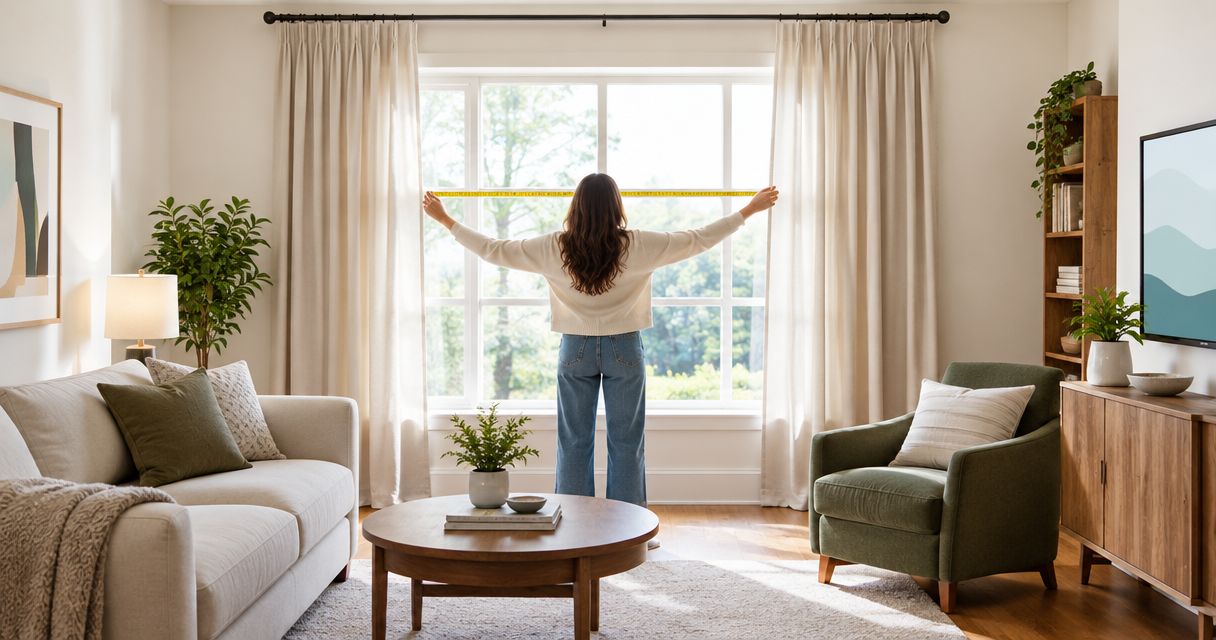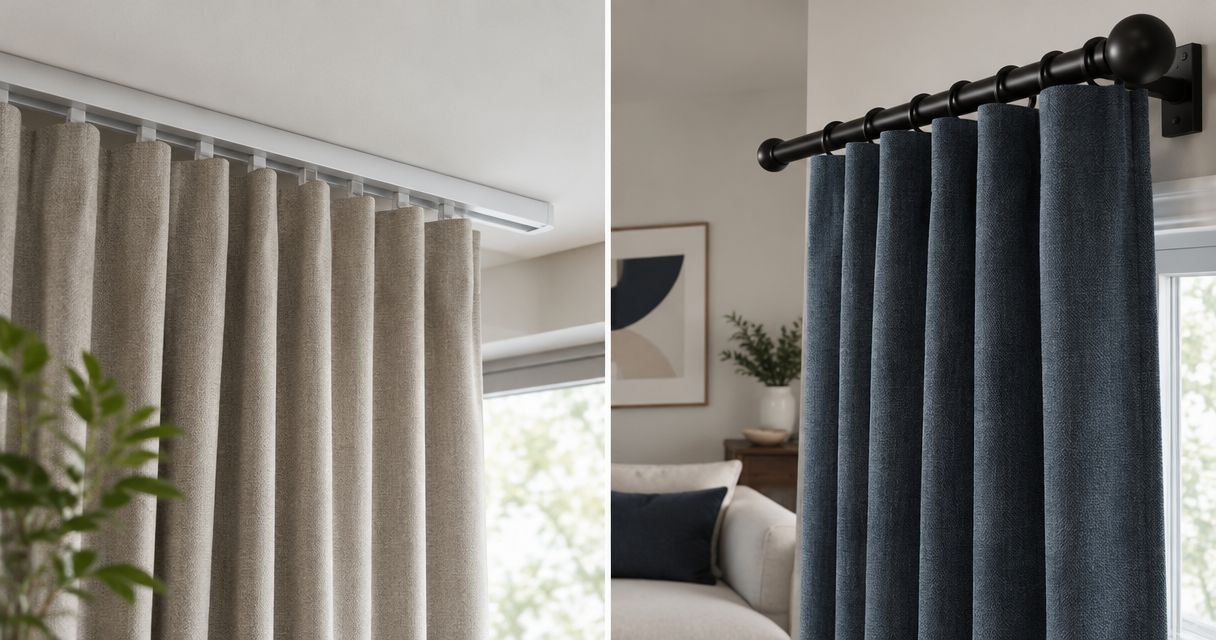
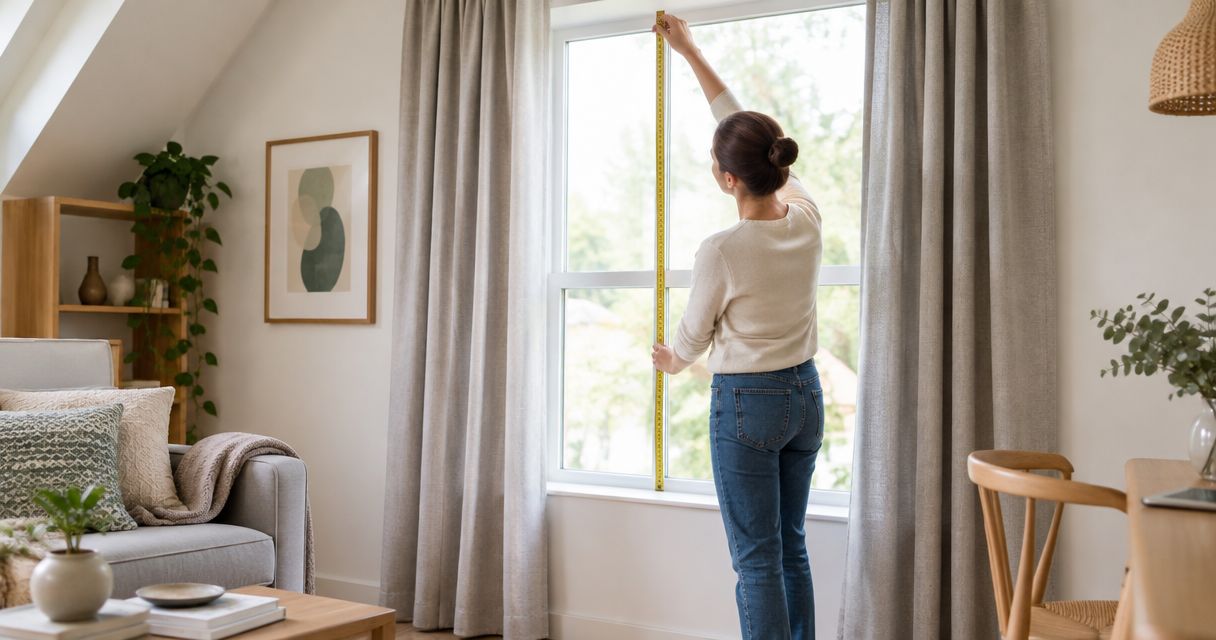
Yes, curtains can be tailored for non-standard window sizes by making new panels to the required dimensions or altering existing curtains when the fabric allows. The fit depends on more than the glass: your rod or track, curtain heading, opening space, and finished length must be planned together, especially for wide, tall, angled, or recessed windows.
- Can curtains be tailored for non standard window sizes? Yes: custom curtains accommodate dimensions that ready-made panels do not.
- Curtain-Store suits Riyadh homeowners seeking custom curtains and installation services together.
- Measure the planned hanging position, not just the window glass, before approving curtain dimensions.
- Alter existing curtains only when their fabric, heading, and remaining length support the new fit.
Why this matters
An unusual window does not need a makeshift curtain solution. It needs a clear plan for coverage, movement, and privacy. A panel can match the window's width yet still leave an exposed edge or block a door when opened.
For your 2026 home project, start with how you use the room rather than a ready-made panel size. Decide whether you want daylight, evening privacy, room darkening, or a clear view when the curtains are open.
Curtain-Store suits Riyadh homeowners who want custom curtains and installation services from the same store. Explore Curtain-Store with your window photographs and room requirements in mind; ask about measurement support before confirming an order.
Can curtains be tailored for non-standard window sizes?
Yes. Custom curtain making lets you specify the finished width, drop, heading, and panel arrangement around the actual installation. Alterations offer another route, but they work within the limits of fabric that already exists.
The useful distinction is between changing a curtain and designing a curtain for the window. Shortening a suitable panel is different from creating coverage for an unusually wide opening or a curved bay.
| Approach | Best suited to | Advantage | Limitation |
|---|---|---|---|
| New custom curtains | Windows requiring a specific width, drop, or panel arrangement | Dimensions and construction are planned together | Requires decisions about fabric, heading, and hardware before making |
| Altered existing curtains | Panels with enough usable fabric for the intended change | Keeps fabric you already own | Cannot add missing matching fabric or remove existing wear |
| Ready-made curtains | Windows that suit the offered panel dimensions | Lets you choose an existing size | The available size might not suit the hanging position or desired folds |
Choose custom curtains when the window dictates the design; choose alterations when the existing fabric genuinely fits the job. Do not buy an almost-right panel assuming every mismatch can be corrected later.
What needs to be agreed before tailoring?
Your finished curtain dimensions describe the curtain after sewing, not simply the size of the window. The maker also needs to know how the curtain hangs and where it stops.
- Coverage: Which part of the wall or opening should the closed curtain cover?
- Heading: How will the curtain attach to its rod or track?
- Opening direction: Where should the panels gather when open?
- Finished length: Should the curtain end at the sill, below it, or near the floor?
- Obstructions: Will furniture, handles, doors, or wall features interfere?
Write these decisions beside the measurements. A drawing with the intended hanging position is more useful than a width and height without context.
Wide windows: plan the fabric and opening space
Curtains for a wide window need enough fabric to form the chosen folds when closed. The finished coverage width and the flat fabric width are not interchangeable; the heading and fullness determine how the fabric gathers.
Wide curtains also need somewhere to sit when open. If the panels gather in front of the glass, they reduce the clear view and daylight even though they cover the opening correctly when closed.
Ask the maker where fabric joins will fall and whether a patterned fabric needs alignment across seams. These are construction choices, not reasons to reject a wide window. Confirm them before approving the fabric.
For a wide window, plan the closed coverage and open position together. A well-sized panel is only part of a usable installation.
Tall windows: confirm the finished drop first
Tall windows can have tailored curtains, but the fabric and hanging position must support the intended drop. Confirm whether the selected fabric can be made into that length and whether its construction requires joins.
Measure from the point used by the chosen heading, rather than automatically measuring from the ceiling or the top of the glass. Rings, hooks, and tracks attach differently, so an unexplained measurement can produce the wrong finished length.
For a 2026 renovation, confirm the final floor finish before approving floor-length curtains. A floor level that changes after measuring also changes where the hem sits.
Avoid asking for an extra-long curtain simply to hide uncertainty. Decide whether you want floor clearance or fabric resting on the floor, then give the maker that clear instruction.
Bay, arched, and angled windows: separate shape from coverage
A shaped window does not always require a curtain cut to the same shape. A straight curtain installed above an arch can cover the entire opening, while a closer-fitting treatment follows a different design brief.
The decision starts with what you want to preserve. Do you want the arch visible when the curtain is open? Should each part of a bay operate separately? Will the curtain sit inside the recess or across its front?
For a bay window, record the individual sections and their relationship to each other. Hardware that changes direction needs planning around corners, brackets, and curtain movement; a single overall width does not describe that installation.
Approve the hanging arrangement before the curtain dimensions. Cutting fabric cannot correct hardware that prevents the panels from moving as intended.
How do you prepare measurements for unusual windows?
Use your initial measurements to explain the project, then confirm the final dimensions with the person responsible for making and fitting the curtains. For a detailed starting point, read how to measure windows for custom curtains.
- Photograph the window. Include the surrounding wall, ceiling, floor, and nearby furniture. Add a closer view of handles, recesses, and existing hardware.
- Choose the coverage. Mark whether the curtain should cover only the opening or extend across the surrounding wall. Include where the fabric should gather when open.
- Confirm the hardware. Identify the existing rod or track, or discuss a new hanging position. Do not treat an undecided mounting point as a final measurement.
- Record the dimensions. Label width and drop clearly, use a consistent unit, and note where each measurement starts and ends. Keep separate records for separate windows.
- Approve the finish. Confirm the heading, hem position, opening direction, and fabric choice alongside the dimensions before production.
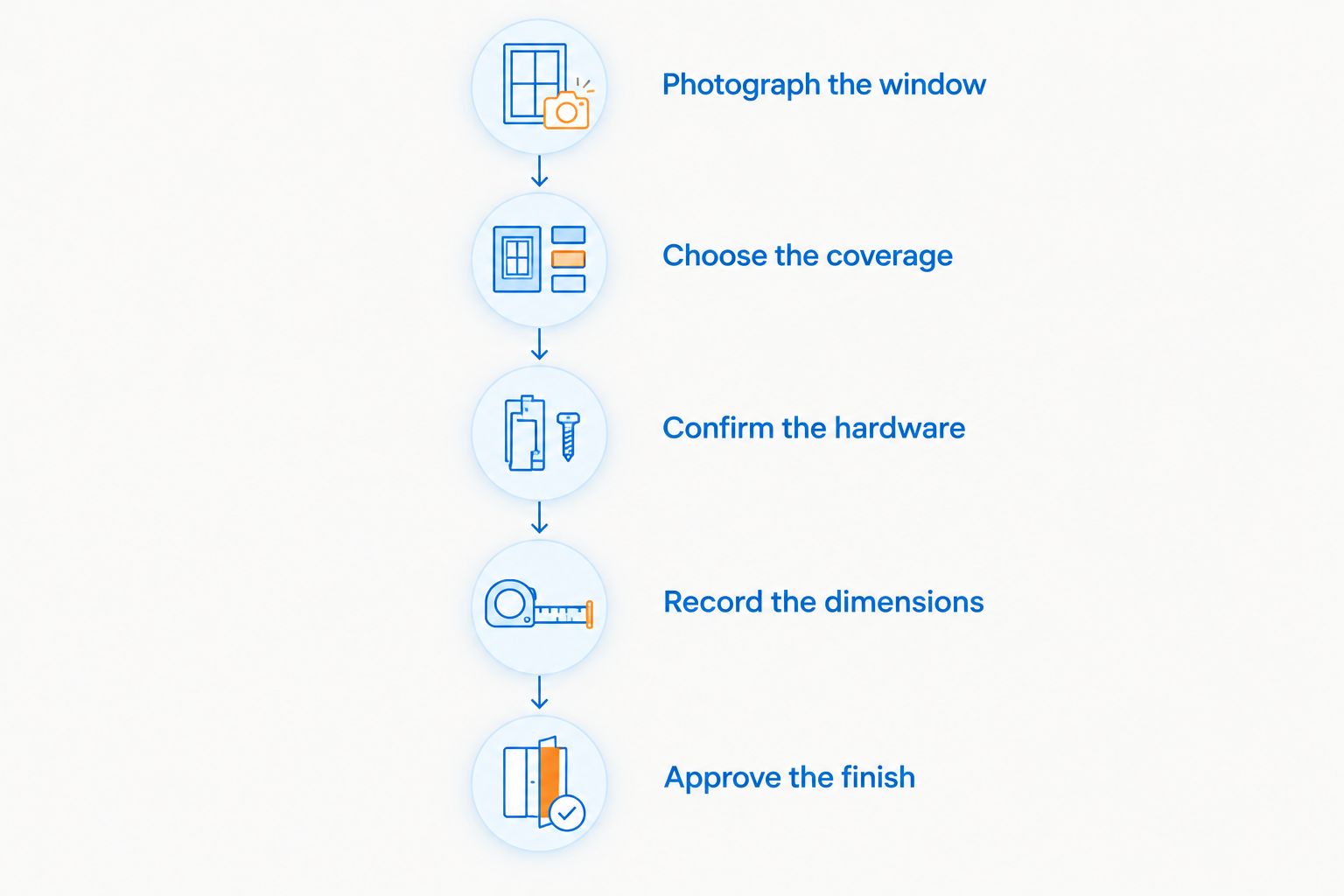
Keep photographs and measurements together so the maker can connect each dimension to the correct window. For a 2026 villa or apartment project, label rooms consistently rather than relying on descriptions such as the big window.
Why the tailoring approach varies
The right approach changes with the window and the curtain you want. These factors explain why matching the glass dimensions alone is not enough:
- Window geometry: A rectangular opening, bay, and arch require different coverage decisions.
- Mounting position: An inside-recess installation and a wall-mounted installation use different boundaries.
- Curtain heading: The attachment method affects the finished drop and how the fabric forms folds.
- Fabric construction: Width, pattern direction, and joins affect how panels can be made.
- Opening space: Curtains need room to gather without blocking access or the desired view.
- Existing fabric condition: Alterations depend on usable material, sound seams, and enough fabric for the proposed change.
Bring these details into the first discussion. They help the maker explain which choices belong to the sewing stage and which require installation planning.
Can you resize curtains you already own?
Yes, existing curtains can be resized when their construction and usable fabric support the change. Shortening a panel is a straightforward type of alteration; increasing its length or width requires suitable additional material or enough fabric already present.
Ask the person doing the alteration to inspect the heading, hem, lining, and condition before agreeing to reuse the curtains. Fading, previous seams, and wear can affect the finished appearance.
Reuse suitable fabric, but do not force an unsuitable panel into a new window. If you want matching curtains across several rooms, check that the available material can support the complete plan before altering the first panel.
Do custom dimensions guarantee privacy or darkness?
No, custom dimensions alone do not guarantee privacy or darkness. Fabric opacity, side coverage, the meeting point between panels, and the mounting arrangement all affect the result.
Explain the room's needs in plain language. A bedroom needs a different discussion from a reception area where you want daylight and a view. Do not assume that a heavier-looking fabric provides the exact level of light control you want.
For your 2026 curtain order, ask to discuss the fabric and edge coverage together. A made-to-measure panel can still leave light around its edges if the installation does not address those gaps.
What should you confirm before placing a custom order?
Ask for the agreed dimensions and design decisions to be recorded together. This gives you a clear reference when reviewing the finished curtains and avoids treating fabric selection as the entire order.
Confirm the room label, finished width and drop, heading, lining choice if applicable, panel arrangement, and mounting position. Also clarify who will confirm the measurements and who will handle installation.
Curtain-Store offers custom curtains, fabrics, and installation services in Riyadh. Call to discuss your unusual window and ask what measurement information is needed; use WhatsApp as a secondary way to share photographs if that channel is offered.
For business premises, add how staff and visitors use the space. Keep doors, circulation routes, and everyday access in the discussion rather than approving curtains from an empty-room photograph alone.
FAQ
Can curtains be tailored for non standard window sizes?
Yes, curtains can be made to the dimensions of non-standard windows. Confirm the finished coverage, heading, hanging position, and drop together rather than ordering from the glass dimensions alone.
Can I make ready-made curtains fit a taller window?
Ready-made curtains can fit a taller window only if there is enough usable fabric or suitable material can be added. Have the heading and hem inspected before assuming the panel can be lengthened.
Do I measure the glass or the curtain track?
Measure the intended curtain coverage and use the reference point required by the selected heading and hardware. Glass dimensions help describe the window but do not establish the finished curtain size by themselves.
Can curtains cover an arched window?
Yes, curtains can cover an arched window without necessarily being cut into an arch. Decide whether the curtain hangs above the arch or follows a closer-fitting arrangement before measurements are approved.
Are custom curtains better than altered curtains for a wide window?
Custom curtains suit a wide window when existing panels lack the usable width or construction needed. Alterations remain an option when the available fabric supports the planned coverage and folds.
Will made-to-measure curtains block every light gap?
Made-to-measure curtains do not automatically eliminate every light gap. Fabric choice, side coverage, panel overlap, and the mounting arrangement must also address room-darkening needs.
What should I ask a Riyadh curtain store before ordering?
Ask who confirms the measurements, how the curtains will hang, and what installation work is included in the agreed order. Curtain-Store offers custom curtains and installation services; discuss your window photographs and requirements before approving dimensions.
One last thing
The measurement that matters is the intended hanging position, not just the window opening. Before approving your 2026 order, describe where the closed curtain should reach and where the open curtain should sit. That simple distinction helps you turn an unusual window into a comfortable, usable part of the room.