
Curtains for bank branches in Riyadh are window coverings chosen to protect privacy, control daylight and keep customer areas comfortable. The right choice depends on what happens beside each window: a public waiting area, a desk where information is discussed and a staff room do not need the same treatment in 2026.
- For curtains for bank branches in Riyadh, choose coverings by room and sightline, not one style for every window.
- Curtain-store suits Riyadh bank teams seeking custom curtains, blinds and installation support from a local store.
- Use adjustable blinds where daylight changes; consider custom curtains where fit and a softer finish matter.
- Check privacy from outside and inside before approving any branch window treatment.
Why window coverings matter for bank branches
A bank branch serves people who need to find their way in, wait comfortably and speak without feeling exposed. Window coverings affect each of those experiences. An uncovered window can put a desk in view from outside; a fully closed curtain can remove useful daylight from a waiting area.
Treat privacy as a sightline question, not a fabric label. Stand where a customer stands, sit where an employee sits and look toward each window. Then decide what needs screening, what needs daylight control and what should remain open. Curtain-store offers curtains, blinds and window treatments for homeowners and businesses in Saudi Arabia, including custom and ready-made options with installation services.
For a Riyadh branch planning changes in 2026, the useful starting point is a room-by-room brief. It gives the person choosing fabrics, the person approving the appearance and the installation team the same picture of what each window needs to do.
How to choose curtains for a bank branch in Riyadh
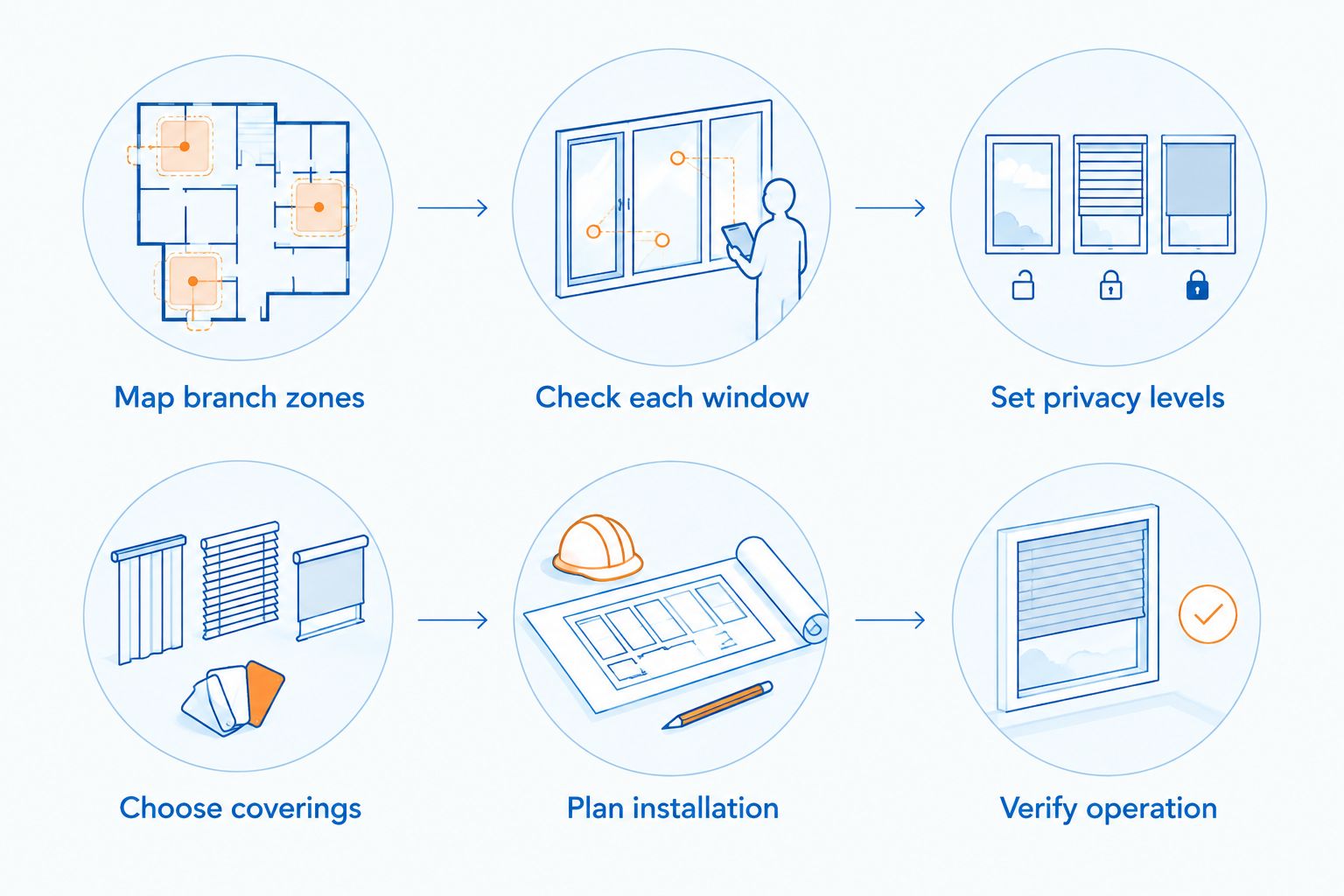
Move from the activity at each window to the covering that supports it. Map branch zones, check each window, set privacy levels, choose coverings, plan installation and verify operation. This order keeps an attractive fabric from becoming the answer to the wrong problem.
Map branch zones
Start with what people do beside each window. A waiting area needs a welcoming view and manageable daylight; a desk where private information is discussed needs careful screening from public sightlines. A staff space can have a different brief. Do not apply a single branch-wide curtain decision before you know which activities sit beside the glazing.
Walk the space during normal use and record where customers queue, wait and speak with staff. Include views from the entrance and outside, not just views from a desk. If a proposed layout changes, update the window brief before selecting a covering.
- Mark customer-facing and staff-only areas on a simple floor plan.
- Note where conversations happen beside windows.
- Identify windows visible from the street or entrance.
- Record which spaces need daylight while occupied.
Check each window
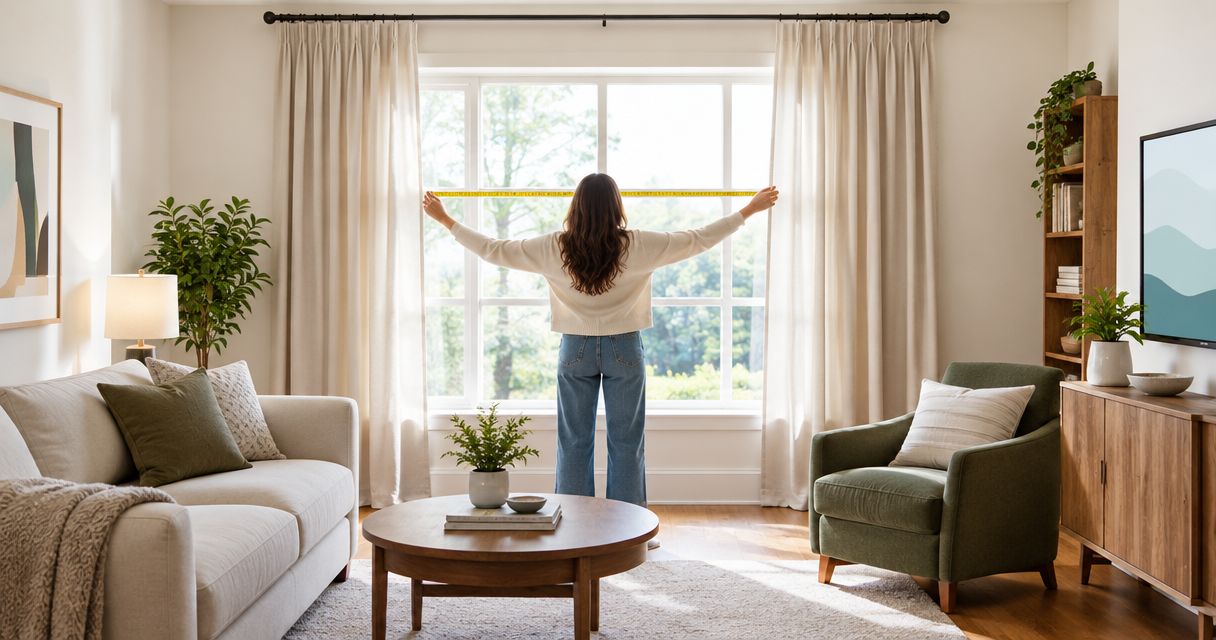
Measure the window opening and inspect the area around it before selecting ready-made curtains or requesting a custom order. The position of nearby furniture, doors and work surfaces affects how a covering can open. A curtain that looks right when closed still has to sit somewhere when pulled aside.
You can begin with your own measurements and photographs, then discuss the details with a curtain supplier before placing an order. Keep each window's notes separate. Similar-looking windows can call for different choices when their surrounding space or use differs.
- Record the opening and available space beside it.
- Photograph the window open and closed to daylight.
- Note nearby desks, seating, doors and fixtures.
- Identify where a curtain or blind would be operated.
Set privacy levels
Decide what must be hidden from each viewing position. Screening a waiting area from passersby is different from shielding a desk where documents or a screen are visible. Also check the view from within the branch: an internal customer walkway can expose a work area even when an exterior window is covered.
A fabric that softens a view is not automatically the right choice for information-sensitive work. Test proposed materials and positions against the actual sightline. For a desk that needs an outside view at times, an adjustable blind gives staff a way to change screening without treating every hour alike.
- Check views from the street, entrance and waiting seats.
- Check views toward desks when staff are seated.
- Separate daylight preferences from privacy requirements.
- Identify windows that need adjustable screening.
Choose coverings
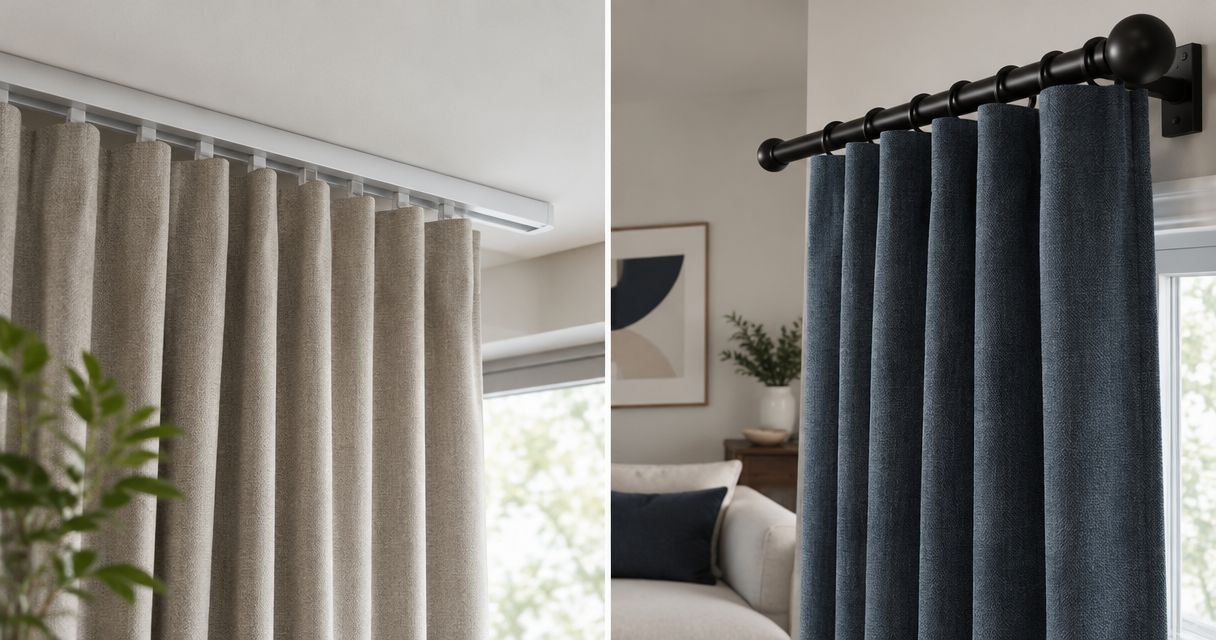
Match the treatment to the brief rather than matching every room to one fabric. Ready-made curtains suit a window when the available sizes and finish work for the space. Custom curtains suit openings or room requirements that call for a specified fit. Blinds offer another way to adjust light and sightlines; a layered treatment lets a room use a soft fabric and an adjustable covering together.
Start by comparing fabric samples and covering types against your window notes. Then discuss the custom options where the measurements, operation or desired finish make an off-the-shelf choice a poor fit. Curtain-store offers custom curtains in Riyadh alongside ready-made curtains and blinds; request details for the particular branch windows rather than assuming one option suits them all.
- Compare each covering in its open and closed positions.
- Check the view through any proposed fabric.
- Match the material's care needs to the room's use.
- Choose where adjustable light control matters.
Plan installation
Decide how the coverings will be fitted before approving the final selection. Ask how each one will be mounted and operated, and check whether that arrangement keeps entrances, furniture and working areas usable. A good-looking sample does not settle what happens when the full covering is installed.
Coordinate access with the branch team so installation work does not conflict with customer-facing activity. Curtain-store offers installation services, but the branch should confirm the scope and schedule for its own order. Keep the approved window list available to whoever checks the completed work.
- Confirm the covering selected for each window.
- Check the proposed mounting and opening position.
- Identify areas that need access during installation.
- Agree on who approves the finished fit.
Verify operation
Inspect the installed coverings while the spaces are being used as intended. Open and close each treatment. Look from the customer side and the staff side, then check the outside view where privacy is part of the brief. This final check catches problems a fabric sample cannot show.
Keep the findings specific: name the window, the viewing position and the issue. That makes a fit, operation or sightline concern easier to address than a general request to make the branch feel more private.
- Open and close every installed treatment.
- Check the view into customer and staff areas.
- Confirm nearby furniture remains usable.
- Record any window that does not meet its brief.
Compare covering options by branch use
There is no single winner for every bank branch window in Riyadh in 2026. Custom curtains suit windows where fit and fabric choice drive the decision; adjustable blinds suit windows that need frequent changes to daylight and sightlines. Ready-made curtains and layered treatments have a place too, but each has a limitation to check before ordering.
| Option | Suitable for | Main advantage | Key limitation |
|---|---|---|---|
| Ready-made curtains | Windows where an available size and finish fit the brief | A direct choice from existing styles | The available fit or finish may not suit every opening |
| Custom curtains | Windows needing a specified fit or selected fabric | The order can follow the individual window brief | Measurements and mounting details need approval before ordering |
| Adjustable blinds | Desks or waiting areas needing changes to light and sightlines | Staff can alter the covering's position | The selected position still needs a privacy check |
| Layered curtains and blinds | Rooms needing both a fabric finish and adjustable screening | Each layer serves a different purpose | More elements must fit and operate together |
A comparison table narrows the choice; it cannot replace a view from the actual desk or customer seat. If an option does not meet the room's privacy brief when someone is using it, move to another covering or change the proposed arrangement. Keep appearance and operation in the same decision.
For shared spaces, write down who is expected to adjust the treatment during the day. A covering that works only when someone remembers to close it needs a clear operating routine. That is a practical branch decision, not a claim about any fabric's performance.
Common mistakes bank branches make
Choosing one treatment for every room
Matching windows can make a branch look consistent, but matching use matters more. A waiting area and a desk used for private conversations have different sightlines. Set each room's brief first, then look for a consistent appearance among the options that meet it.
Judging privacy from a fabric sample alone
A sample does not show the full window, the edges of a finished covering or what someone sees from outside. Check the proposed treatment in the intended position. If privacy is essential, include the viewing position in the approval notes so everyone checks the same thing.
Forgetting the open position
A curtain or blind takes up space when opened. It can affect the view, the nearby furniture or how staff use the window area. Check both positions on the branch plan before confirming the fit.
Treating installation as a separate decision
The covering, mounting position and room layout need to work together. Confirm installation details while selecting the treatment, not after the fabric and window list are approved. For 2026 branch plans, make the person responsible for the space part of that review.
Skipping the finished sightline check
The purchase is not the final privacy test. Walk the branch after installation and compare each window against its brief. The useful verdict is whether the installed covering works from the positions people actually use.
FAQ
Which curtains work for a bank branch in Riyadh?
Choose curtains by the use and sightlines of each room. Custom curtains suit windows needing a specified fit, while ready-made curtains suit openings where an available size and finish meet the brief.
Are blinds or curtains better for a customer-facing desk?
Adjustable blinds suit a desk that needs changes to daylight and screening during use. Curtains suit a desk where a fabric finish and a clear open-or-closed position meet the privacy brief.
How do you check privacy before choosing branch curtains?
Look toward each window from outside, the entrance, waiting seats and staff work positions. Check the proposed covering in the positions in which it will actually be used.
Do all windows in a bank branch need matching curtains?
No; each window needs a covering that fits the activity beside it. You can choose a consistent appearance after confirming that every room's privacy and daylight needs are met.
When should a bank branch consider custom curtains?
Consider custom curtains when an individual window needs a specified fit or fabric selection. Confirm the measurements, mounting plan and intended operation before ordering.
Can a bank branch use curtains and blinds together?
Yes, a layered treatment can combine a fabric finish with adjustable screening. Check that both coverings fit the window and operate without interfering with the room's use.
What should the branch check after installation?
Open and close each covering and inspect its fit from customer and staff positions. Recheck any window whose privacy or operation does not match the approved brief.
One last thing
A branch can choose the right fabric and still miss the privacy goal if it checks only the view from inside. In 2026, put an outside-looking-in check on the approval list for every window where screening matters. It is a simple way to keep the finished choice tied to the reason it was ordered.
Curtain-store is a Riyadh-based option for businesses considering curtains, blinds and installation services. Bring the window notes and room brief when you contact the store, and ask which available approach fits each space. That keeps the conversation about the branch's needs rather than a single fabric.