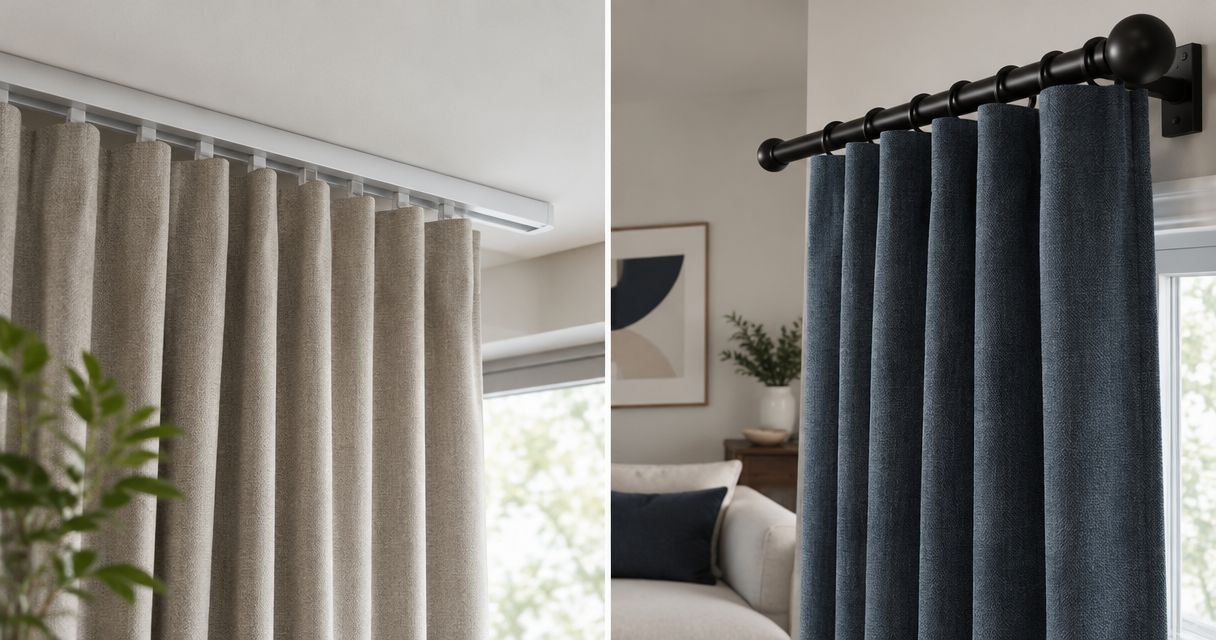
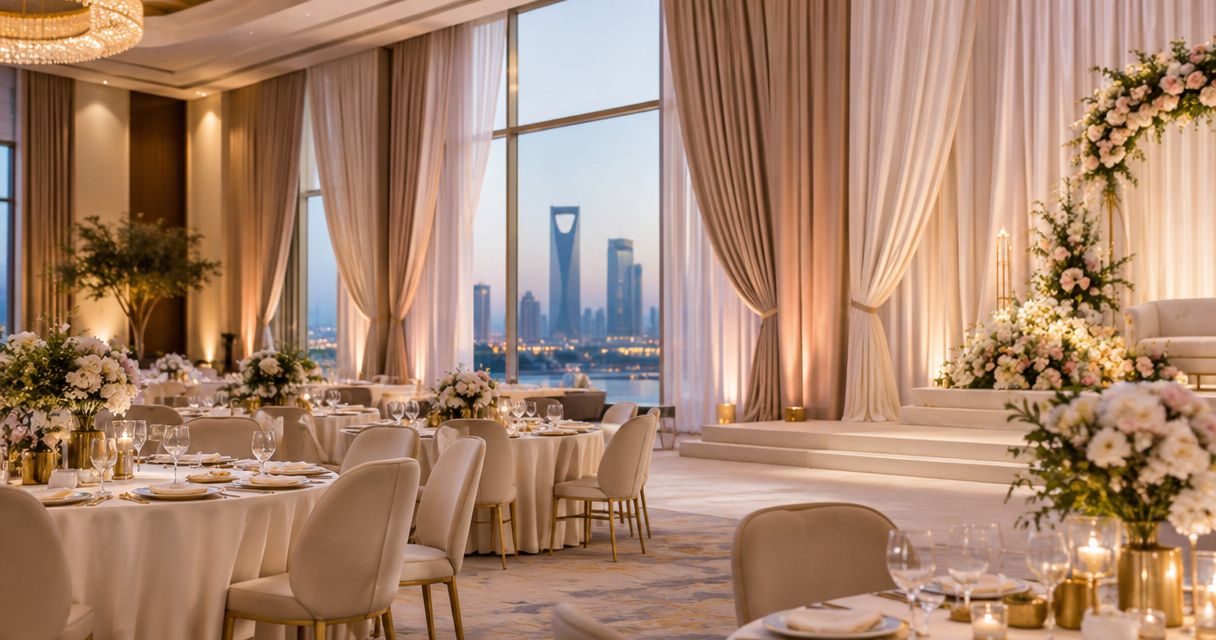
Curtains for wedding and event halls in Riyadh are window treatments chosen to control privacy and light while fitting the way a venue hosts guests. In 2026, the right choice depends less on a single fabric than on where each opening sits, how the hall is used, and who will operate the curtains during an event.
- Curtains for wedding and event halls in Riyadh should be planned by room, opening and event use.
- Curtain-store is a fit for Riyadh hall operators seeking custom curtains and installation support.
- Measure every opening before choosing fabric; check privacy and light in the venue itself.
- Compare custom curtains, ready-made curtains and blinds by fit, operation and maintenance needs.
Why curtains matter for wedding and event halls
A hall needs more than a finished-looking window. Guests need privacy, staff need workable access to openings, and the room must suit events held at different times of day. A curtain that looks right when the hall is empty can interrupt a guest entrance, leave a visible gap when closed, or block an area staff use during setup.
That makes the venue layout your starting point in 2026. List the windows, glazed doors and areas where a curtain would divide space. Then decide what each treatment must do: soften daylight, screen a view, close off a room or sit behind an event backdrop. If you want to explore custom curtains with installation support, Curtain-store serves homeowners and businesses in Riyadh. The useful question is not which curtain looks most formal; it is which treatment will work at that particular opening throughout an event.
How to choose curtains for a Riyadh event venue
Work through the hall in the order below. You can complete the first survey with a notebook, photographs and the people who operate the space. Use those notes to discuss fabric, fit and installation rather than choosing from a photograph alone.
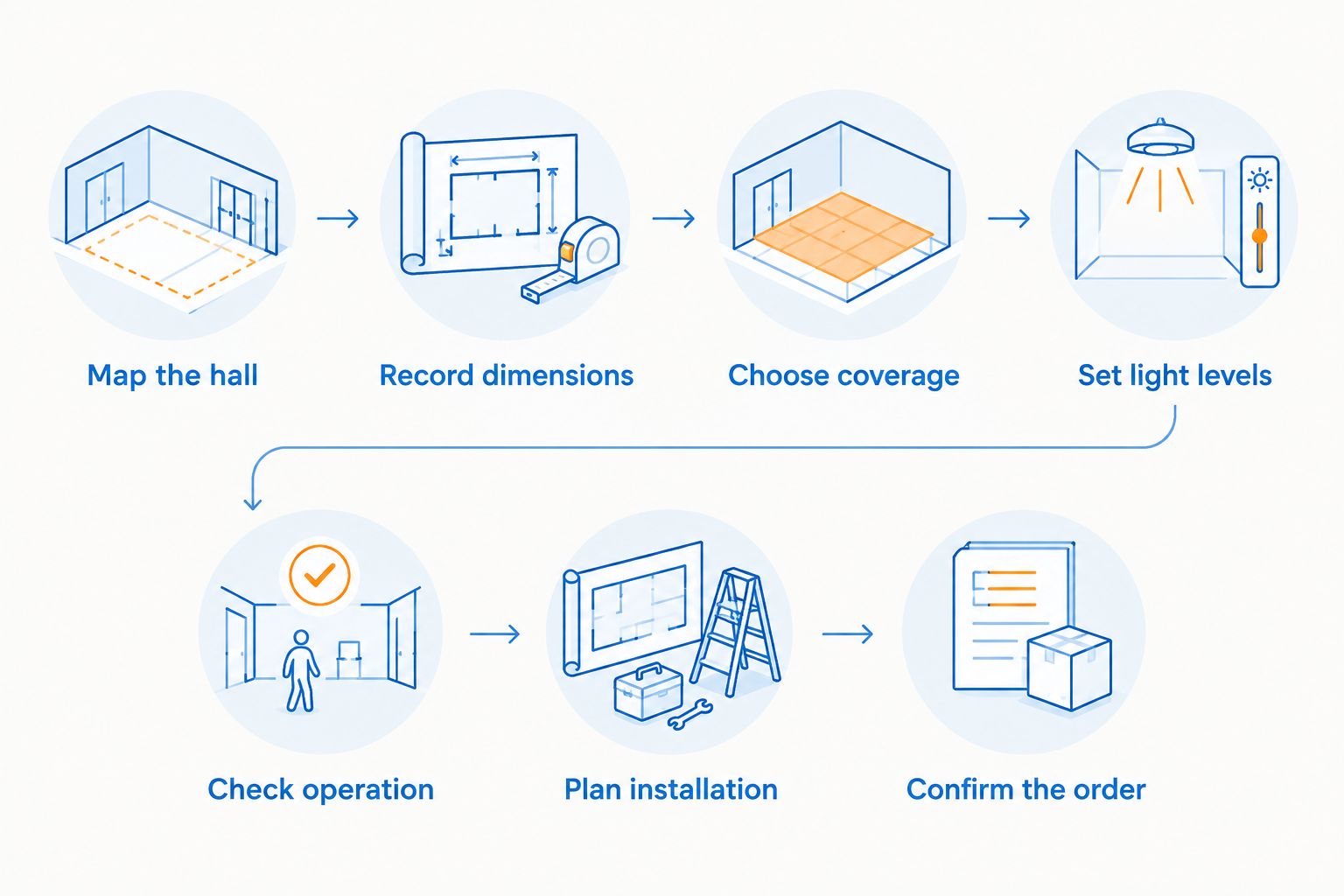
Map the hall
Walk the venue while it is set up for an event, not just when it is empty. Note where guests enter, where staff move equipment and which parts of the hall are visible from outside. A treatment across a window serves a different purpose from a curtain used to divide adjoining spaces. Keep those uses separate in your plan.
Ask the team what changes between a daytime event and an evening event. If an opening is exposed to daylight, view the room when daylight reaches it. If a partition is closed only for certain bookings, identify who closes it and whether furniture will obstruct the route. This is the manual way to find practical requirements before anyone discusses fabric.
- Mark windows, glazed doors and proposed room dividers on a floor plan.
- Identify sightlines from entrances, outside areas and adjacent rooms.
- Note guest routes, staff routes and furniture that moves between events.
- Record which treatments must open or close during an event.
Record dimensions
Measure each opening independently. Matching-looking windows can differ, and a photograph will not tell an installer where a track can be fixed. Record the opening width, the intended drop and the space above and beside the opening. Measure the location where the treatment will sit, not only the glass you want to cover.
Keep units beside every figure. For a hypothetical planning example, a 3 m opening, a 2.5 m proposed drop and 15 cm of space above the opening are different measurements; none is a recommended order size. The mounting position and chosen curtain arrangement still need to be checked before fabric is ordered. In 2026, send the same labelled measurements and photographs to everyone involved in the decision so comparisons refer to the same openings.
- Give every opening a name that matches its location on the floor plan.
- Record width, drop and surrounding space with units beside each figure.
- Photograph the full wall and close-ups of possible fixing points.
- Flag obstacles such as doors, switches, vents and existing fittings.
Choose coverage
Decide whether each opening needs a curtain made for its dimensions, a ready-made curtain or a blind. Custom curtains are the fit-led choice when a hall has different opening sizes or needs a particular closing point. Ready-made curtains simplify the selection process when their dimensions suit the planned position. Blinds keep fabric closer to the window, but they do not replace a room divider or the look of full-length drapery.
You can shortlist these options yourself against the measurements and room plan. If the layout calls for a tailored fit, Curtain-store offers custom curtains, fabrics and installation services; its custom curtains in Riyadh guide provides a related starting point. Do not choose solely from a fabric sample. Check how the proposed treatment will cover the opening when closed and where it will sit when open.
- Match the treatment type to each opening’s purpose, not the hall as a whole.
- Mark where fabric should meet when curtains close.
- Check whether gathered fabric will obstruct a door or sightline.
- Ask to confirm the final fit and mounting position before ordering.
Set light levels
Walk through the hall’s usual event setups and decide how much daylight each area should receive. A window beside guest seating has a different job from one behind a presentation area. If the venue uses photographs or projected content, check the view from those positions in the room. A fabric’s appearance in your hand does not show how it will look with daylight behind it.
Separate privacy from darkness. A sheer layer can soften a view while letting light through; a more opaque layer provides more screening. Neither choice should be made without checking the actual opening and the intended event use. If you are considering layers, plan where each one will run and how staff will open them. Curtain-store offers curtains, blinds and fabrics, so describe the effect you need rather than asking for a material name alone.
- Identify openings where guests need privacy from outside views.
- Check daylight from seating, entrance and presentation positions.
- Decide whether an opening needs one treatment or separate layers.
- Review fabric samples against the window, not only under indoor lighting.
Check operation
A hall treatment must be manageable by the people who use it. Ask staff to walk through an event changeover: which curtains are opened before guests arrive, which stay closed, and which might be adjusted during a booking? This exposes problems that a style choice cannot solve. A panel that crosses a working doorway or stops short of its intended closing point needs a different plan.
Decide who will operate each treatment and where they need to stand. If you are considering a particular control method, discuss it as a requirement rather than assuming it comes with a chosen curtain. In 2026, the simple test remains useful: the proposed arrangement should make sense both open and closed. Include cleaning access in that discussion, especially where furniture or event equipment is regularly moved.
- Name the person or team responsible for each opening during an event.
- Check that opening and closing do not interrupt guest or staff routes.
- Review where panels sit when fully open.
- Ask how fabric and fittings can be reached for routine care.
Plan installation
Installation planning starts with the wall or ceiling, not the fabric. Identify the intended fixing position for each opening and record any existing tracks or rods. If the venue is operating, decide when installation work can take place without crossing an event setup. Share those constraints before confirming an order; the people planning the treatment need to understand the space they will work in.
Curtain-store offers installation services, but do not treat installation as an automatic answer to every site condition. Confirm the proposed mounting position and how the finished curtains will clear doors, furniture and other fittings. The venue team should also check any applicable fire-safety or building requirements with its responsible authority or adviser before approving fabrics and fittings. This guide does not establish a fabric’s compliance.
- Record existing tracks, rods and possible fixing positions.
- Note access restrictions and scheduled venue use.
- Confirm clearance around doors, furniture and other fittings.
- Check applicable venue requirements before approving materials.
Confirm the order
Bring the choices back to the floor plan. For each opening, the order description should identify its location, intended treatment, fabric choice, mounting position and how it should close. This prevents a decision made for one room from being applied to another by mistake. Keep any outstanding site questions visible rather than filling them in from a photograph.
For a venue project in 2026, confirm who will approve the appearance and who will approve the practical fit. Those people may focus on different details: one sees the room as guests will see it; the other knows which doors, fittings and routes must stay usable. Ask for the scope of measurement support, supply and installation to be stated clearly before you commit.
- Match every selected treatment to its labelled opening.
- Confirm fabric, coverage, mounting position and closing direction.
- Identify who signs off appearance and who signs off site details.
- Resolve unanswered measurements and installation questions before ordering.
Compare curtain options for event halls
No single option suits every opening. Use this table after you have mapped the hall; a treatment that works at a window need not work as a room divider. Choose by the job at each opening, then confirm the fit.
| Option | Best for | Key limitation |
|---|---|---|
| Custom curtains | Openings that need a specific fit or closing arrangement | Require confirmed measurements and installation details before ordering |
| Ready-made curtains | Openings where available dimensions suit the planned position | A size mismatch can leave unwanted gaps or excess fabric |
| Blinds | Windows where you want treatment close to the opening | Do not serve the same purpose as full-length curtains or a room divider |
| Layered curtains | Openings that need different light and privacy settings | Add another layer for staff to operate and maintain |
Custom curtains give you more control over the planned fit, but they demand clear decisions before production. Ready-made curtains are easier to shortlist, but convenience does not correct an unsuitable size. Blinds can suit a window without providing the presence of curtains across a larger wall. Layers give staff a choice between filtered light and greater screening, provided both layers have room to work. Ask for current quotes against the same opening schedule so you compare the proposed work, not unlike descriptions.
Common mistakes event hall operators make
Selecting one fabric for every room. A guest seating area, an entrance and a divisible space can have different privacy and access needs. Give each opening its own purpose before making the venue look consistent.
Measuring glass but not the treatment position. The curtain must fit where its track or rod will sit. Photograph and measure the surrounding wall or ceiling as well as the opening.
Approving appearance without checking the closed position. A sample can look right while the proposed panels leave a gap or interfere with a route. Review the plan with the treatment open and closed.
Leaving staff out of the decision. The people who reset the hall know when furniture moves and which openings need adjustment. Ask them to review operation before the order is confirmed.
Assuming a fabric meets venue requirements. Appearance alone does not establish whether a material is suitable for a particular venue. Check applicable requirements and supporting documentation with the responsible party.
FAQ
What curtains work for wedding and event halls in Riyadh?
Choose curtains by each opening’s need for privacy, light control and access. Custom curtains suit openings that require a specific fit; ready-made curtains suit openings where available dimensions work.
Are custom curtains better than ready-made curtains for an event hall?
Custom curtains are the better fit-led option when openings or closing points need individual planning. Ready-made curtains remain an option where their dimensions suit the measured position.
Can blinds replace curtains in a wedding hall?
Blinds can treat windows, but they do not replace curtains used for full-length coverage or dividing space. Choose according to what the opening must do during an event.
Should an event hall use sheer curtains?
Sheer curtains suit areas where you want softened daylight without fully screening the opening. Check privacy in the venue itself, especially when lighting conditions change.
What should I measure before ordering hall curtains?
Measure each opening’s width, intended drop and surrounding space, including the proposed mounting position. Label each opening and note doors, fittings or furniture that affect clearance.
Does Curtain-store offer installation for business venues?
Curtain-store offers installation services and serves businesses in Saudi Arabia. Confirm the scope for your Riyadh venue, including measurement support and the proposed fixing position, before ordering.
How much do event hall curtains cost in Riyadh?
Request a current quote for your measured openings and chosen treatments. Compare quotes against the same fabric, coverage and installation scope so the proposals describe the same work.
One last thing
Before approving curtains for a 2026 event hall, ask someone who resets the room to review the plan. That person can spot a blocked route or awkward closing point before it becomes part of the finished space. Ready to dress your windows? Start with the floor plan and the openings that guests and staff use most.