Yes, blackout curtains can soften some outside noise, but their blackout label describes light blocking—not proven sound insulation. They can also reduce reflections inside your room; persistent traffic rumble, vibration, and sound entering through window gaps need attention beyond the curtains.
- Do blackout curtains reduce outside noise too? Partly, but light blocking does not establish acoustic performance.
- Heavy, lined curtains can soften room reflections; window gaps still let outside sound enter.
- Curtain-store suits Riyadh homeowners seeking custom window treatments with installation support.
- Choose bedroom curtains for darkness and privacy; request acoustic test evidence before expecting noise reduction.
Do blackout curtains reduce outside noise too?
Blackout curtains can help a room feel less echoey, but they are not a substitute for sound-insulating windows. Sound absorption inside a room and sound insulation against outdoor noise are different jobs. A curtain can perform the first without doing much of the second.
For a custom curtain order in 2026, Curtain-store offers ready-made and custom curtains, fabrics, and installation services. Keep your light-control needs separate from your acoustic expectations when discussing the order.
| Option | Best suited to | Useful contribution | Main limitation |
|---|---|---|---|
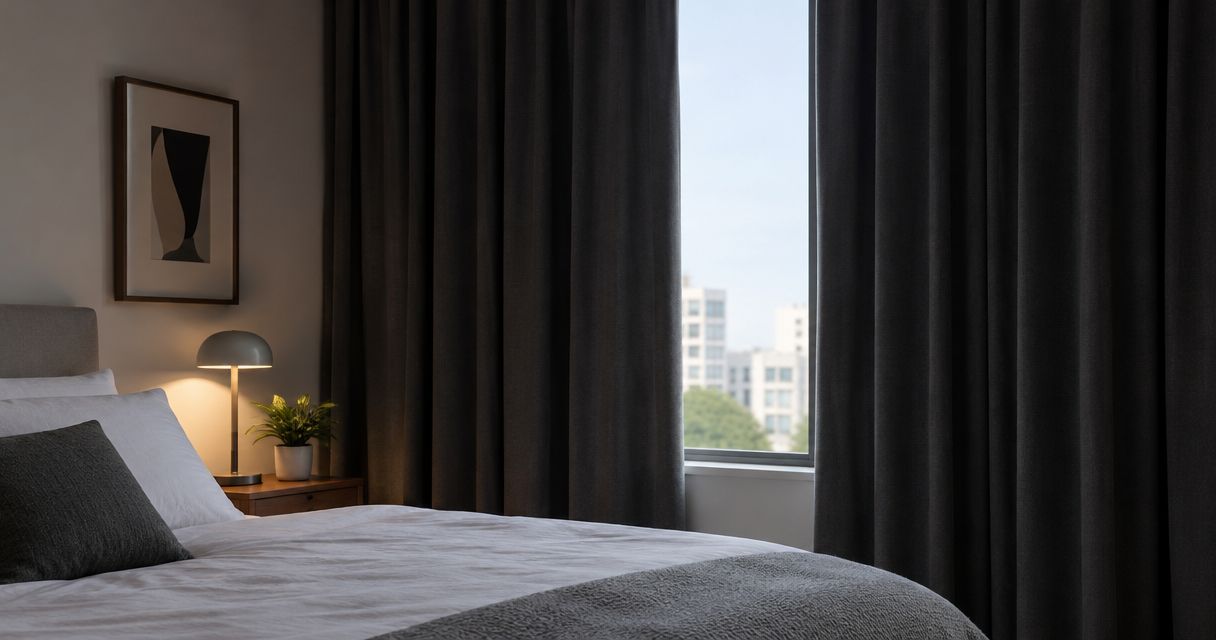
| Blackout curtains | Bedrooms needing darkness and privacy | Block light and add a soft surface | A blackout label does not establish noise reduction |
| Heavy, lined curtains | Rooms needing light control and less echo | Can absorb some reflected sound | Do not seal the window or stop structural vibration |
| Curtains with acoustic test evidence | Buyers with a specific acoustic requirement | Allow you to evaluate the performance actually tested | Absorption results do not necessarily show outdoor-noise insulation |
| Window seals and glazing assessment | Rooms where noise enters at the window | Address the sound-entry route | Curtains cannot replace repairs or changes to glazing |
Use this comparison to choose the right next step, not to assume a performance ranking. A curtain described as acoustic still needs evidence showing what was measured and how it was installed.
Why this matters
A bedroom can be dark and still noisy. If you buy blackout curtains expecting silence, the light-control benefit can be real while the noise problem remains.
For Riyadh homeowners, the practical decision is whether you want better sleeping conditions, fewer room reflections, or less street noise entering the building. Those goals overlap, but they require different checks. Start with the problem you hear rather than the fabric name you like.
The same distinction matters in offices and meeting rooms. Curtains can help soften an echoey space, but they do not make confidential conversations inaudible outside it. Choose curtains for comfort; assess the building for sound isolation.
Light blocking and sound blocking are different
Blackout fabric prevents light from passing through the material. Its construction can include a lining, coating, or fabric structure designed for that purpose. None of those features, on its own, establishes how much outdoor sound the finished curtain stops.
Sound behaves differently. It can pass through glazing, travel through gaps around a frame, and reach your room through other parts of the building. Closing a curtain does not create an airtight barrier around those routes.
There is another effect you can notice: a soft curtain absorbs some sound that would otherwise reflect from hard surfaces. Voices and other sounds inside the room can feel less sharp or reverberant. That improvement is useful, but it does not prove that less traffic noise crossed the window.
For a 2026 purchase, read blackout and acoustic descriptions separately. A light-blocking claim answers whether the fabric darkens your room. An acoustic claim needs to explain whether it concerns absorption, sound transmission, or the complete installed assembly.
Heavy, lined curtains: useful for softer room acoustics
Heavy, lined curtains are suited to rooms where you want darkness and less echo together. Their benefit depends on the fabric construction, the area covered, the folds, and the way the curtains hang. Weight alone is not a reliable acoustic rating.
A lined curtain adds material at the window, while folds create more fabric surface than a flat panel. These features can contribute to sound absorption. They do not turn the curtain into a sealed wall, and you should not attach a noise-reduction figure to them without test evidence.
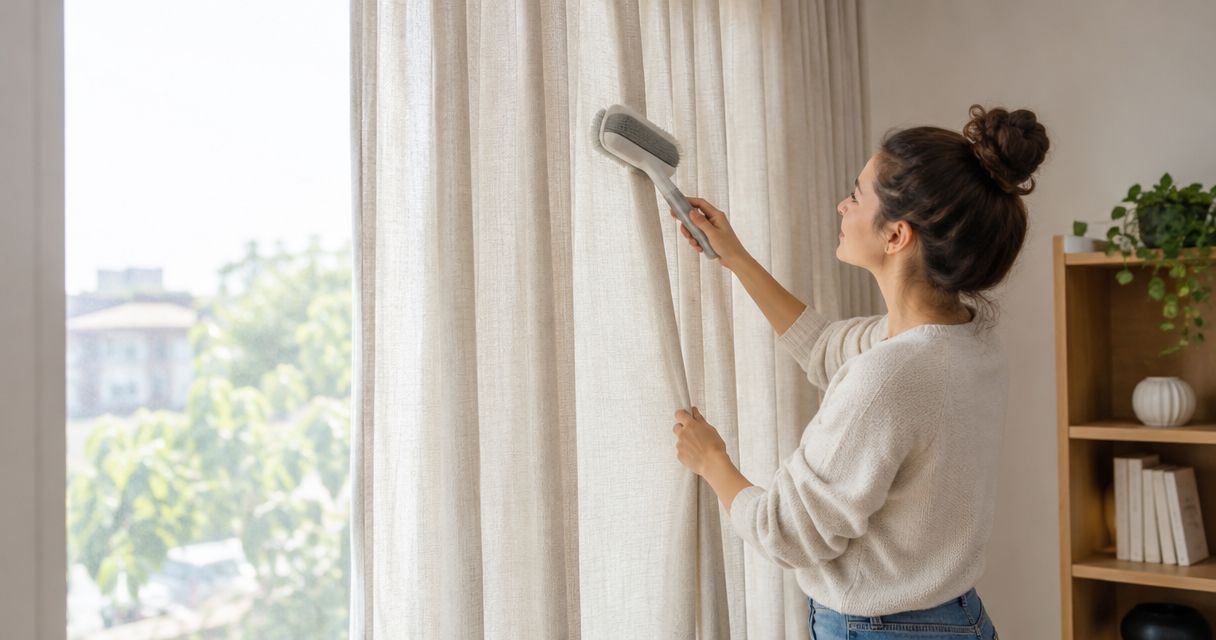
The trade-off is practical as well as acoustic. A substantial curtain needs suitable support, enough room to open, and a care method appropriate to its fabric and lining. Confirm those details before choosing material purely because it feels thick.
A comfortable bedroom balances darkness, privacy, everyday use, and manageable care. If curtains make the room more pleasant but passing vehicles remain audible, the curtains have not necessarily failed at their intended light-control job.
Acoustically tested curtains: check what the test proves
Curtains with relevant acoustic test evidence suit buyers who need a documented result rather than a descriptive label. Ask for the actual report or specification, not just a product description saying noise reducing or soundproof.
Sound absorption tests examine how a material absorbs sound under defined conditions. Sound transmission tests examine sound passing through a tested assembly. These are different measurements, so an absorption result cannot be treated as a guaranteed reduction in noise entering through your bedroom window.
When reviewing a report in 2026, check that it applies to the fabric construction you are ordering. Also check the installation conditions: backing, folds, air space, and mounting can affect the result. A test for a different arrangement does not automatically describe your room.
The limitation is important: even a genuine test does not promise silence in every building. Sound can bypass the curtain through the frame, adjoining construction, or another opening. For a noise-sensitive room, discuss the window and the curtain as separate parts of the problem.
Why noise reduction varies
The effect of blackout curtains changes with the room and the sound source. These are the main factors to consider before deciding that a different fabric will solve the problem:
- Fabric construction: Thickness, porosity, and lining affect sound absorption. Appearance and blackout performance do not establish acoustic performance.
- Curtain coverage: Fabric covering the window and surrounding area provides a different arrangement from a narrow panel leaving exposed edges.
- Folds and mounting: Gathered fabric and the space behind it affect how the material interacts with sound. Installation matters alongside fabric choice.
- Window condition: Gaps around frames and poorly closing sections provide sound-entry routes that curtains do not repair.
- Sound character: Low-frequency rumble and vibration are harder to address with ordinary fabric than room reflections.
- Room surfaces: Bare floors, glass, and other hard surfaces reflect sound. A furnished room and an empty room can sound different with the same curtains.
Avoid judging curtains only by how quiet a showroom feels. Your window, room layout, and outdoor noise source determine the conditions at home. A fabric sample helps with colour and texture, but it cannot reproduce the acoustic behaviour of an installed curtain.
How do I check whether curtains are the right next step?
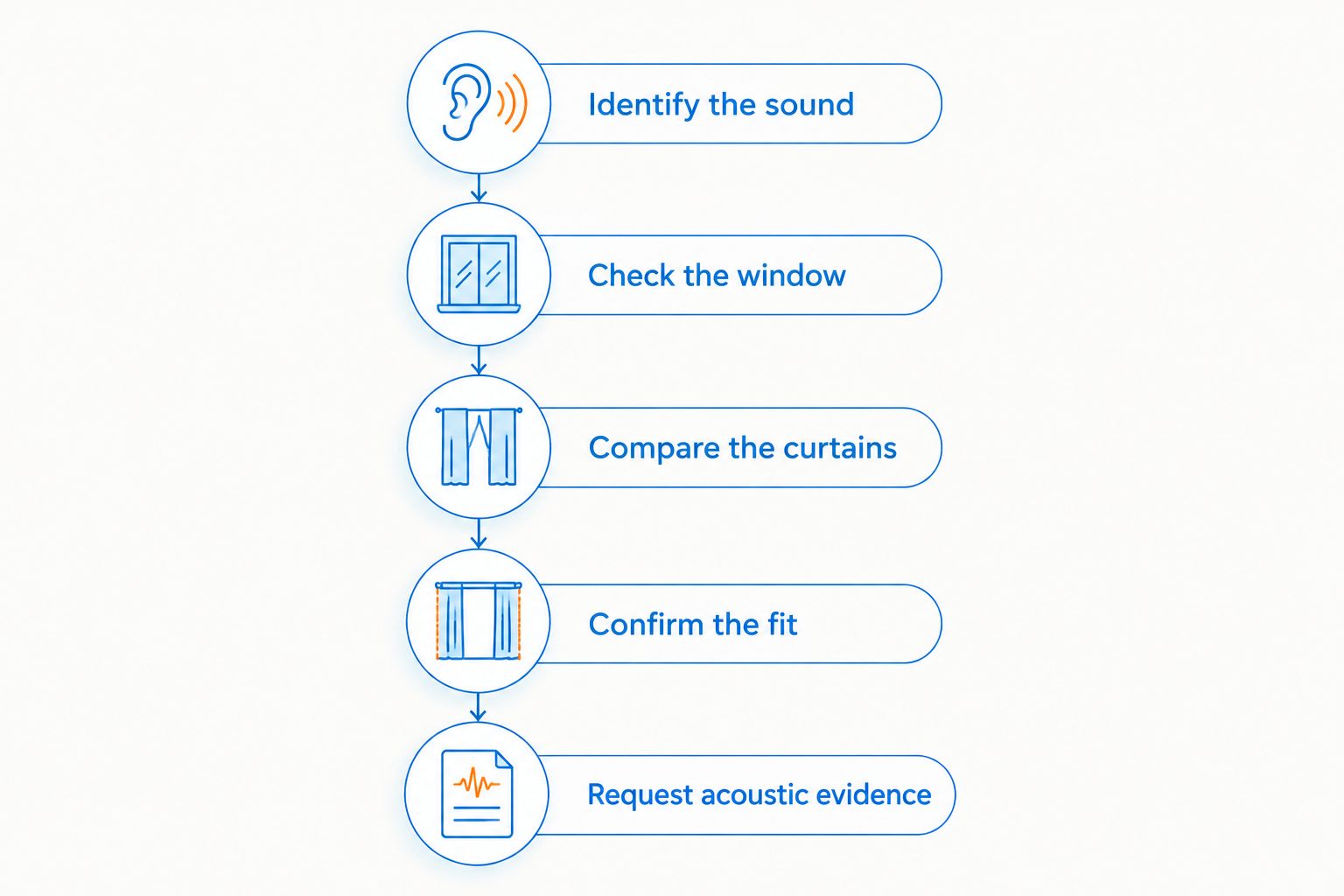
Before choosing fabric, make a simple observation of the room. You are looking for the likely sound route—not producing an acoustic rating. Keep the window position, room use, and other sound sources consistent when making comparisons.
- Identify the sound. Describe what bothers you: voices, traffic hiss, engine rumble, or vibration. Note whether it is a brief interruption or a continuing background sound.
- Check the window. Close it fully and inspect the frame and closing edges. If you see a damaged seal or a section that does not close properly, raise that with a window specialist.
- Compare the curtains. Listen with existing curtains open and closed under similar conditions. A softer room sound is useful evidence of a comfort change, not proof of a measured insulation value.
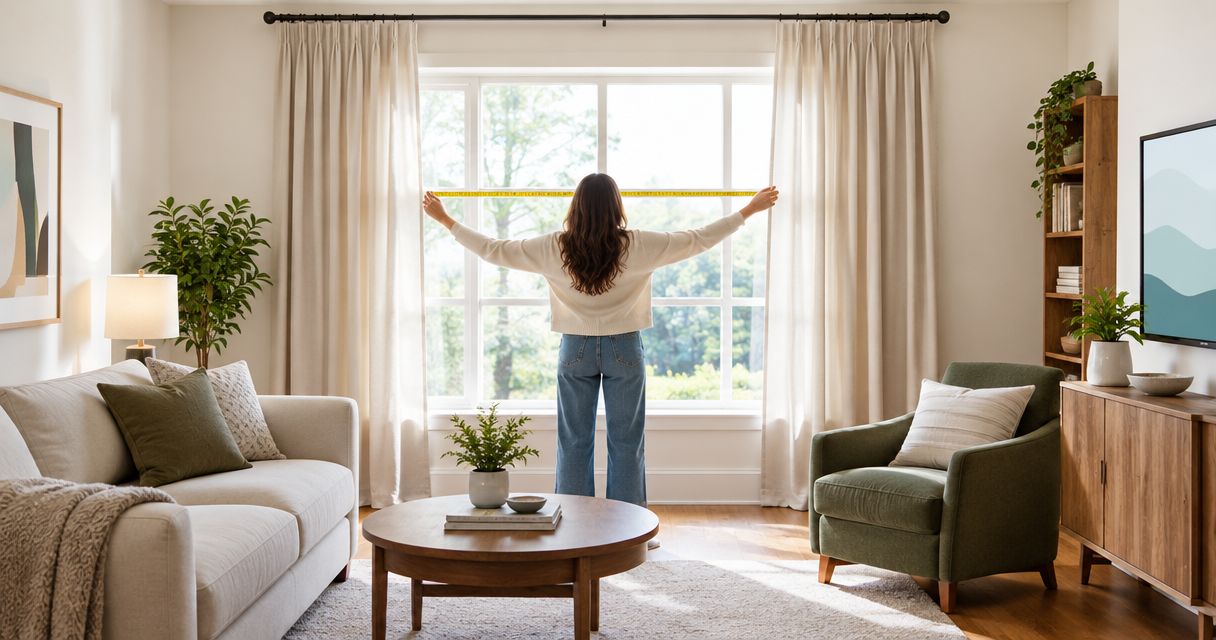
- Confirm the fit. Decide the curtain position, coverage, and opening space before final measurements. The fabric must suit the actual mounting arrangement.
- Request acoustic evidence. If reducing outside noise is essential, ask what evidence supports the proposed curtain and whether a window assessment is needed.
Your notes do not need technical language. A description such as traffic is audible even with the window fully closed gives the supplier more useful direction than asking for the thickest fabric.
For a closer look at fabric-led options, explore the guide to noise-reducing curtains for bedrooms. Use it alongside your window checks, not instead of them.
What should I discuss before ordering custom curtains?
For a custom curtain order in 2026, tell the supplier how you use the room and what you need the curtains to change. Lead with darkness, privacy, outside noise, or echo so each requirement gets a separate answer.
Curtain-store provides custom curtains and installation services for homeowners and businesses in Saudi Arabia. When discussing your order, ask how measurement and fitting will be arranged, which lining suits your light-control needs, and what evidence supports any acoustic claim.
Use this short conversation checklist:
- Explain whether the room is a bedroom, living area, office, or other business space.
- Describe the outside sound and whether it remains audible with the window closed.
- Ask how the curtain will cover the window and where it will sit when open.
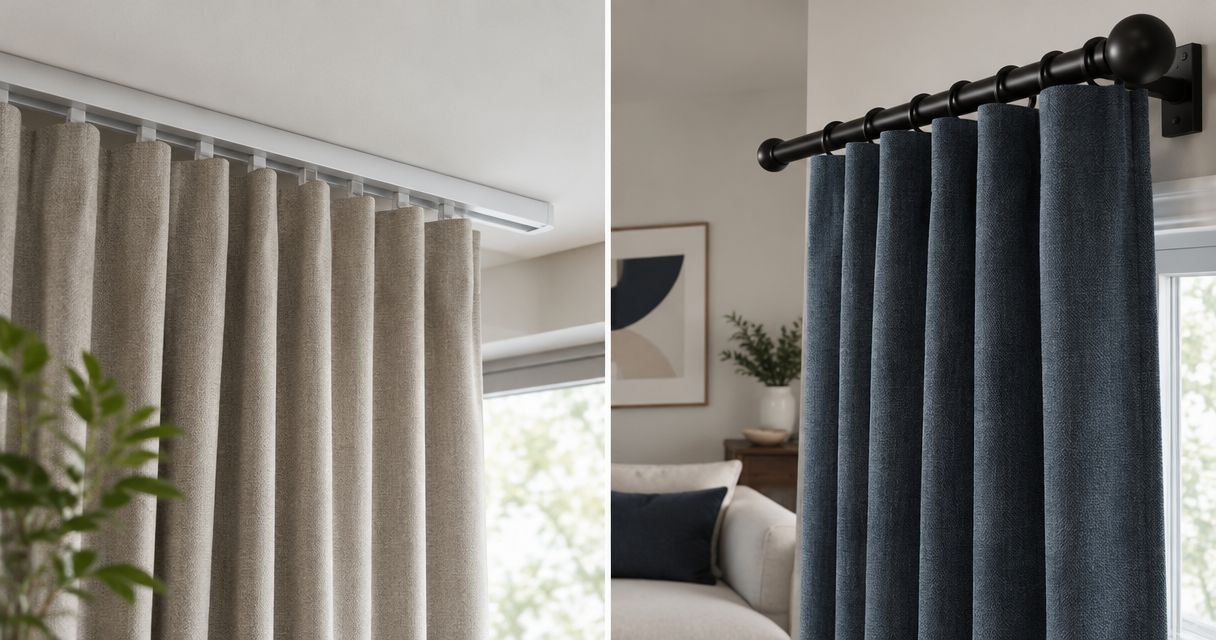
- Confirm that the rod or track suits the proposed curtain construction.
- Ask for the care instructions for the complete fabric-and-lining combination.
- Keep any acoustic performance claim separate from the blackout description.
Start with a phone conversation to explain the room and your priorities. Use WhatsApp as a secondary way to share window photos and the details discussed. Confirm the measurement and installation arrangements directly rather than assuming a particular service timeframe.
Will blackout curtains stop traffic noise in a bedroom?
Blackout curtains will not reliably stop traffic noise in a bedroom. They can soften room reflections, but engine rumble and sound passing through glazing or frame gaps require attention to the window and building construction.
If traffic remains the main disturbance, prioritise identifying its entry route. Choose the curtains for darkness and privacy while arranging the appropriate assessment for noise.
Are blackout curtains better than sheer curtains for noise?
Blackout curtains do not automatically have better proven acoustic performance than sheer curtains. A heavier, lined construction can absorb more reflected sound than a lightweight sheer, but the blackout label itself is not the evidence.
Choose sheers for softened daylight rather than outside-noise control. If you need darkness as well, evaluate a separate blackout layer without assuming that layering guarantees sound insulation.
Should I fix window gaps before changing curtains?
Yes, address defective window seals or closing gaps before expecting new curtains to reduce outside noise. Curtains hang in front of the opening; they do not repair it.
Keep ventilation openings and required building functions in mind. Ask a qualified window specialist to assess the issue rather than sealing unfamiliar openings yourself.
FAQ
Do blackout curtains reduce outside noise too?
Blackout curtains can soften some noise and reduce room reflections, but they do not reliably soundproof a window. Their light-blocking label does not establish acoustic performance.
Can blackout curtains make my bedroom completely silent?
No, blackout curtains cannot make a bedroom completely silent. Sound can enter through glazing, frame gaps, other openings, and the building structure.
What should I check when buying noise-reducing curtains in 2026?
Check whether the acoustic claim concerns sound absorption or sound transmission, and request the supporting test evidence. Confirm that the tested fabric and mounting arrangement match the proposed order.
Does thicker blackout fabric always block more sound?
No, thickness alone does not establish how much sound a curtain blocks. Fabric construction, folds, mounting, and the window itself all affect the result.
Will curtains help if my room sounds echoey?
Soft curtains can help absorb reflected sound in an echoey room. That improvement is different from stopping outdoor noise from entering through the window.
Should I choose curtains or repair my window first?
Repair a defective window seal or closing mechanism before relying on curtains for outside-noise control. Choose curtains separately for darkness, privacy, and room comfort.
Can I use blackout curtains in a meeting room?
Yes, blackout curtains can provide light control and contribute to softer room acoustics in a meeting room. They do not establish speech privacy or sound isolation between spaces.
One last thing
A room sounding quieter does not necessarily mean less outdoor sound is entering it. Reducing reflections can make the sound inside feel less harsh even when the window transmits the same noise. That is a useful comfort benefit, but it is not the same promise as soundproofing.
For your 2026 curtain order, keep darkness, privacy, and acoustics as separate requirements. Explore fabric and installation options with Curtain-store, then request specific evidence wherever outside-noise reduction is part of the decision.