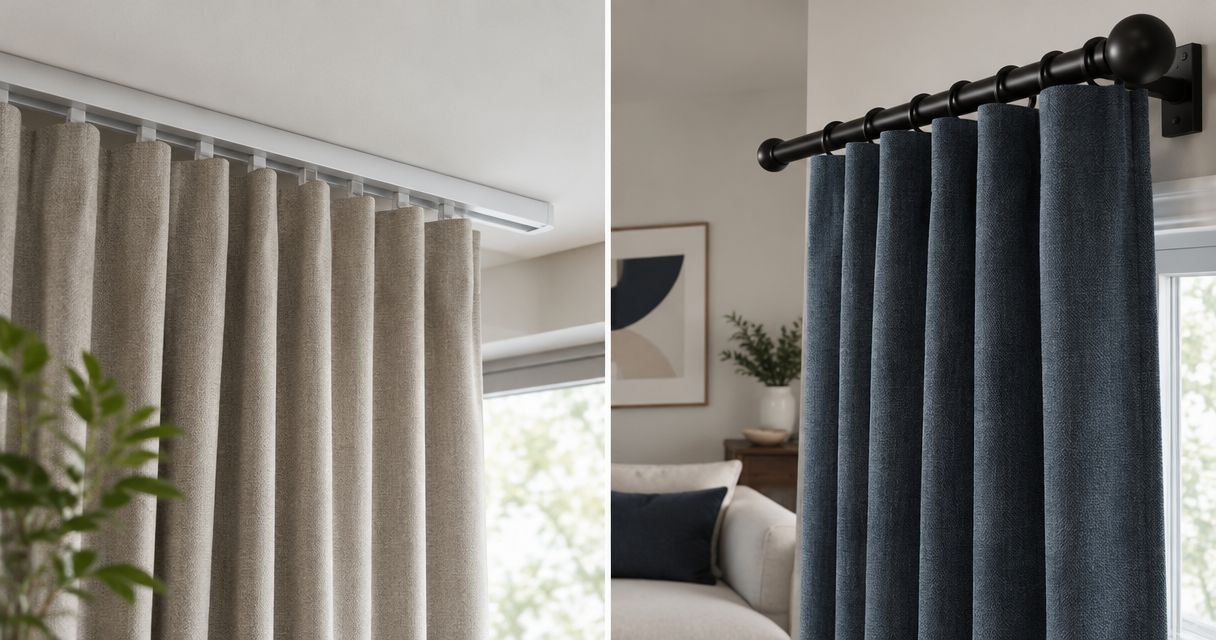
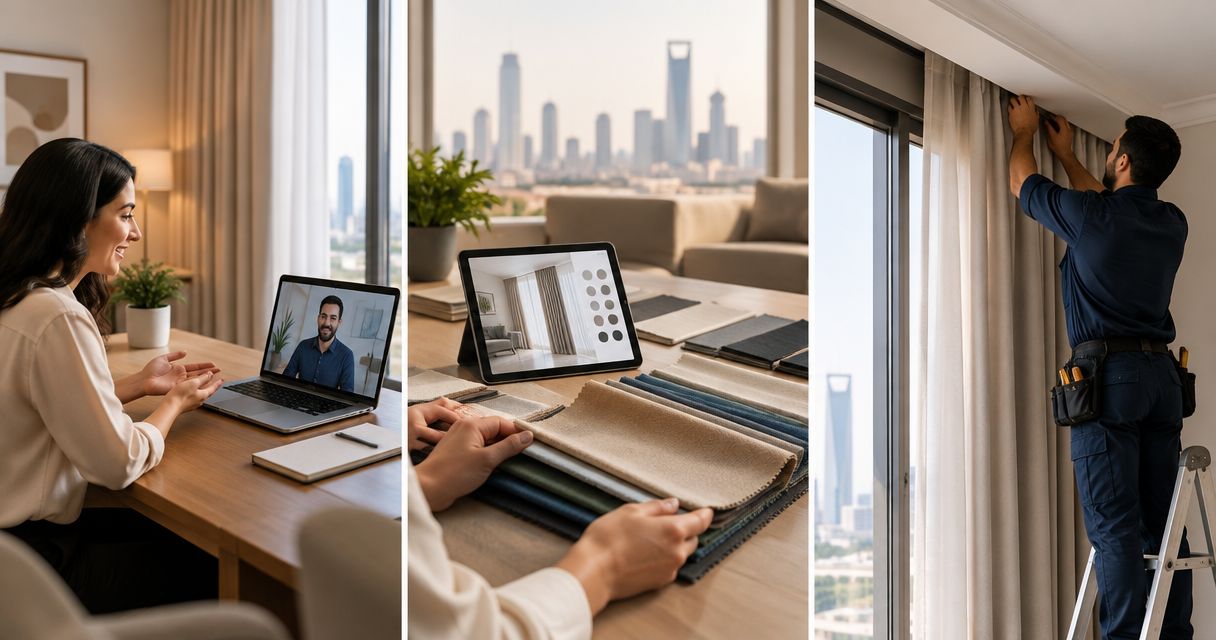
Instead of repeating window measurements and fabric choices across separate messages, use a single curtain order to installation process in Riyadh: prepare your brief, confirm the fit, approve the order, and check the finished installation. This 2026 guide shows you what to agree at each stage so your curtains suit the room, your privacy needs, and your daily routine.
- For the curtain order to installation process Riyadh, confirm measurements and mounting details before approving your order.
- Curtain-Store suits Riyadh homeowners seeking custom curtains and installation services from the same store.
- Keep fabric selection, window measurements, and installation requirements together in one written order summary.
- Treat online consultation as preparation, not a substitute for confirming the actual window and fixing surface.
Why this matters
A curtain order involves more than choosing a colour. The fabric, finished dimensions, mounting position, and opening direction must work together. A change to one detail can affect the others.
Curtain-Store suits Riyadh homeowners seeking custom curtains and installation services from the same store. Explore Curtain-Store to begin your enquiry, then use the workflow below to organise what you need to discuss.
For your 2026 project, keep the decisions in one place rather than treating consultation, ordering, and installation as unrelated appointments. The same approach works for a bedroom, a majlis, or a business reception area: explain how the room is used, confirm the proposed treatment, and agree what installation includes.
Before you start
- Prepare your room brief. Note the room name, privacy needs, preferred appearance, and anything that obstructs the window. Take 2 photos per window: a full-wall view and a closer view of the proposed mounting area. These are preparation aids, not final measurements.
- Arrange access and approval. Identify who can allow access for any agreed measurement visit and installation. For a business, confirm who approves the fabric and who authorises work on the premises. For a rental, check permission before agreeing to new fixings.
- Check the mounting surface early. A ceiling recess, wall, existing rod, or track changes what needs to be measured and installed. Do not approve curtain dimensions from the glass width alone; confirm how the finished treatment will relate to its support.
You do not need a particular app or account to follow this guide. Start with a phone enquiry using the contact details published by the store. Use WhatsApp as a secondary channel if the store confirms it, especially for sharing photographs and keeping written decisions together.
Your consultation brief
Prepare the room details
- Name each window consistently. Use clear descriptions such as bedroom window or majlis left window. Keep that name on the photographs, notes, and order details so similar windows do not become confused.
- Explain the room's purpose. Say whether you want daytime light, evening privacy, a darker sleeping space, or a decorative finish. For a workplace, describe the activity near the window rather than asking for a fabric by appearance alone.
- Record physical obstacles. Include handles, doors, furniture, air-conditioning outlets, and any existing window treatment. Photograph the whole wall so the discussion includes the space around the opening.
- Separate requirements from preferences. Privacy is a requirement; a particular colour is a preference. Tell the adviser which decisions are essential and which you are happy to explore.
Expected result: you have a room-by-room brief that explains both the look you want and the practical job the curtains must do. The consultation can focus on decisions rather than reconstructing your room from scattered messages.
Agree the consultation scope
- Call with your brief ready. Ask how to share photographs and discuss fabric choices remotely. Confirm whether an online discussion is suitable for your project.
- Ask about measurement support. Establish who will take the final measurements and whether a site visit is included in the proposed service. Do not treat your own preliminary figures as approved production dimensions.
- Identify the decision-maker. If several people need to approve the room, gather their preferences before selecting the final fabric. For businesses, include the person responsible for the premises.
- Request the next action in writing. Record whether you need to provide more photographs, arrange access, review samples, or confirm an appointment.
Expected result: everyone understands what the consultation covers and what must happen before an order can be approved. Fast service does not replace these checks or establish a particular completion date.
Your measurements and fabric approval
Confirm the finished fit
- Identify the support. Agree whether the curtains will use an existing support or require a new one. Ask the installer to assess the proposed fixing surface before work is approved.
- Confirm width and drop. Record measurements in a consistent unit, such as centimetres, and distinguish window dimensions from finished curtain dimensions. Ask which measurements determine the order.
- Choose the finishing position. Discuss where the curtain should end and how it should relate to the floor, sill, or furniture. Confirm this before cutting or making begins.
- Check opening and stacking space. Decide where the curtain should gather when open. Make sure that position does not obstruct a frequently used door or cover something you need to access.
- Label the approved dimensions. Keep them against the correct window name and mark preliminary figures separately. Remove superseded measurements from the active order summary.
Expected result: the approved dimensions describe the intended installation, not merely the size of the glass. You can explain where each curtain starts, ends, and gathers.
A full-wall photograph helps explain the room, but it cannot establish the strength of a fixing surface. Keep the site assessment and the visual brief as separate checks.

Choose the curtain format
Choose the format around the fit you need. Curtain-Store offers ready-made and custom curtains; neither format removes the need to check dimensions and support.
| Format | Best for | Practical advantage | Limitation to check |
|---|---|---|---|
| Ready-made curtains | A room where an existing size suits the intended fit | You can assess an existing curtain format against your window | The existing dimensions and finish must suit the room; ask whether alterations are possible |
| Custom curtains | A room needing a specified fit or finish | You can define the required dimensions and appearance before approval | More details need agreement before making begins |
- Review the fabric in context. Ask how to inspect a sample against your wall and furnishings. A screen photograph is useful for narrowing choices, but lighting and display settings affect how colour appears.
- Discuss light and privacy separately. Explain what you need during the day and after dark. Ask what the proposed fabric and construction provide rather than assuming a darker colour means stronger light blocking.
- Confirm every visible choice. Record the selected fabric reference supplied by the store, colour, heading style, and any agreed lining. Use the store's actual names rather than creating your own product labels.
- Approve one final selection. Keep rejected alternatives outside the active order record so an earlier photograph cannot be mistaken for the chosen fabric.
Expected result: your selection connects the fabric's appearance with the room's purpose, and the order identifies exactly what you approved. For a 2026 room refresh, this is more useful than a collection of inspiration pictures without a final decision.
Your order and installation handover
Approve the order summary
- Create 1 order summary for the project. Include window names, approved dimensions, fabric references, finish choices, and the proposed support. Make clear which details the store still needs to confirm.
- Confirm the installation scope. Ask whether the work includes fitting new supports, hanging the curtains, or using existing hardware. Discuss removal of old treatments separately rather than assuming it is included.
- Agree responsibilities. Record who provides access, who approves changes, and what preparation you must complete before the appointment.
- Confirm timing directly. Ask for the sequence and appointment details that apply to your order. Do not interpret general fast-service wording as a promise of same-day measurement, making, delivery, or installation.
- Approve the final version. Give approval only after the summary matches your choices. If something changes, request an updated record before the affected work continues.
Expected result: you and the store are working from the same approved information, with clear responsibilities and no unresolved fit decisions hidden in earlier messages.
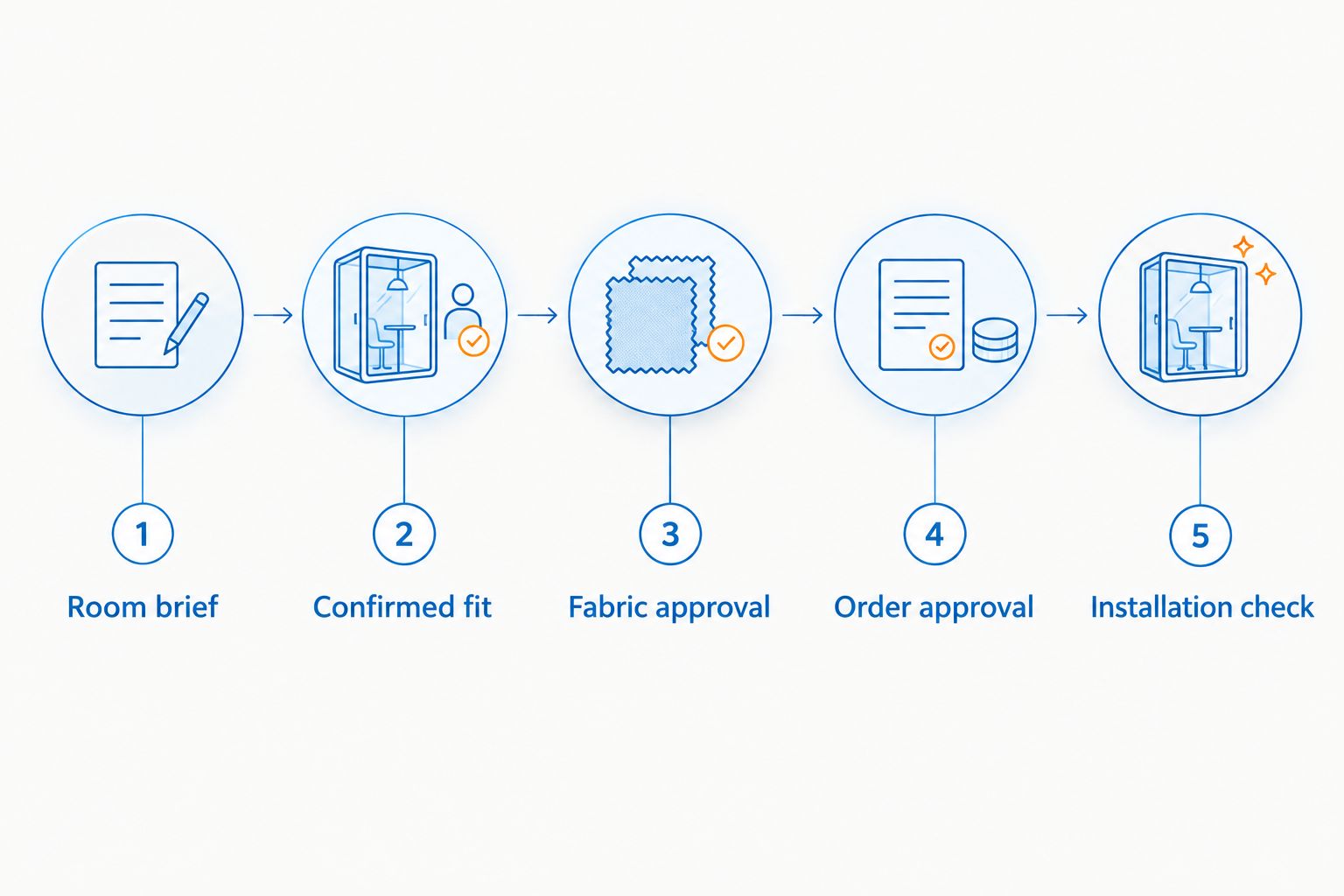
Use this 2026 handover sequence to keep the project readable at a glance: Room brief, Confirmed fit, Fabric approval, Order approval, Installation check.
Prepare and check the room
- Clear the working area. Move fragile objects and furniture that prevent safe access to the window. Ask the installer what space needs to remain clear rather than guessing.
- Confirm access arrangements. Share relevant building-entry instructions and identify the person attending. For a business, coordinate the appointment with the person responsible for the premises.
- Match curtains to window names. Compare the installation with the approved summary before accepting an unexplained substitution or change.
- Check operation with the installer. Open and close the curtains, look for catching, and confirm that nearby doors and handles remain usable. Discuss any adjustment while the installer can see the problem.
- Review the finish and care instructions. Check the agreed drop and visible alignment. Ask for care guidance for the actual fabric and construction supplied.
Expected result: you have checked appearance and everyday use, not just whether the curtains are hanging. Keep the final order record and care instructions together for future reference.
When you update an existing room
An existing curtain replacement follows the same workflow, but starts with what you intend to retain. Photograph the current rod or track and explain what is wrong with the present setup: the fit, opening movement, privacy, or appearance.
- Keep the support only after assessment. Ask whether its condition and fixing are suitable for the proposed treatment.
- Recheck dimensions. Do not assume the old curtain represents your preferred finished fit.
- State what stays. Identify retained furniture, supports, or other window treatments so the new order works around them.
- Approve changes explicitly. A different heading or mounting position needs an updated fit decision before making.
For businesses, repeat the process by room or area and keep access arrangements beside each location. This keeps a reception window separate from a private office without creating an entirely different ordering system.
Troubleshooting
- The colour looks different from the consultation photograph. Review a physical sample in the intended room before approving the fabric. Keep the confirmed reference in the order summary.
- Two messages show different measurements. Stop using the conflicting figures and ask for a single confirmed measurement record tied to the correct window. Update the order before the affected work continues.
- The proposed support conflicts with a recess or obstruction. Ask the installer to assess the mounting position and revise the fit details. Do not solve the conflict by changing curtain dimensions without approval.
- The curtain catches or blocks access after hanging. Demonstrate the movement with the installer and compare it with the agreed opening arrangement. Request an assessment of the cause before accepting a change.
- Someone changes the fabric or finish after approval. Ask the store what work has already begun and record any agreed revision. Confirm its effect on the installation plan rather than assuming the original appointment remains unchanged.
Customize your workflow
For a whole-home project, organise the brief by room and give each window a consistent name. The fabric selection to villa handover workflow is a useful next guide when you need to coordinate several spaces.
For your 2026 planning, mark decisions as confirmed or awaiting approval instead of creating guessed completion dates. Curtain-Store offers custom curtains and installation services, but the scope and sequence for your project need direct agreement. Call first to discuss the room, then keep the confirmed details in writing.
FAQ
How does the curtain order to installation process work in Riyadh?
The process moves from a room brief to confirmed measurements, fabric approval, order approval, and an installation check. Agree the service scope and appointments directly with the store before treating any stage as booked.
Can I start my curtain order through an online consultation?
You can prepare a curtain enquiry remotely with room photographs and a written brief. Ask the store how it handles online consultation and how final measurements will be confirmed before ordering.
Should I measure my windows before calling?
Preliminary measurements help explain your room, but they should not automatically become production dimensions. Confirm who is responsible for the final measurements and how the mounting position affects them.
Are custom curtains better than ready-made curtains?
Custom curtains suit a specified fit or finish, while ready-made curtains suit a room where an existing size works. Compare the intended dimensions and appearance before choosing either format.
Does Curtain-Store provide curtain installation in Riyadh?
Curtain-Store is a Riyadh-based store offering curtains and installation services for homeowners and businesses. Confirm the work included in your particular order, including supports and any existing treatments.
Can curtain measurement and installation happen on the same day?
Do not assume measurement and installation will happen on the same day. Confirm the timing and scope directly; general fast-service wording does not establish a specific same-day appointment or completion promise.
What should I check before the curtain installer leaves?
Check opening and closing, the agreed finished drop, visible alignment, and access to nearby doors and handles. Discuss any concern with the installer and request care instructions for the fabric supplied.
One last thing
Check the curtains open as carefully as you check them closed. A finished installation needs to work while you use the room, not only while you stand back to admire it. Test the movement and nearby access before completing the handover.