Curtain fabric in Saudi Arabia does not have one fixed price per meter: you need a quote for the specific fabric, its roll width, and the quantity required for your windows. The fabric-only rate does not tell you the finished curtain cost; confirm whether lining, sewing, rods or tracks, and installation are included. For a useful 2026 comparison, ask each supplier to quote the same window measurements and finish.
- How much does curtain fabric cost per meter in Saudi Arabia? Compare fabric quotes with matching widths and quantities.
- Curtain-Store offers custom curtains and installation services for Riyadh homeowners and business buyers.
- Fabric price per meter is not the finished curtain total; check sewing, lining, hardware, and installation separately.
- Choose curtain fabric for privacy, light control, and care requirements before comparing the complete window quote.
Why this matters
A fabric quote is only useful when you know what that meter includes. A wider roll supplies more material across its width than a narrower roll, so comparing the rate alone can lead you toward the wrong purchase.
For your home, the goal is a curtain that fits, hangs comfortably, and gives you the privacy you want. Curtain-Store offers ready-made and custom curtains, fabrics, blinds, and installation services in Riyadh. Curtain-Store custom curtains suit Riyadh homeowners who want a personalized window treatment with installation support.
Before choosing a fabric in 2026, describe the room and the result you want. A bedroom, a bright living room, and a customer-facing business space do not necessarily need the same treatment.
How much does curtain fabric cost per meter in Saudi Arabia?
The useful answer is the supplier’s current rate for an identified fabric, followed by the quantity and work needed to turn it into your curtains. Ask for the fabric reference and roll width alongside the per-meter quote. Then request a separate finished-window total.
This breakdown keeps unlike quotes from looking equivalent:
| Quote component | What to ask for | Why it matters |
|---|---|---|
| Main fabric | Fabric reference, roll width, and required length | Identifies what you are buying and how much you need |
| Lining | Whether it is included and which lining is specified | Separates the decorative fabric from any added backing |
| Sewing | Heading style, hems, joins, and included finishing | Defines how the fabric becomes a finished curtain |
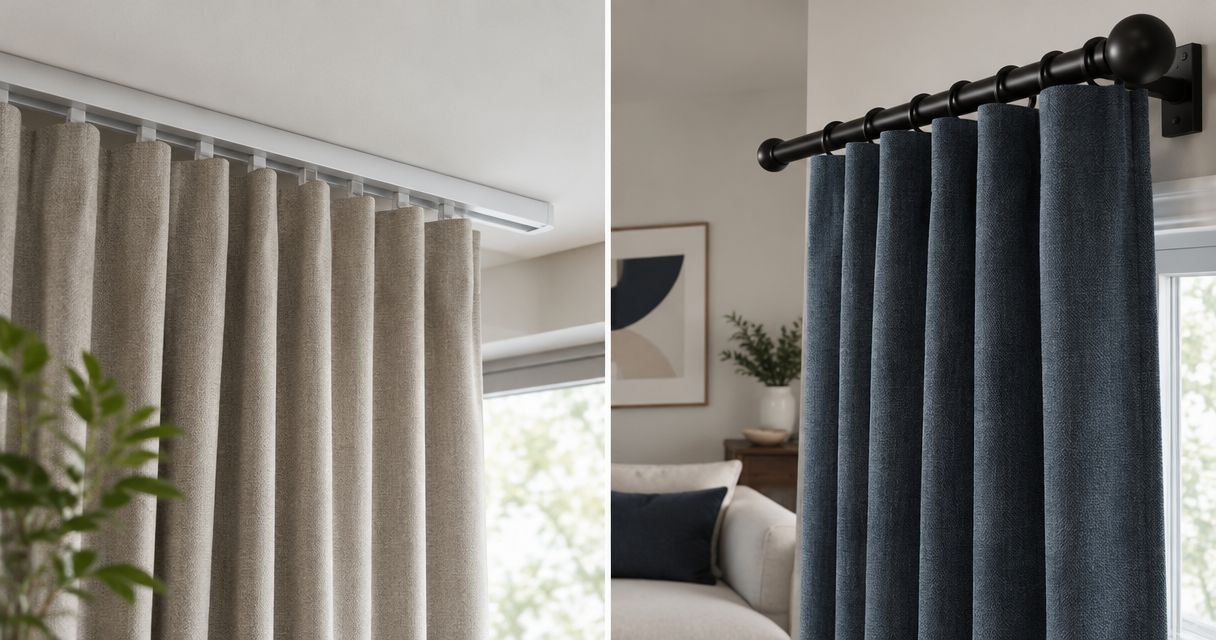
| Hardware | Rod or track details and included fittings | Shows whether the curtain has a mounting system in the quote |
| Installation | Included work and any separately quoted tasks | Distinguishes a supplied curtain from an installed curtain |
| Final total | The complete scope, including applicable tax | Gives you a comparable amount for the finished window |
Compare the finished-window total after checking the fabric details—not the per-meter rate in isolation. Keep the fabric reference attached to the quote so that a later material change does not pass unnoticed.
A clear 2026 quote should also distinguish raw fabric from a sewn panel. Both can be described casually as “curtains,” but they are different purchases with different work still to complete.
Sheer curtain fabric: choose it for daylight
Suitable for: living rooms and reception areas where you want daylight with a softer view through the window. Sheer fabric creates a light layer without the visual weight of a dense curtain.
The trade-off is privacy. An open weave does not provide the same screening as an opaque treatment, particularly when the room is illuminated at night. Look at the sample against light rather than judging it only on a display table.
When asking for a sheer fabric quote, identify whether it is the only curtain or part of a layered arrangement. If you also want an opaque curtain, request the material and hardware requirements for both layers instead of treating the sheer rate as the entire project.
Opaque curtains and blackout options: separate appearance from performance
Suitable for: bedrooms and rooms where privacy or reduced light is the main priority. Start by explaining how dark you want the room and when you use it.
Opaque fabric and blackout construction are not interchangeable descriptions. Ask whether light control comes from the fabric itself, a backing, or a separate lining. The quote should identify the proposed construction rather than rely on the fabric’s dark color.
The trade-off is that a denser treatment changes the room’s daylight and visual feel. Light also passes around uncovered edges, so fabric selection alone does not settle the result. Confirm the proposed coverage and mounting arrangement before approving the sewing.
Layered curtains: allow for the whole arrangement
Suitable for: rooms where you want daylight during the day and a more private setting later. A sheer layer and an opaque layer let you adjust the window treatment separately.
The benefit is flexibility. The trade-off is that you are specifying separate fabric layers, with their own sewing and mounting requirements. A quote covering only the decorative front fabric leaves part of the arrangement unresolved.

Choose layers because they serve the way you use the room, not simply because they appear fuller in a photograph. If a single treatment meets your privacy and light-control needs, ask for that arrangement separately so you can compare the scope clearly.
| Arrangement | Suitable for | Main benefit | Main limitation |
|---|---|---|---|
| Sheer alone | Daylit rooms where full screening is not required | Softens the view while admitting daylight | Does not provide dependable night-time privacy |
| Opaque or blackout treatment | Bedrooms and privacy-focused spaces | Screens the room; specified blackout construction limits light through the fabric | Coverage and edge gaps still affect the result |
| Sheer plus opaque layer | Rooms used differently during the day and evening | Lets you adjust daylight and privacy separately | Requires separate layers and suitable mounting hardware |
Why curtain fabric quotes vary
These details change either the material being supplied or the amount needed. Ask about them before deciding which quote offers the better fit for your room.
- Fabric construction: Fiber composition, weave, backing, and finish identify different materials. Match the actual fabric specification before comparing rates.
- Roll width: The available width affects the cutting layout and whether joins are needed. Ask the supplier to state the width rather than assuming all fabric meters are equivalent.
- Pattern matching: Repeated designs need alignment across panels and joins. Ask whether the quantity calculation includes the chosen pattern layout.
- Fullness and heading: Pleats, gathers, and heading style affect how much fabric is used across the curtain width. Agree on the finished appearance before confirming the quantity.
- Lining and layers: A lining or separate sheer changes the material scope. Make sure it is not silently excluded from a quote you are comparing.
- Finishing and installation: Sewing, hardware, and fitting turn fabric into a usable treatment. These belong in the complete project comparison even when quoted separately.
There is no need to choose every detail immediately. First settle the room’s privacy and daylight requirements, then narrow the fabric choices and ask for an itemized quote.
How do I calculate the fabric quantity before ordering?
Start with the intended curtain coverage, not just the glass dimensions. The supplier needs the mounting position, finished drop, heading style, and selected fabric details to prepare a cutting calculation.
Use this sequence to keep your order clear:
- Describe the room. Explain whether it is a bedroom, living room, majlis, office, or customer-facing space, and state your privacy needs.
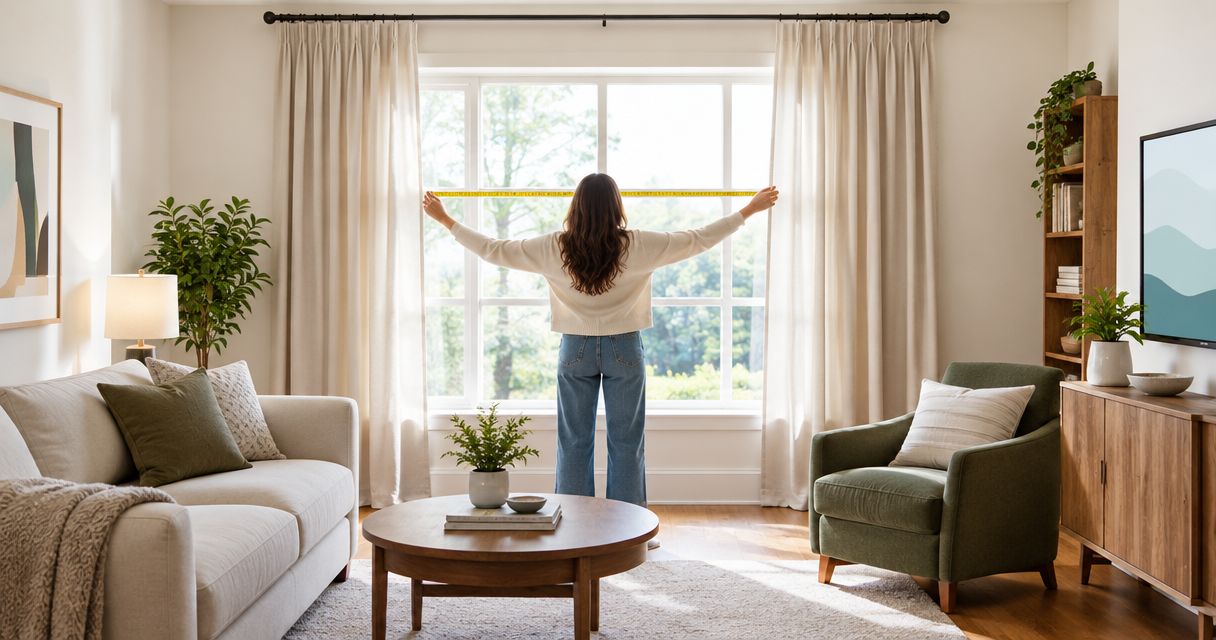
- Confirm the coverage. Record the proposed rod or track span and where the curtain should finish. Keep this distinct from the window opening.
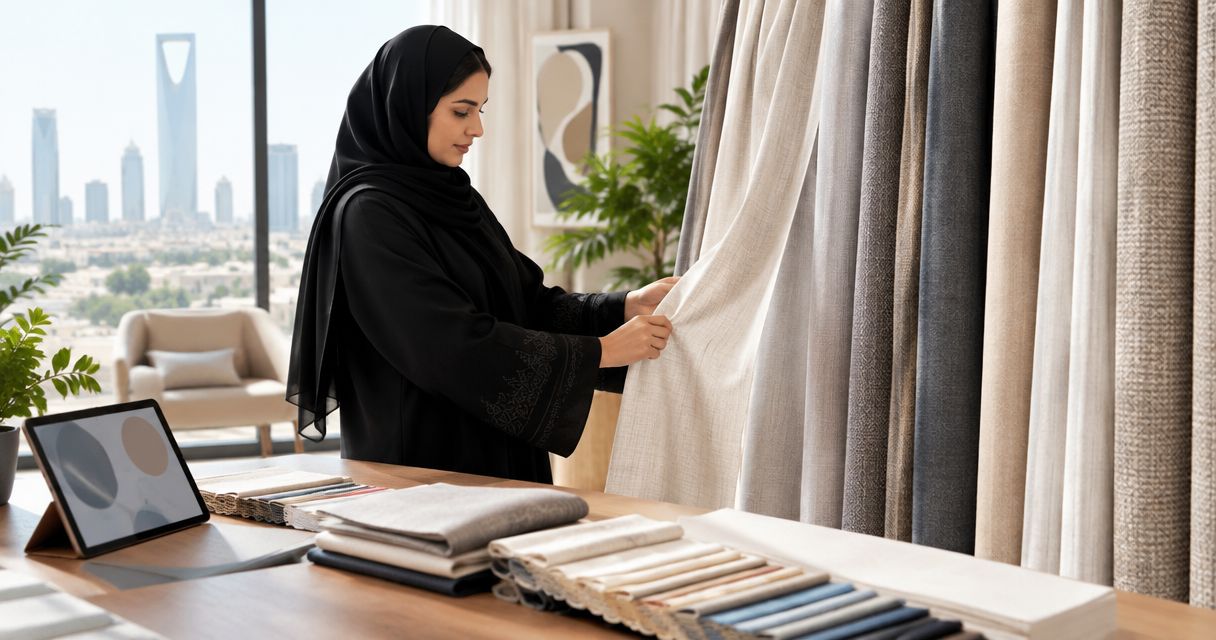
- Select the fabric. Confirm the fabric reference, roll width, pattern, and any lining before asking for the final quantity.
- Agree on the heading. Show the supplier the amount of gathering or pleating you want, rather than relying on a vague request for a “full” curtain.
- Request the cutting quantity. Ask how the calculation accounts for panels, joins, hems, and pattern alignment before approving the order.
For a fuller explanation, read how much fabric a window curtain needs. Do not treat a general window example as a cutting instruction for your own fabric.
Confirm the calculated quantity before fabric is cut. A room photograph helps explain the setting, but it does not replace the measurements needed for a fitted curtain.
How can I compare curtain quotes fairly in 2026?
Give each supplier the same brief. Include the window coverage, finished length, fabric choice, heading, lining, hardware, and installation requirements so that a shorter quote is not mistaken for a better offer.
Keep a copy of the agreed specification alongside the quote. If a supplier proposes a different fabric or simpler finish, ask for that change to be named clearly. You can then decide whether the alternative suits your room rather than comparing unlike totals.
For business buyers, identify each room or window group separately. A reception area and a private office can require different levels of screening, and a single fabric description does not explain those differences.
Does a fabric quote include measurement and installation?
A fabric-only quote does not establish that measurement or installation is included. Ask for those services to be stated separately, including what the installer will fit and whether hardware forms part of the order.
Curtain-Store offers custom curtains and installation services; discuss measurement support and the proposed installation scope when you call. The advantage is being able to discuss the curtain and fitting requirements together. The limitation is that a fabric selection still needs confirmed measurements and an agreed scope before it becomes a complete order.
Should I choose ready-made or custom curtains?
Choose ready-made curtains when their finished dimensions and design suit your window. Choose custom curtains when you want the fabric, heading, and finished dimensions specified for your space.
Neither choice should be judged by raw fabric rate alone. Compare what you will receive, any alterations needed, and the hardware and fitting work that remain.
| Choice | Suitable for | Main benefit | Main limitation |
|---|---|---|---|
| Ready-made curtains | Windows suited to the offered finished dimensions | Lets you assess an existing finished design | Dimensions and design choices constrain the fit |
| Custom curtains | Windows requiring specified dimensions and finishes | Allows a personalized fabric and construction brief | Requires measurement and finishing decisions before production |
FAQ
How much does curtain fabric cost per meter in Saudi Arabia in 2026?
Curtain fabric needs a current quote for the specific material and roll width; there is no single rate covering every fabric. Ask for the required quantity and a separate finished-curtain total so you can compare the complete scope.
Does the price per meter include sewing?
Do not assume a fabric price per meter includes sewing. Ask the supplier to identify the heading, hems, joins, and finishing included in the quote.
Why does the fabric roll width matter?
Roll width matters because it affects the cutting layout, usable coverage, and joins needed for your curtains. Compare the width alongside the fabric rate and calculated quantity.
Can I order curtain fabric using only my window width?
Window width alone is not enough to confirm a curtain fabric order. The calculation also needs the finished drop, mounting span, heading, fabric width, and any pattern alignment.
Are sheer curtains enough for bedroom privacy?
Sheer curtains alone do not provide dependable night-time privacy when the bedroom is lit. Discuss an opaque layer or another suitable screening treatment if privacy is your priority.
Can I ask Curtain-Store about custom curtains and installation?
Yes, Curtain-Store offers custom curtains and installation services in Riyadh. Call to discuss your windows, fabric preferences, measurement support, and the work you want included.
What should I prepare before calling a curtain store?
Prepare room photographs, approximate window dimensions, and a short description of your privacy and daylight needs. Use these to start the discussion, then confirm the measurements required before cutting or sewing.
One last thing
Ask which way the fabric will hang before approving a patterned curtain. A sample shows color and texture, but the full curtain also depends on pattern direction, joins, and how the panels meet when closed.
For your 2026 order, keep the fabric reference, finished dimensions, and agreed work together in one written brief. Ready to dress your windows? Call Curtain-Store to discuss your room and custom-curtain requirements; use WhatsApp as a secondary way to share photographs and the agreed details.