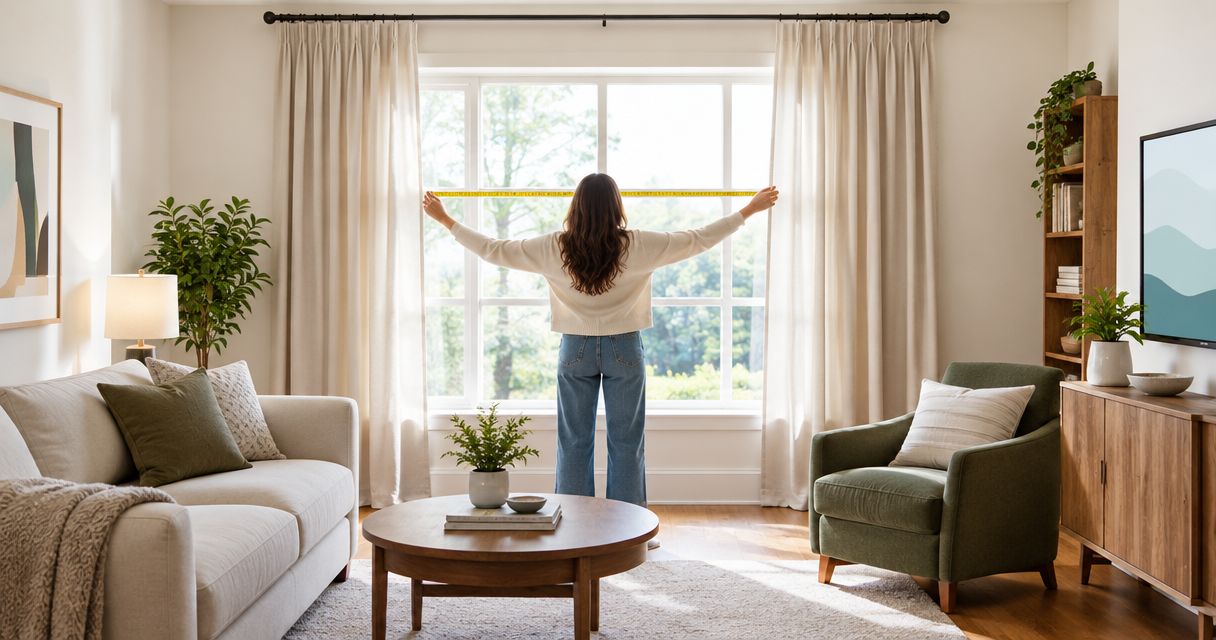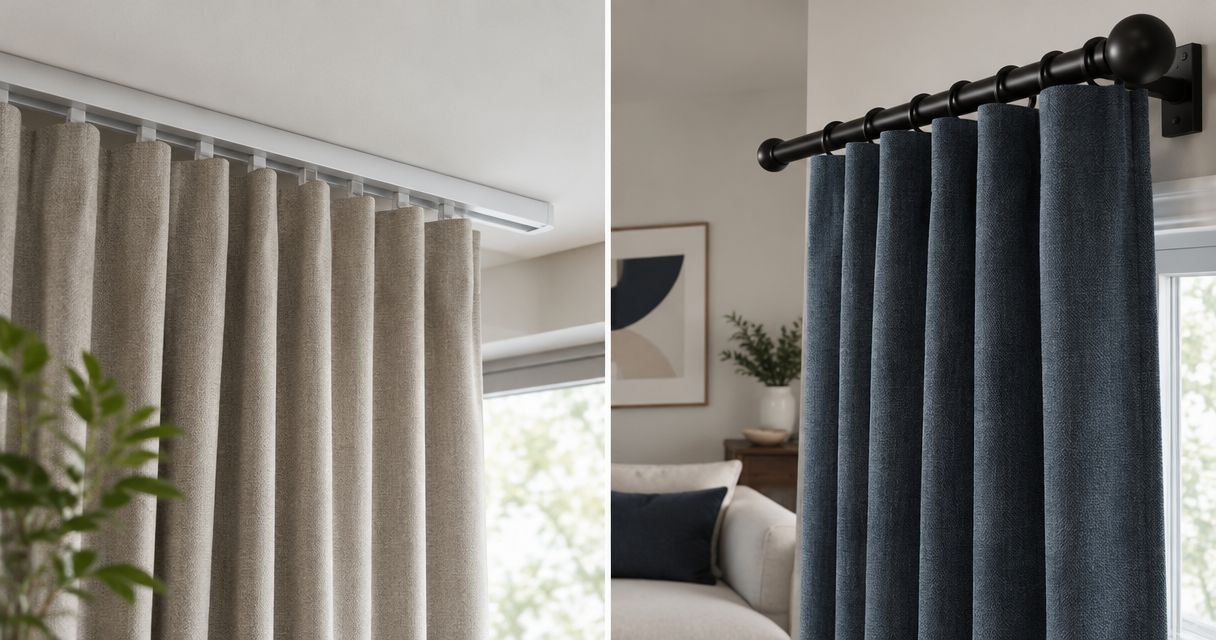
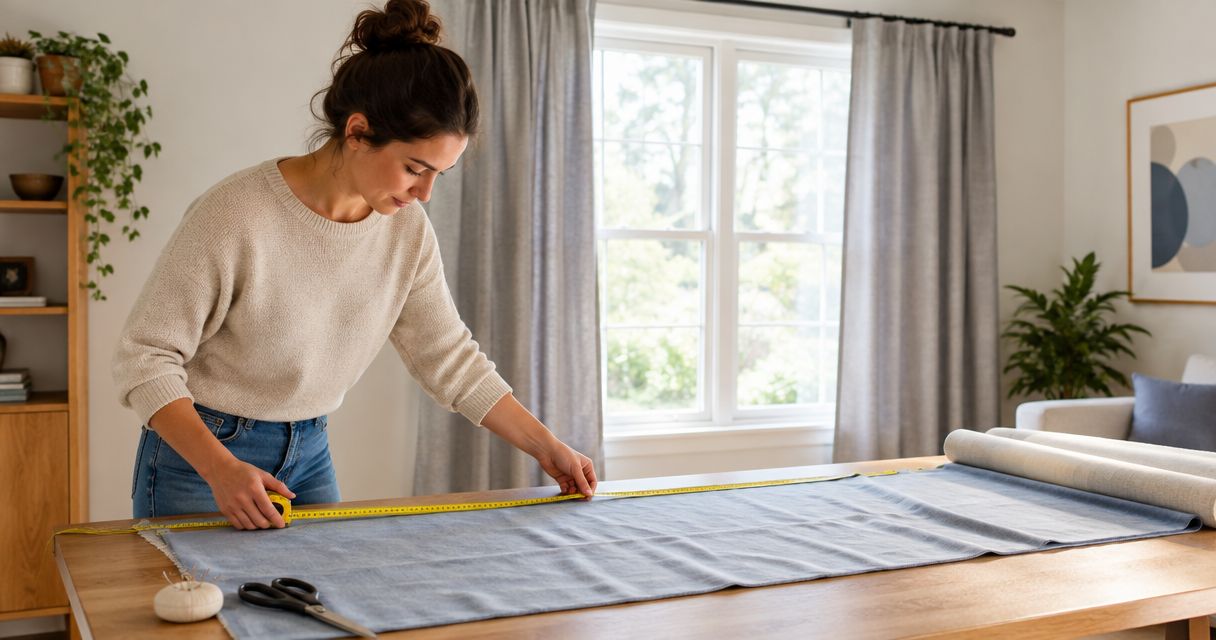
You need enough curtain fabric to cover the full rod or track width at your chosen fullness, with each fabric drop long enough for the finished curtain plus its heading and hem allowances. There is no single fabric quantity for a standard window: the fabric’s usable width, curtain style, and pattern repeat determine the final order. This 2026 guide shows you how to calculate that quantity before cutting or ordering custom curtains.
- How much fabric do I need for a standard window curtain? Calculate from track width, fullness, and cutting length.
- Curtain-store offers custom curtains and installation services for Riyadh homeowners and businesses.
- Calculate face fabric and lining separately; their cutting requirements differ.
- Confirm usable fabric width and pattern repeat before ordering curtain fabric.
Why this matters
A window measurement is not a fabric order. Curtains need enough material to form their folds, finish their edges, and reach the intended stopping point. Buying from the glass width alone leaves those details out.
Start with the intended curtain arrangement, then measure for it. If you are planning a made-to-measure treatment, the custom curtains guide for Riyadh provides related reading while you prepare your measurements.
Confirm the heading and fabric before approving the cutting quantity. Changing either after calculation changes the order, even when the window stays exactly the same size.
How much fabric do I need for a standard window curtain?
Calculate the total flat curtain width first, then work out how many fabric widths you need and how long each piece must be. The quantity depends on the curtain’s construction, not a universal definition of a standard window.
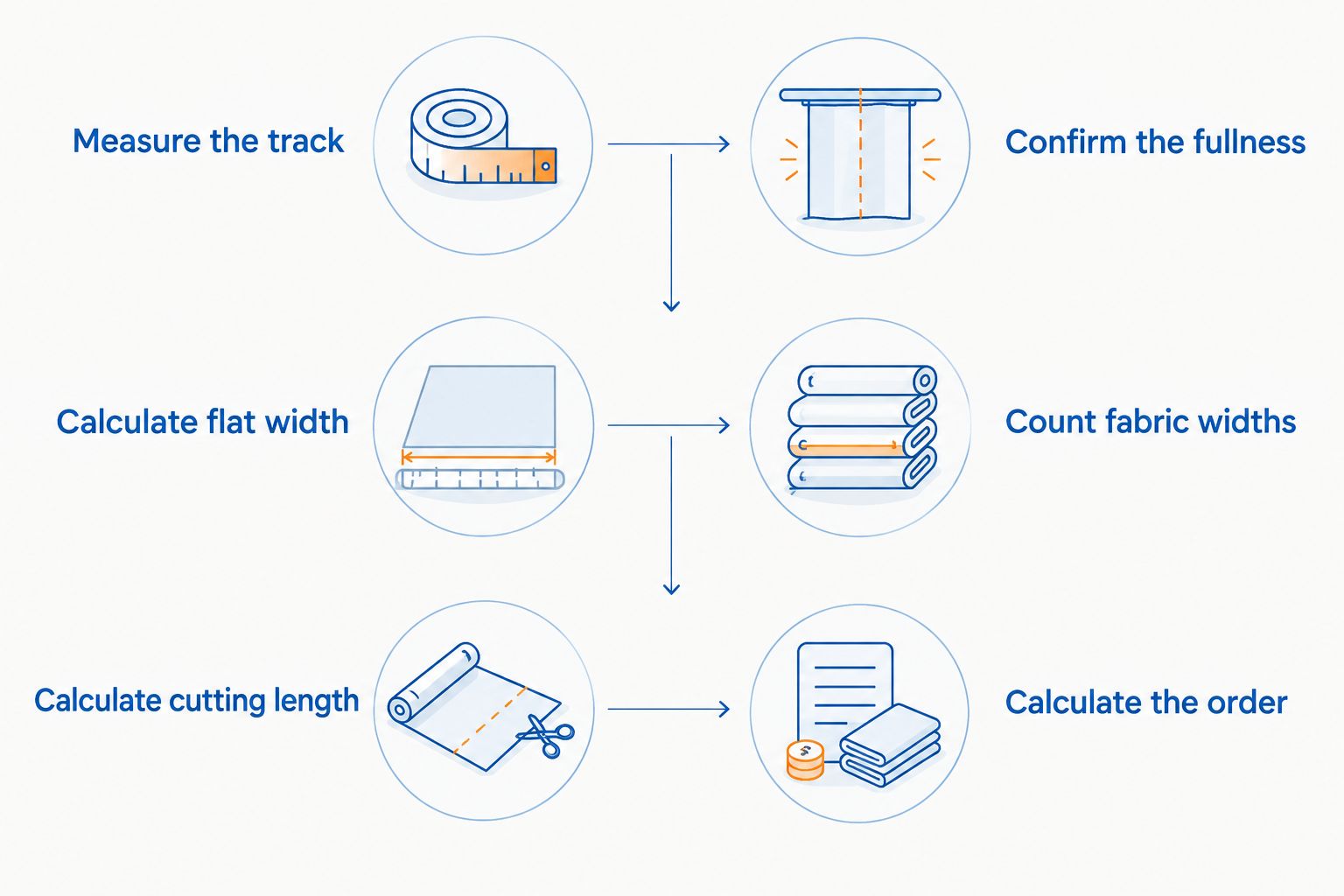
For fabric used in vertical drops, follow this sequence:
- Measure the track. Record the full width the finished curtain must cover, not just the width of the glass.
- Confirm the fullness. Use the fabric multiplier specified for your chosen heading or curtain system.
- Calculate flat width. Multiply the coverage width by the agreed fullness multiplier.
- Count fabric widths. Divide the required flat width by the usable fabric width, allowing for seams and side hems. Round up to whole cutting widths.
- Calculate cutting length. Add the heading and bottom-hem allowances to the finished drop, then account for any pattern matching.
- Calculate the order. Multiply the number of cutting widths by the cutting length and include any additional material identified in the cutting plan.
The working formula is:
Fabric length to order = number of cutting widths × cutting length per width.
This formula applies to vertical-drop construction. Wide-width fabric used across the curtain needs a different cutting layout, so confirm the orientation before using the formula.
What belongs on your measurement sheet?
Keep the room measurements separate from the sewing allowances. Your finished curtain dimensions describe the result you want; the cutting dimensions describe the material needed to make it.
| Measurement or detail | What to record | Why it changes the order |
|---|---|---|
| Coverage width | Full rod or track span to be covered | Sets the starting width for the curtain |
| Finished drop | Distance from the hanging reference point to the intended bottom edge | Sets the visible curtain length |
| Heading | The selected curtain construction | Determines fullness and top allowance |
| Usable fabric width | Width available after unusable edges and relevant allowances | Determines how many fabric widths are required |
| Pattern repeat | Repeat size and matching instructions, when applicable | Changes where each drop can be cut |
| Lining | Whether a separate lining is included | Requires its own material calculation |
For your 2026 curtain order, keep every measurement in the same unit. 1 metre equals 100 centimetres; 1 centimetre equals 10 millimetres; 1 metre equals 1,000 millimetres. Mixing centimetres with millimetres creates an avoidable calculation error.
Label dimensions clearly as width or drop. A photograph helps explain the window arrangement, but it does not replace measured dimensions.
Vertical-drop fabric: calculate joined widths
With vertical-drop construction, you cut lengths from the roll and join them side by side where necessary. The number of lengths depends on the curtain’s required flat width and the fabric’s usable width.
This approach suits a curtain layout that needs joined drops. Its advantage is a clear cutting sequence; its drawback is that seams and pattern alignment need attention. Best suited to: projects whose fabric direction and usable width support vertical cutting.
Do not divide by the roll’s stated width without checking what remains usable. Selvedges, side hems, and joining seams affect the finished width, and the cutting plan must account for them.
Also decide how the joined widths will be distributed between panels. A total that works across the opening still needs a panel layout that puts joins and leading edges in sensible positions.
Wide-width fabric: confirm the cutting direction
Some fabrics are designed to run across the curtain rather than down it. In that arrangement, the roll width must accommodate the required curtain drop and its finishing allowances.
Wide-width construction can reduce the need for vertical joins. The limitation is that the fabric width, design direction, and finishing requirements must suit the intended drop. Best suited to: projects where the fabric’s approved orientation accommodates the finished curtain height.
Check this before treating wide-width fabric as an alternative to vertical drops. Rotating a directional design changes its appearance, and the curtain maker should confirm that the proposed orientation is suitable.
| Construction | Best suited to | Main advantage | Main limitation |
|---|---|---|---|
| Vertical drops | Fabric intended to hang in its roll direction | Quantity follows a drop-by-drop cutting plan | Joining seams and matching require allowance |
| Wide-width construction | Fabric approved for use across the curtain | Can reduce vertical joins | Available width must accommodate the curtain drop |
Fabric orientation comes before the final quantity. A calculation for one construction should not be reused for the other without checking the layout.
Why curtain fabric quantities vary
The same window can require different amounts of fabric because the finished curtains can be made in different ways. These are the main drivers to check before placing your 2026 order:
- Heading and fullness: The chosen heading determines how much flat fabric is gathered or folded across the coverage width.
- Usable fabric width: Wider usable material changes the number of joined drops required; nominal roll width alone is not enough.
- Finished drop: A longer curtain needs longer cuts, with its finishing allowances added separately.
- Pattern repeat: Matching a design across adjacent drops changes the cutting positions and the material used.
- Seams and hems: Material folded into edges or consumed by joins is not part of the visible finished width or drop.
- Separate layers: Lining, sheers, and other independently made layers need their own calculations rather than one shared total.
Choose these details for the room you want to create. Privacy, daylight, and the way the curtains sit when open matter more than finding a fabric quantity before the design is settled.
Fullness is a design choice, not a window measurement
Fullness describes the relationship between the curtain’s flat fabric width and its coverage width. More fabric creates more material within the folds; less fabric produces a flatter treatment.
Use the specification for your selected heading rather than borrowing a multiplier from another curtain style. A pleated heading and a curtain system with a prescribed fold arrangement should not automatically share the same calculation.
Ask the curtain maker to explain the proposed fullness in plain language. You should know what the closed curtain will look like before approving the amount of fabric.
Pattern matching belongs in the cutting plan
A patterned fabric needs a layout that aligns the design across joined drops and, where intended, across the panel pair. Matching is not just a finishing detail.
Record whether the design has a vertical repeat, a directional motif, or a matching instruction. The cutting plan then identifies the appropriate starting point for each length instead of assuming every cut can begin immediately after the previous one.
For plain fabric, you still need to check the face and direction. A fabric with a pile or directional surface needs consistent orientation across the finished treatment.
Should I measure the window or the curtain track?
Measure the rod or track span that the curtains need to cover. The glass opening alone does not describe the complete curtain arrangement, especially when the hardware extends beyond the window.
If the hardware is not installed, agree its intended position before confirming fabric. Otherwise, you are calculating for an arrangement that has not yet been fixed.
For the drop, identify the correct hanging reference point for the selected heading. Then measure to the intended curtain bottom, whether that is near the sill, below it, or at the floor.
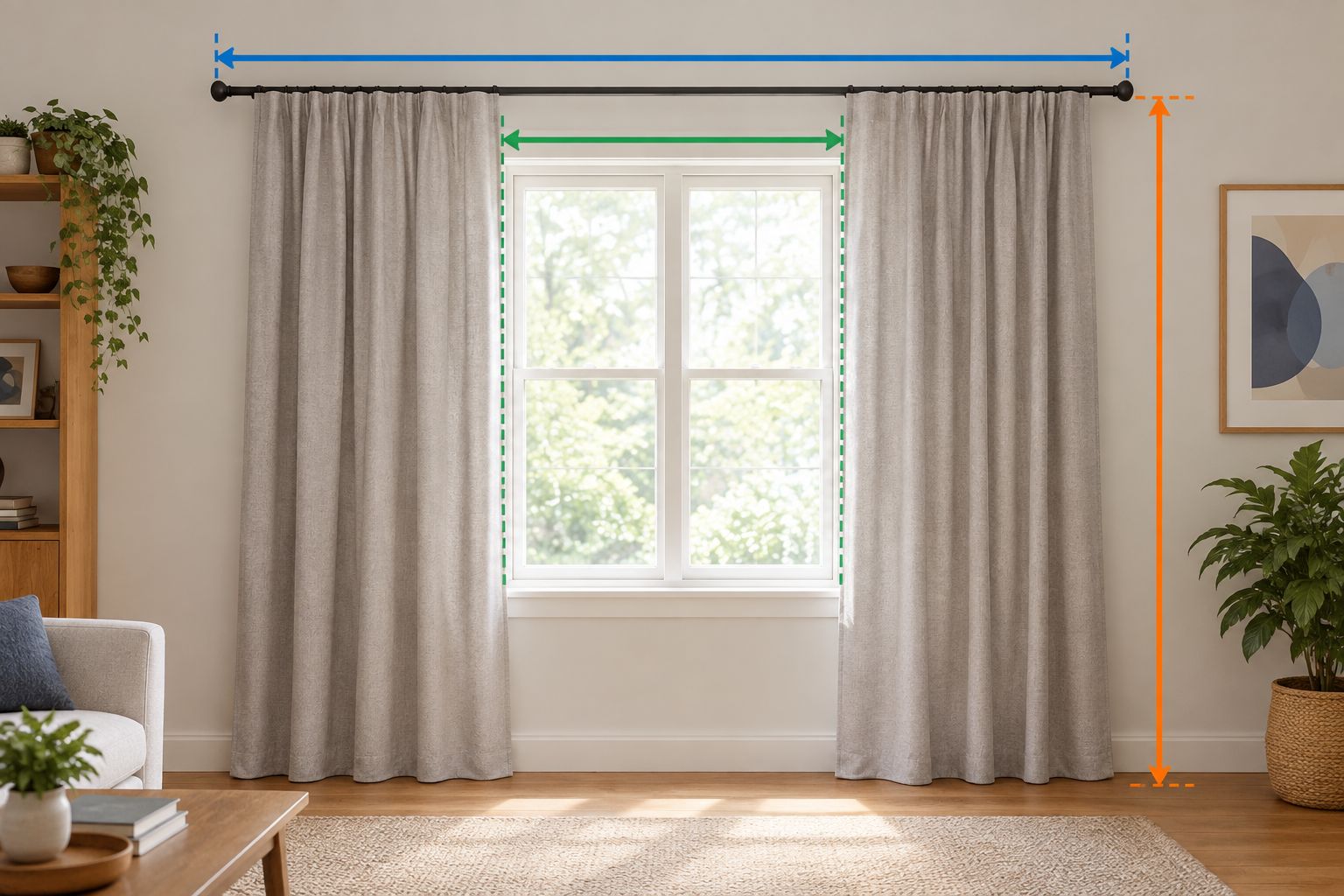
Check the intended bottom edge against the actual floor or sill. Do not assume every point along the opening gives the same drop, and ask the installer how any unevenness will be handled before fabric is cut.
Does a pair of curtains need twice the fabric?
A pair of panels does not automatically need twice the fabric of a single panel covering the same opening. Calculate the total required flat width first, then divide that width into the intended panel arrangement.
Separate panels introduce their own finished edges, so the cutting allowance still needs checking. Panel count also affects the position of joins and the appearance of the leading edges.
Do not double the total simply because the curtain opens in the middle. Ask for a cutting plan that shows how the calculated width becomes the finished panel pair.
Do lining and sheers use the same fabric calculation?
Lining and sheers need separate calculations because they are separate pieces of material with their own usable widths and construction details. The face-fabric total is not a reliable order quantity for either layer.
A lining can have different finishing requirements from the face fabric. A separate sheer curtain also has its own heading, coverage width, and finished drop, even when it shares the window with another treatment.
For a layered 2026 arrangement, label each total by material and purpose. That keeps the decorative fabric, lining, and sheer quantities from being combined into an unclear order.
Turn your measurements into a custom order
Curtain-store serves Riyadh homeowners and businesses seeking custom curtains and installation services. A made-to-measure order lets you discuss the intended curtain arrangement, but it still needs an agreed fabric choice and cutting plan.
Call Curtain-store first to discuss your window, preferred heading, and installation needs; use WhatsApp as a secondary contact option. Ask what measurement support is included and confirm the next step before ordering fabric.
Have your measurements and window photographs ready. You can explore the Curtain-store site before the conversation, then confirm these details:
- Which heading and fabric orientation will be used?
- What finished width and drop will the order achieve?
- How will patterns, joins, and panel edges be arranged?
- Are face fabric, lining, and sheers calculated separately?
- Who will confirm the final measurements before cutting?
Approve the finished dimensions as well as the fabric quantity. For business premises, keep the measurements labelled by room and opening so similar-looking windows do not get mixed up.
FAQ
How much fabric do I need for a standard window curtain?
Calculate the coverage width at the chosen fullness, then work out the required cutting widths and cutting length. There is no universal fabric quantity because headings, fabric widths, curtain drops, and pattern repeats differ.
Can I calculate curtain fabric from the window width alone?
No, window width alone is not enough to calculate curtain fabric. You also need the coverage width, finished drop, heading requirements, usable fabric width, and relevant cutting allowances.
Should I measure my curtain pole or the glass?
Measure the pole or track span that the curtains must cover, rather than only the glass. Confirm the intended hardware position first if it has not been installed.
Do two curtain panels need twice as much fabric?
Two curtain panels do not automatically require twice the fabric of one panel covering the same opening. Calculate the total flat width, then account for how it is divided and finished.
Do patterned curtains need extra fabric?
Pattern matching changes the cutting positions and can increase the fabric required. Confirm the repeat and matching layout before approving the order quantity.
Can I use the same quantity for curtain fabric and lining?
Calculate curtain fabric and lining separately. Their usable widths, cutting layouts, and finishing allowances can differ.
Can Curtain-store help with custom curtains in Riyadh?
Curtain-store offers custom curtains and installation services in Riyadh. Call to discuss your requirements and confirm measurement arrangements before approving your order.
One last thing
A calculated total is only useful if someone can explain how it becomes your finished curtains. Ask to see the proposed distribution of fabric widths between panels, not just a single total in metres.
Before cutting your 2026 curtains, confirm the heading, finished drop, fabric direction, and pattern alignment together. The final check is the cutting plan—not whether the window looks like a standard size.