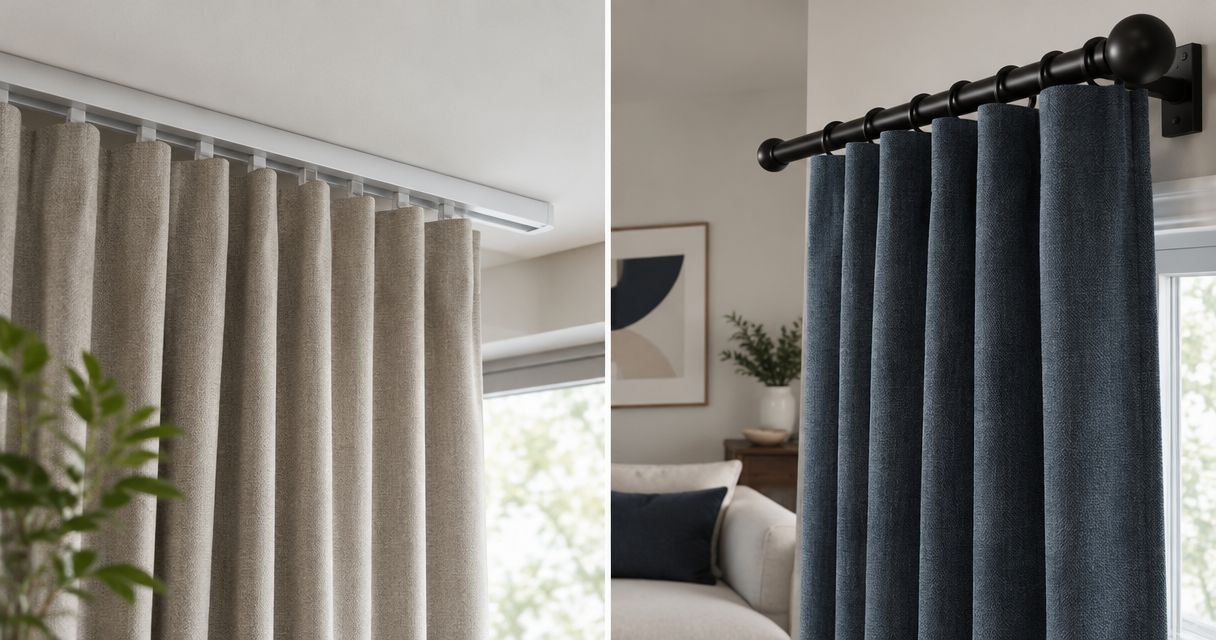

Replace curtains when damaged fabric, failed lining or poor coverage stops them providing the privacy and light control you need—not simply because they reach a certain age. For a 2026 replacement decision, check whether cleaning, a small repair or a track adjustment will solve the problem before ordering new curtains.
- How often should curtains be replaced? Use fabric condition, privacy and light control—not a fixed replacement calendar.
- Keep curtains that still close properly, cover the window and suit your room.
- Repair isolated faults; replace fabric that is tearing or no longer meets your needs.
- Curtain-store offers custom curtains and installation support for Riyadh homeowners planning a replacement.
Why this matters: Replacing every curtain at once treats different problems as though they have the same cause. A loose hook, a damaged lining and a window that needs wider coverage call for different decisions. Start with the fault you can see, then decide what actually needs changing.
If replacement is the right choice, Curtain-store offers ready-made and custom curtains, blinds, fabrics and installation services. Keep your current curtains in place until you have agreed how the replacement will fit and function.
How often should curtains be replaced?
Curtains need replacing when their condition or performance no longer suits the room and a practical repair will not restore it. There is no single replacement interval that accounts for every fabric, window position, cleaning method and household routine. Age alone does not tell you whether a curtain still works.
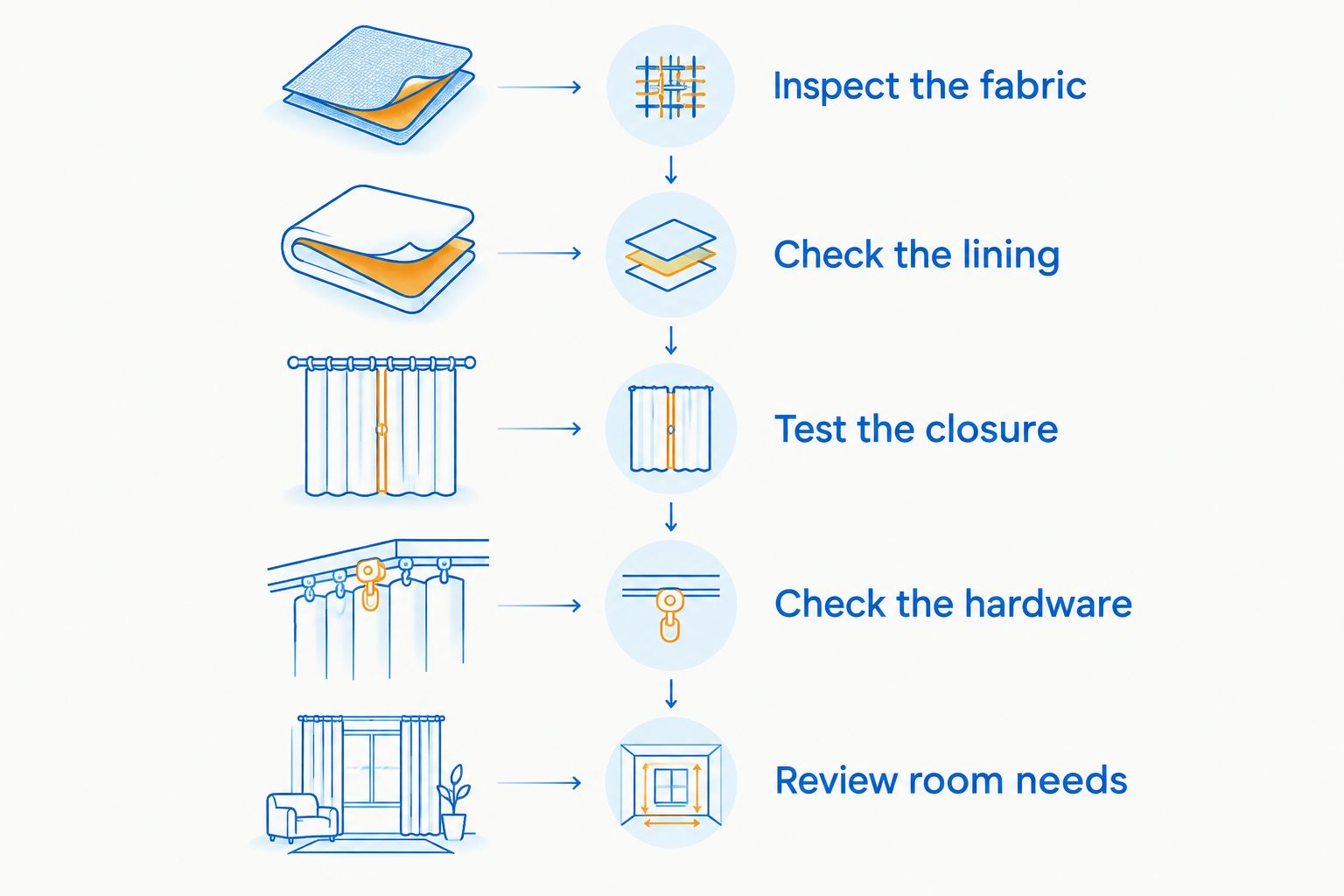
Use this check for your 2026 curtain review. Examine each window separately rather than making a whole-home decision from the appearance of one damaged panel.
- Inspect the fabric. Look along folds, edges and hems for thinning, tears or areas that break when handled gently. Separate surface marks from damage to the cloth itself.
- Check the lining. Open the curtain and examine the window-facing side. Look for splitting, peeling or detached sections, then check whether the room still gets the light control you want.
- Test the closure. Draw the curtains fully shut. Notice gaps in the middle, exposed edges and fabric that catches before reaching its intended position.
- Check the hardware. Look for missing hooks, loose fittings or a track that prevents smooth movement. A fabric replacement does not correct a faulty fitting.
- Review the room's needs. Decide whether privacy, daylight, appearance or access to the window has changed. Sound curtains can still be the wrong fit for a new use.
Do not tug hard on weakened fabric or climb onto furniture to inspect fittings. Leave high or difficult-to-reach hardware to someone with suitable equipment.
Clean, repair or replace: which decision fits?
The right next move depends on the fault, not on how old the curtains look. Cleaning addresses removable dirt; repair addresses a local defect; replacement addresses fabric failure or a mismatch with what the room needs.
| Decision | Best for | Main advantage | Main limitation |
|---|---|---|---|
| Keep and clean | Sound curtains with removable dust or marks | Retains curtains that still do their job | Cannot restore torn fibres or faded colour |
| Repair or adjust | An isolated seam, hook, hem or fitting problem | Targets the fault without changing everything | Does not resolve widespread fabric damage |
| Replace the lining | Sound outer fabric with a damaged lining | Keeps the visible fabric you still like | Depends on construction and repair suitability |
| Replace the curtains | Extensive damage or unsuitable coverage | Lets you choose fabric and fit for current needs | Requires fresh decisions about measurements and fittings |
Keep usable curtains; replace the part that has failed. That can mean repairing a heading rather than replacing a panel, or changing a lining rather than discarding attractive outer fabric. Ask whether the existing construction allows that work before committing to it.
Cleaning is not a test of endurance. Follow the care label rather than trying a stronger wash to remove a stubborn mark. If the label is missing or the fabric is delicate, get suitable cleaning advice before treating the whole curtain.
When cleaning is enough
Cleaning is the sensible first step when the fabric remains intact, the curtains close properly and the problem is dust or a removable mark. Check the care instructions before taking them down. Different fabrics and linings do not necessarily tolerate the same treatment.
After cleaning according to those instructions, judge the curtain again in its normal position. A panel lying on a table does not show whether it covers the window or hangs evenly. Rehang it correctly before deciding that its appearance or fit has failed.
For your 2026 refresh, distinguish dirt from colour change. Cleaning removes soiling; it does not put lost colour back into faded fibres. If a pale strip remains where the curtain faces the window, decide whether the appearance bothers you enough to justify replacement.
Do not replace curtains solely because another room's fabric looks newer. Your living room, bedroom and guest room can have different wear patterns while still meeting their individual needs.
When a repair makes more sense
Repair is a good candidate when the damage is local and the surrounding fabric remains sound. Examples include an opened seam, a detached hook or a hem that has come loose. Check the area around the fault: stitching into fragile cloth does not solve the underlying weakness.
Movement problems deserve a separate inspection. If a curtain catches, stops short or hangs unevenly, check the hooks, rings and track before assuming you need new fabric. Keep the distinction clear when discussing the work: are you correcting the curtain, the fitting or both?
A damaged lining also needs its own assessment. If you still like the face fabric, ask whether the lining can be changed without compromising the panel. That decision depends on how the curtain is made and the condition of the remaining material.
The limitation of repair is straightforward: it fixes a specific defect, not every defect. Repeated tears across the cloth, widespread thinning or a curtain that no longer covers the window calls for a broader solution.
When replacement is the clearer choice
Replace curtains when the material is too weak to handle normally, damage extends across the panel or the fabric no longer provides the coverage you require. A curtain that looks acceptable from the doorway can still fail at the window. Inspect it close up and test it closed.
For privacy, assess the room under the conditions in which you use it. A daytime check alone does not settle an evening privacy question. Close the curtains with the room lights on and assess visibility from a safe, permitted position outside, or ask someone you trust to help.
For light control, separate fabric failure from fitting gaps. Light entering through a tear is different from light entering around the edges of an otherwise sound panel. New fabric alone will not correct a poorly planned overlap or mounting position.
Replacement is also reasonable when your needs change. Turning a spare room into a bedroom, changing a window arrangement or wanting a different appearance does not mean the old curtains are defective. It means you are choosing for a different brief.
Why curtain replacement timing varies
The same purchase date does not create the same replacement date. These factors explain why one window needs attention while another does not:
- Sun exposure: Inspect the window-facing surface for fading and weakening. The visible room-facing side does not show the whole condition of the curtain.
- Frequency of handling: Curtains that are opened and closed regularly need attention around headings, hooks and leading edges. Look where your hand usually pulls the fabric.
- Cleaning and care: Compare the care label with the treatment the curtain has received. A problem that appears after cleaning needs investigation before repeating that method.
- Fabric and lining condition: Assess the layers separately. An attractive outer fabric does not prove that the lining is intact, and a damaged lining does not automatically condemn the outer fabric.
- Fit and mounting: Check width, drop, overlap and movement. A coverage problem belongs in the measurement and installation discussion, not just the fabric discussion.
- Changing room use: A new sleeping, working or reception arrangement can change your requirements without changing the fabric's physical condition.
Use these observations when planning work in 2026. They give you a useful description to discuss with a curtain supplier, rather than only saying that the curtains are old.
What should you check in each room?
Bedrooms: check light control and privacy
For bedroom curtains, close the panels and look for unwanted light through the fabric and around the edges. Decide which bothers you before choosing a replacement. A fabric change and a fitting adjustment solve different problems.
If light blocking is your priority, explore the guide to blackout curtains for bedrooms. Discuss coverage as well as material; the word blackout does not answer every question about the finished installation.
Living rooms and majlis: check privacy and daylight together
For living rooms and majlis, think about how you use the space while the curtains are open and closed. You might still enjoy the daylight but want more privacy during evening gatherings. Assess both situations before replacing a curtain simply because its colour feels dated.
If your curtains have separate layers, inspect each layer individually. Keep the layer that still serves its purpose and discuss whether only the other needs changing. You do not have to make every part of the window treatment the same age.
Offices and business spaces: check the task
For business buyers, inspect curtains against the room's purpose: privacy, presentation, window access and comfortable screen viewing. Test them while the room is in use. A curtain that suits an unused meeting room does not automatically suit a workstation beside the glass.
Where premises have specific maintenance or safety requirements, confirm those requirements before selecting replacement fabric. Appearance alone is not an adequate purchasing brief.
How to plan a replacement without repeating the problem
Start with what your current curtains fail to do. If the issue is a central gap, record the gap. If it is fabric damage, note where the damage appears. These observations help keep the conversation focused on the result you want.
Next, record the window arrangement and existing mounting position. Include obstacles such as furniture, handles or an opening door. Treat your notes as preparation for the measurement discussion, not as a substitute for confirming the final dimensions.
Then choose fabric and lining around privacy, daylight and care needs. Ask how to look after the finished curtain before choosing it, especially if easy maintenance matters to your household or business.
Finally, agree which fittings stay and which need attention. Confirm the scope and timing directly when arranging the work. Do not assume that a fabric order automatically includes every hardware adjustment.
Curtain-store is for Riyadh homeowners who want custom curtains and installation support. The store also serves businesses, so describe how the room is used when discussing a replacement. For your 2026 plan, make a phone call your first contact step and use WhatsApp for follow-up details if offered.
Should you replace curtains when you redecorate?
No, redecorating does not require replacing curtains that still fit and perform well. Compare the existing fabric with your new room choices before deciding. Keeping it is sensible when you still like the result; changing it is a design choice, not a maintenance deadline.
Can you replace only the damaged curtain?
Yes, replacing only a damaged panel is an option, but matching needs attention. Existing fabric can differ in colour from a new piece, even when the original design is similar. Discuss the visible difference before deciding whether to replace one panel or the pair.
Does a new curtain need a new track?
No, a new curtain does not automatically require a new track. Have the existing fitting assessed for condition and suitability for the planned curtain. Keep usable hardware when it suits the new arrangement; address loose or unsuitable fittings before hanging replacement fabric.
FAQ
How often should curtains be replaced?
Replace curtains when fabric damage, failed lining or unsuitable coverage prevents them meeting your needs. Use condition and performance rather than a fixed age, and check whether cleaning or repair will solve the fault.
Do faded curtains have to be replaced?
Faded curtains do not have to be replaced if the fabric remains sound and you still like the appearance. Inspect the faded area for weakness, because a colour change and a structural problem require different decisions.
Can I wash old curtains instead of replacing them?
You can clean old curtains when their condition and care instructions allow it. Follow the label; cleaning does not restore torn fabric, failed lining or an unsuitable fit.
Should I replace curtains that let light into the bedroom?
Replace bedroom curtains if their fabric no longer provides the light control you need and a suitable repair will not solve it. Check edge gaps and closure first, because the fitting can be the cause.
Can I keep the outer curtain and replace the lining?
Keeping the outer curtain and replacing the lining is an option when the outer fabric is sound and the construction allows the work. Ask for an assessment before treating a lining replacement as the solution.
Should I replace every curtain in my home together?
You do not need to replace every curtain together. Inspect each window separately and replace the curtains that no longer meet that room's needs.
Where can I discuss custom replacement curtains in Riyadh?
Curtain-store offers custom curtains and installation services in Riyadh. Call to discuss your window, fabric preferences and installation needs, and confirm the measurement arrangements and work scope directly.
One last thing
Before you discard a curtain, look at the part that meets the track. A missing hook or uneven heading can make sound fabric hang badly and leave a privacy gap. Correct that fault first, then judge the curtain again—you want to replace worn fabric, not mistake a fitting problem for one.