Yes, you can combine roller shades with fabric curtains on one window: fit the roller shade closer to the glass and place the curtain rod or track farther into the room. The two layers need separate mounting space and enough clearance to move without catching; choose the shade for the light and privacy you need, then choose curtains for softness, coverage, and the look you want.
- Can you combine roller shades with fabric curtains on one window? Yes, with separate supports and clear operating space.
- Roller shades control light; fabric curtains add softness and another adjustable layer.
- Sheer curtains do not provide dependable nighttime privacy when indoor lights are on.
- Curtain-store offers custom curtains and installation services for Riyadh homeowners planning layered window treatments.
Can you combine roller shades with fabric curtains on one window?
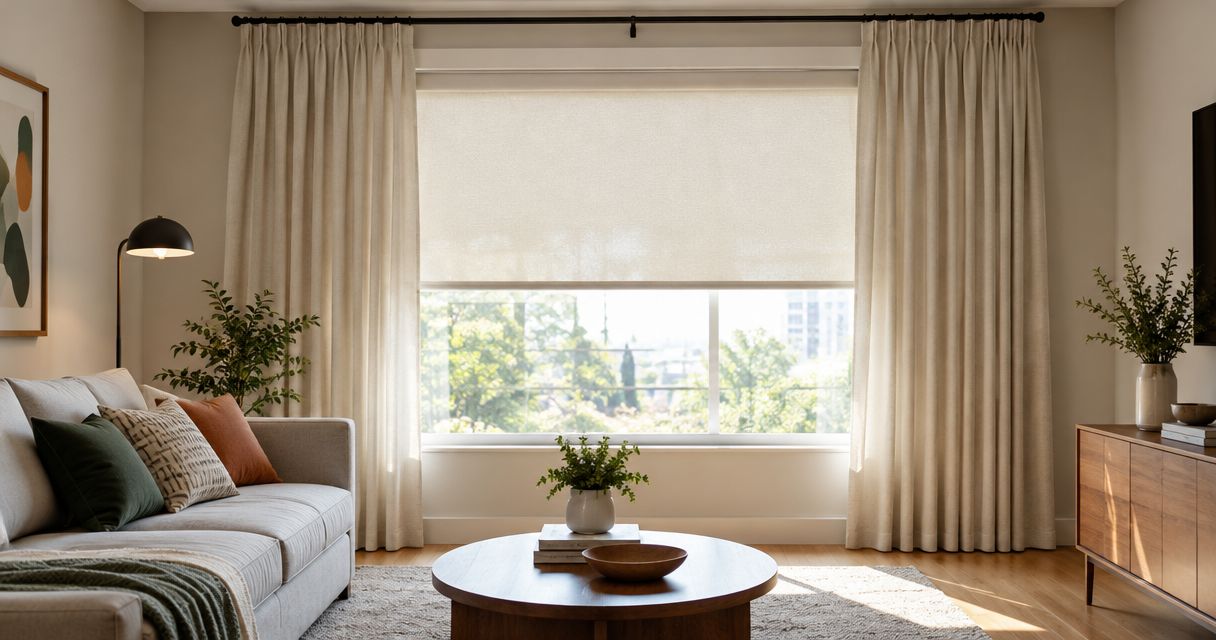
Yes. Treat the roller shade and fabric curtains as separate window treatments that must work together. A roller shade usually sits behind the curtains, either inside the window recess or above it. The curtain rod or track sits in front, allowing the panels to slide without rubbing against the shade mechanism.
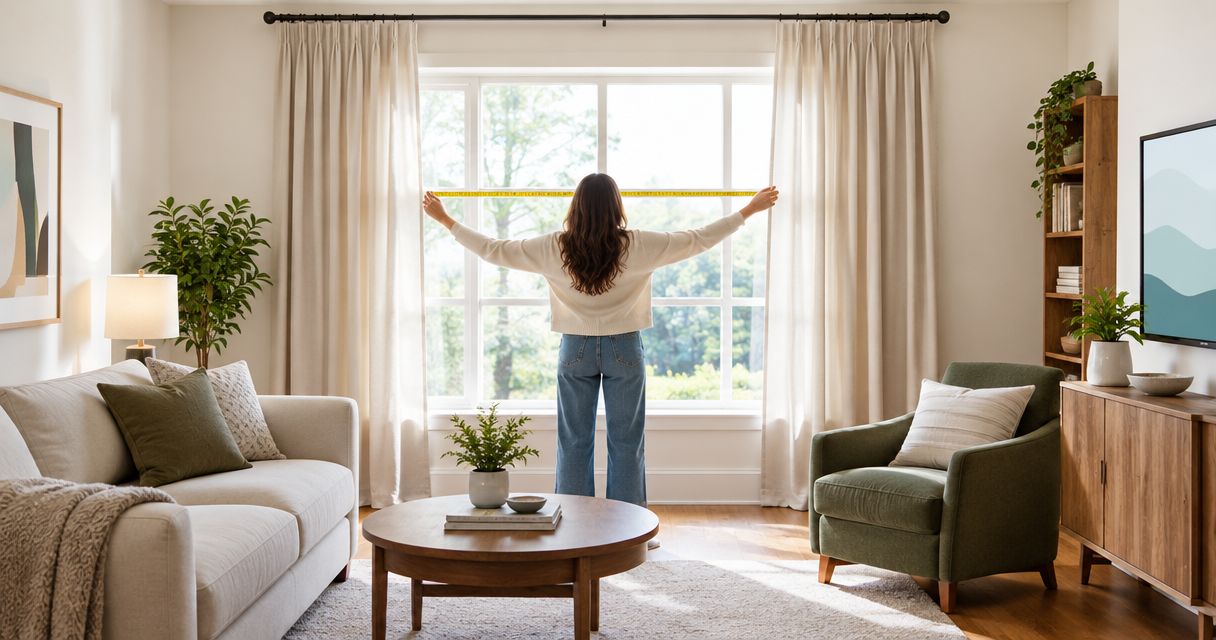
Start with the window, not the fabric. Follow the window-measuring guide to identify the recess, surrounding wall, and obstructions before choosing either layer.
| Layered arrangement | Suited to | Main advantage | Main limitation |
|---|---|---|---|
| Roller shade with sheer curtains | Living rooms where you want daylight and a softer view | Sheers soften the window while the shade provides adjustable coverage | Sheers alone are not dependable nighttime privacy |
| Roller shade with opaque fabric curtains | Rooms where privacy and a fuller fabric finish matter | You can adjust each layer separately | Fabric needs room beside the window when open |
| Blackout roller shade with fabric curtains | Bedrooms where reducing unwanted light is the priority | Curtains can cover light entering around shade edges | A blackout fabric does not make the whole installation lightproof |
For a 2026 window update, select the arrangement around how you use the room. A bedroom, family sitting room, and office do not need the same balance of daylight, privacy, and fabric coverage.
Why this matters
Layering gives you different ways to use the same window. You can open the shade and keep sheer curtains closed for softened daylight, lower the shade for more coverage, or close opaque curtains when you want privacy. The benefit is choice, not simply adding more fabric.
The drawback is that two treatments take more space and require more planning. If the curtain hangs against the roller tube, chain, or bottom bar, an attractive combination becomes awkward to use. Check movement and mounting positions before confirming your curtain order.
Curtain-store is suited to Riyadh homeowners seeking custom curtains and installation support. For layered window treatments, bring a clear description of the room's privacy needs and ask to confirm the shade and curtain positions together.
Roller shade with sheer curtains
Choose this combination when you want a soft fabric finish without keeping the room visually closed off. The sheer layer filters the view and softens daylight, while the roller shade provides coverage when you lower it. This suits a living room where you change the window setting throughout the day.
The limitation is privacy after dark. When indoor lighting is brighter than the light outside, people outside can see through sheer fabric. Lower a suitably opaque shade rather than relying on the sheer layer alone.
For your 2026 living-room plan, decide whether the roller shade itself needs to preserve a view or obscure it. Do not assume every roller fabric provides the same privacy: inspect a sample against light and ask about its intended use.
Roller shade with opaque fabric curtains
Choose this combination when you want adjustable coverage and a more substantial curtain finish. The roller shade handles the window opening, while opaque curtains add a separate privacy layer and frame the room. You can keep the curtains open without removing the shade's function.
The trade-off is space. Open curtain panels gather beside the window, and heavier or fuller fabric needs more room than a lightly gathered sheer. Check that the gathered panels do not cover a doorway, crowd furniture, or block access to the shade control.
Opaque does not automatically mean blackout. If darkness matters, ask about the fabric and lining rather than judging performance by colour or thickness alone.
Blackout roller shade with fabric curtains
Choose this combination for a bedroom where light entering around the window is a concern. Blackout shade fabric blocks light through the fabric itself, but gaps around the edges still matter. Curtains that cover those edges add another barrier when closed.
The limitation is the finished installation. Light can still enter above the curtain heading, between panels, or around uncovered edges. Neither a blackout label nor a dark curtain colour guarantees a fully dark room.
For a bedroom refresh in 2026, inspect the window's light paths before choosing the mounting arrangement. If the main problem is light around the sides of an existing shade, focus on curtain coverage and placement rather than replacing fabric without addressing those gaps.
Why the right combination varies
The same layered arrangement will not fit every window. These factors determine whether it works comfortably:
- Recess depth: An inside-mounted roller shade needs enough room for its brackets and mechanism.
- Handles and opening direction: The shade must clear handles and allow the window to open as intended.
- Curtain projection: The rod or track must place fabric far enough forward to avoid the shade.
- Space beside the window: Open curtains need somewhere to gather without covering controls or nearby fittings.
- Light and privacy needs: Sheer, opaque, and blackout fabrics perform different jobs.
- Mounting surface: Brackets and fixings must suit the wall, ceiling, or recess supporting them.
Confirm these details for each window. Matching fabrics throughout a room does not mean every window can use identical mounting positions.
How should you mount the two layers?
Inside-mounted shade with curtains outside the recess
An inside-mounted shade sits within the window opening, with curtains mounted on the surrounding wall or ceiling. This keeps the shade close to the glass and gives the curtains a separate path in front. It suits windows with a recess that accommodates the selected shade hardware.
Its limitation is the recess itself. Shallow openings, projecting handles, and inward-opening windows can interfere with the shade. Inside mounting also leaves edge gaps, so assess the coverage rather than assuming a close fit eliminates all light.
Outside-mounted shade with curtains farther forward
An outside-mounted shade sits above or around the opening rather than within it. Curtains then need to hang in front of the shade and its brackets. This arrangement is useful when the recess cannot accommodate the shade mechanism.
The trade-off is projection into the room. A curtain bracket that works with curtains alone might not extend far enough to clear an outside-mounted roller. Check the actual hardware together before drilling.
Existing curtains with a new roller shade
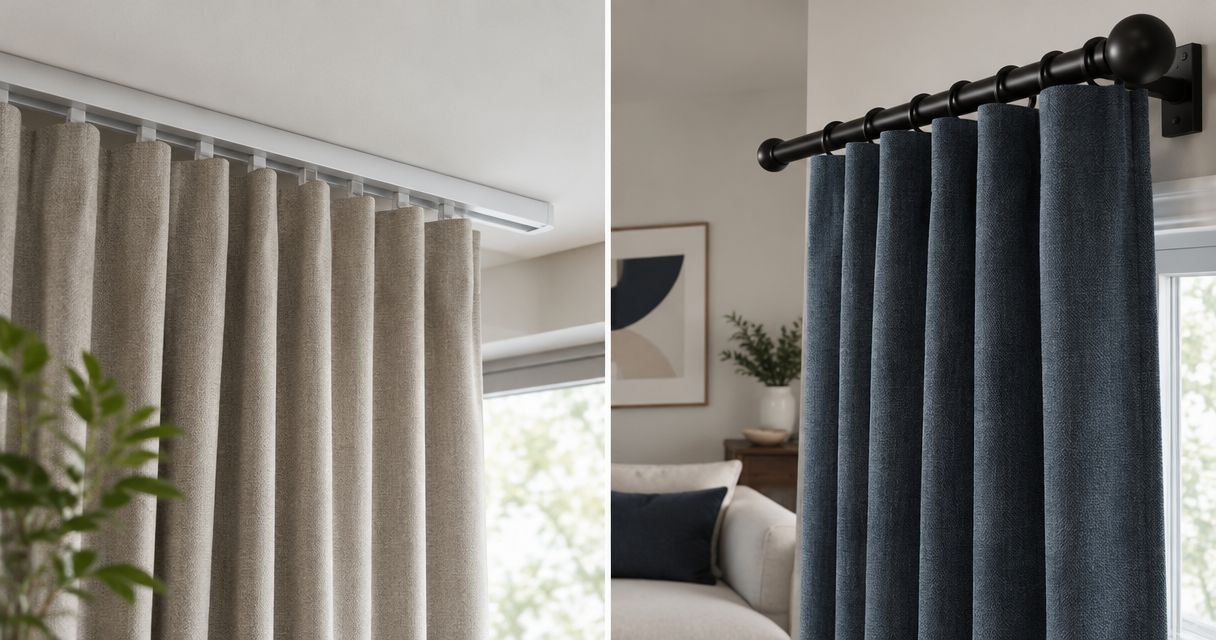
You do not automatically need to replace an existing curtain rod or track. Keep it only if its position leaves adequate space for the roller mechanism, curtain folds, and controls. Test the arrangement with the curtains both open and closed.
If the panels rub against the shade, changing fabric alone will not solve the mounting conflict. Adjust the supports or reconsider the shade position first. Existing holes are not a reason to accept an arrangement that catches every time you use it.
How do you plan a layered window treatment?
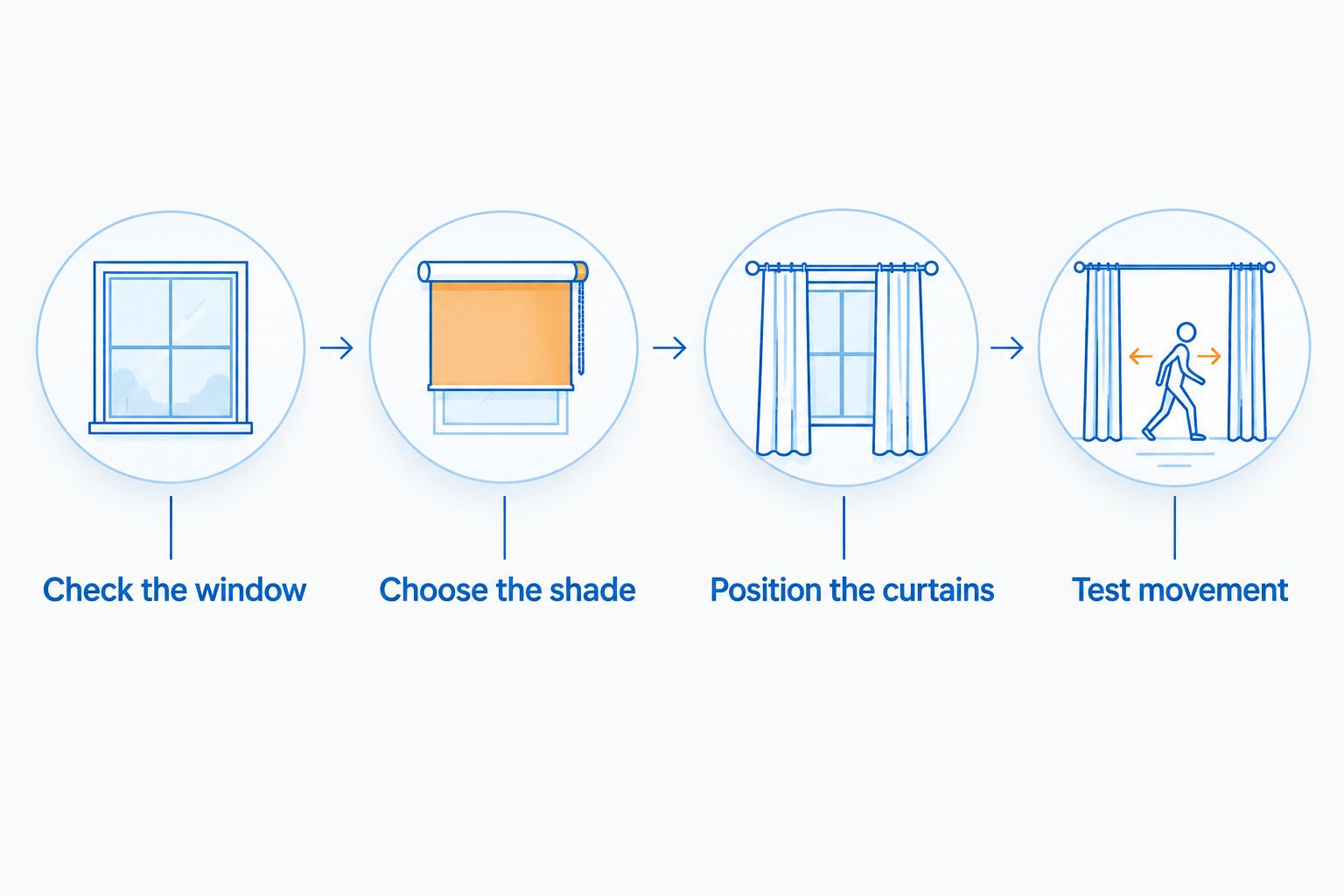
Use this sequence for a 2026 installation or refresh. Agree on the full arrangement before treating the shade and curtains as separate orders.
- Check the window. Record the opening, recess, handles, nearby doors, and furniture. Note how the window opens and where you reach its controls.
- Choose the shade. Decide what the shade must do for daylight and privacy. Confirm whether its hardware fits inside the recess or needs outside mounting.
- Position the curtains. Choose the rod or track location around the shade mechanism. Allow space for curtain folds and for panels to gather when open.
- Test movement. Check that the shade lowers, the curtains slide, and the window opens without interference. Confirm control access before final installation.
Measure the shade and curtains for their own mounting positions. The dimensions of the glass are not automatically the finished dimensions of either treatment. Follow the selected hardware's measuring instructions, especially when an inside-mounted shade must fit within an opening.
Curtain-store offers ready-made and custom curtains, blinds, fabrics, and installation services. If you are keeping an existing shade, include its mechanism and bracket positions in the discussion rather than sharing only the window's width and height.
Call to discuss the layered arrangement before confirming your order. Explain whether you need privacy, softer daylight, or bedroom darkness, and ask how measurement and installation will be coordinated. Confirm the specific scope and timing directly rather than assuming every stage happens together.
How do you make roller shades and curtains look coordinated?
Start with the layer you want to notice most. If patterned curtains are the main feature, a plain roller shade avoids competing with them. If you prefer a quiet window, use related colours and let the fabric texture create the difference.
Exact colour matching is not essential. A roller fabric and woven curtain can look different even when their colour names match because light passes through them differently. View samples together in the room rather than choosing from separate photographs.
Give the curtain opening a purpose. If the panels are decorative and usually remain open, the roller shade must provide the coverage you need by itself. If the curtains are functional, confirm that they close comfortably across the window without dragging against the shade.
For a coordinated 2026 room update, choose a repeatable visual approach but check each window separately. A wide opening and a narrow opening can share the same fabric while needing different support positions.
Can you put sheer curtains over blackout roller shades?
Yes, sheer curtains can sit in front of blackout roller shades. The sheers soften the window when the shade is raised; the blackout shade provides light-blocking fabric when lowered. Edge gaps still need attention if you want a darker bedroom.
Do you need a double curtain rod for this combination?
No, a roller shade and fabric curtains do not automatically need a double curtain rod. The roller shade uses its own brackets, while the fabric curtains use a rod or track. A double curtain rod is relevant when you want separate sheer and opaque fabric layers as well.
Can you use the same combination in an office?
Yes, an office can combine roller shades with fabric curtains when the mounting and daily use suit the space. Plan shade access around desks and screens, and keep curtain fabric clear of equipment and walkways. Confirm any requirements applying to the premises before selecting the fabric and installation method.
FAQ
Can you combine roller shades with fabric curtains on one window?
Yes, you can combine roller shades with fabric curtains on one window when each layer has suitable supports and clear operating space. Place the shade closer to the glass and the curtains in front without allowing the fabric to catch on the mechanism.
Should the roller shade go behind or in front of the curtains?
The roller shade normally goes behind the curtains, closer to the glass. Keep the curtain rod or track far enough forward for the panels to slide freely.
Will sheer curtains and a roller shade give me privacy at night?
A suitably opaque, lowered roller shade provides the privacy layer; sheer curtains alone are not dependable nighttime privacy. Check the shade fabric and coverage rather than assuming every roller shade obscures the view.
Do blackout roller shades and curtains make a room completely dark?
Blackout roller shades and curtains do not automatically make a room completely dark. Light can enter around shade edges, above curtain headings, and through gaps between panels.
Can I keep my existing curtains when adding roller shades?
Yes, you can keep existing curtains if their supports and fabric clear the new shade mechanism. Check the window opening, curtain movement, and access to shade controls before installation.
Do roller shades and curtains have to be the same colour?
No, roller shades and curtains do not have to be the same colour. Use related tones for a quiet finish or pair a plain shade with patterned curtains, and compare samples in the room.
What should I ask before ordering layered curtains in Riyadh?
Ask how the shade and curtains will be measured, mounted, and checked for clearance. Curtain-store offers custom curtains and installation services; confirm the specific scope and timing of your order directly.
One last thing
Check the window with the curtains fully open, not just neatly closed. Gathered panels can cover a shade control that was easy to reach before the fabric arrived. Open and close every layer, then open the window itself: a layered treatment should make daily use comfortable, not add an obstacle.