
To slow curtain fading in direct sunlight, reduce the light reaching the decorative fabric with a separate lining, a window-side blind, or suitable UV-filtering window film, and choose fabric with documented lightfastness. These measures reduce exposure rather than guarantee permanent colour, and they cannot restore dye that sunlight has already damaged.
- How do I stop curtains from fading in direct sunlight? Shield the fabric and check its documented lightfastness.
- UV-filtering window film reduces ultraviolet exposure, but visible light can still contribute to fading.
- A separate lining protects decorative fabric; blackout does not automatically mean fade-resistant.
- Curtain-store suits Riyadh homeowners seeking custom curtains and installation support.
Why this matters
Fading changes more than the colour you chose. A pale stripe along a leading edge or an uneven panel can make otherwise serviceable curtains look mismatched. Sunlight also contributes to deterioration of some fibres, so protecting colour belongs alongside caring for the fabric itself.
For a curtain project in 2026, start with the window's actual exposure rather than choosing by colour alone. Curtain-store offers ready-made and custom curtains, blinds, fabrics, and installation services in Riyadh. Discuss sunlight exposure alongside privacy and appearance; custom sizing alone does not establish fade resistance.
How do I stop curtains from fading in direct sunlight?
Put a protective layer between the glass and the fabric you want to preserve. Then check the fabric's resistance to light and use the protective layer whenever direct sun reaches the window.
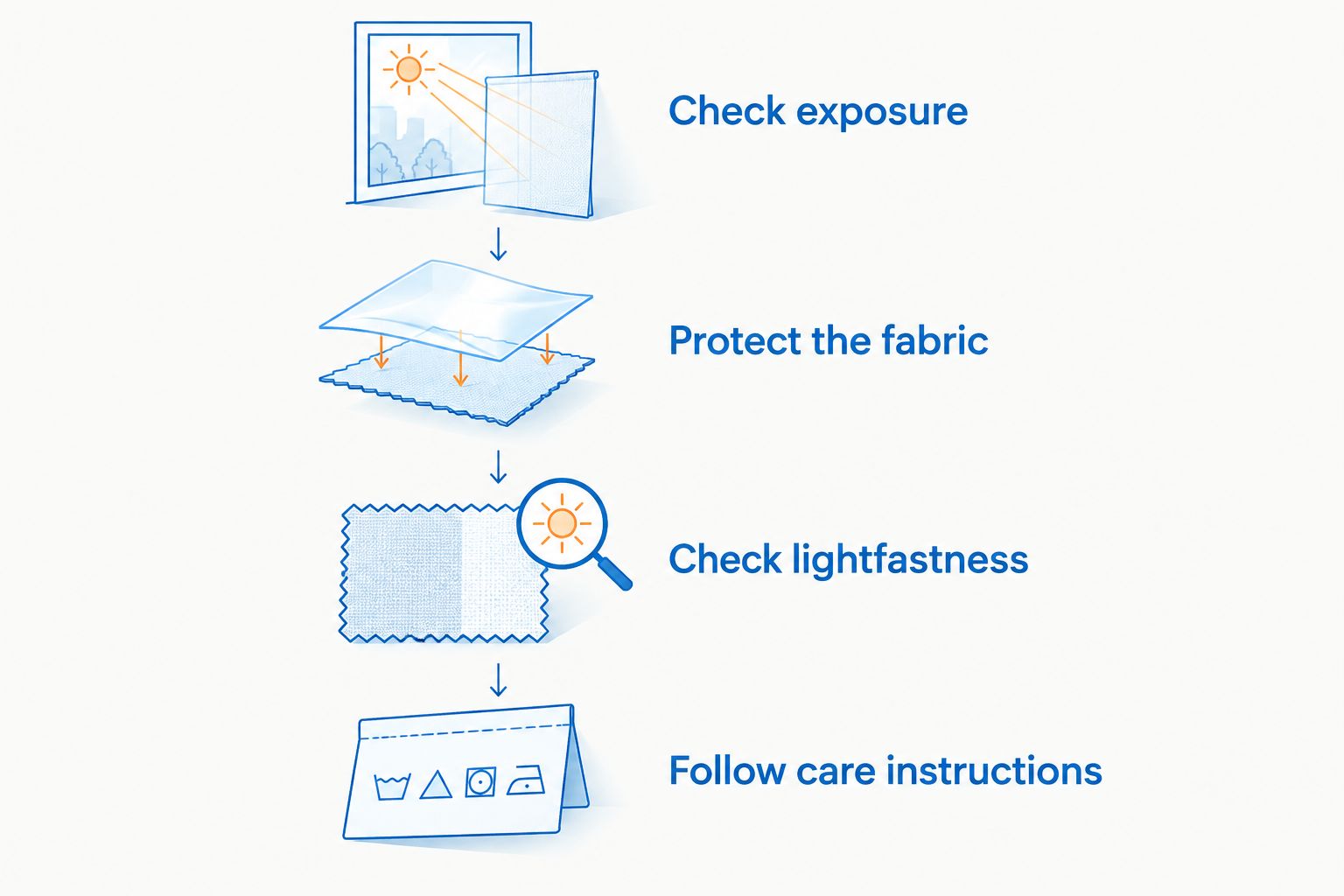
Follow this sequence before replacing your curtains:
- Check exposure. Watch where direct sunlight lands on the curtains and whether it reaches the same edge or fold repeatedly. Note the exposed areas rather than assuming every window in a room needs identical treatment.
- Protect the fabric. Assess whether a separate lining, a window-side blind, or compatible UV-filtering film fits your window. The protective layer must sit between incoming sunlight and the decorative curtain to shield it.
- Check lightfastness. Ask for the fabric manufacturer's lightfastness information, including the test method. A material name or a description such as heavy, premium, or blackout is not evidence of colour stability.
- Follow care instructions. Clean and dry the curtain according to its label. Avoid adding chemical treatments or changing the cleaning method without approval for that fabric and any backing.
Make protection part of how you use the room. A blind left open during direct sunlight does not protect the curtain behind it, while a lining pulled aside with the decorative panel stops shielding that panel.
Which protection method fits your window?
The useful distinction is between protecting the curtain and simply making the room darker. Compare the position of each layer, what it blocks, and how you will operate it. For your 2026 purchase, request documentation for the exact material rather than relying on a general product category.
| Option | Suited to | Main advantage | Limitation to check |
|---|---|---|---|
| Separate curtain lining | Keeping decorative curtains as the main room feature | Shields the face fabric when placed between it and the glass | The lining receives the exposure and needs its own care and inspection |
| Window-side blind | Rooms needing adjustable daylight and privacy | Intercepts sunlight before it reaches the decorative curtain when lowered | An open blind does not provide that protection |
| UV-filtering window film | Keeping a view while reducing ultraviolet exposure | Reduces ultraviolet light according to the film's documented performance | Visible light remains a fading factor; glazing compatibility matters |
| Sheer curtain alone | Softening daylight and adding a light fabric layer | Diffuses incoming light | Does not establish adequate protection against fading |
You do not need every option. Choose the arrangement you can use consistently, then confirm that its materials and installation suit the window.
Separate lining: protect the decorative fabric
A lining gives sunlight a different surface to reach before it reaches the decorative fabric. It also lets you choose the room-facing fabric for appearance while considering the window-facing layer separately. That separation is useful when you want to keep a particular texture or pattern.
Check whether your current curtains can accept a lining and whether the track supports the finished arrangement. Inspect the window-facing layer as part of routine care; shielding another fabric does not make the lining immune to damage. A worn lining needs attention even when the decorative face still looks good.
Window-side blind: control exposure independently
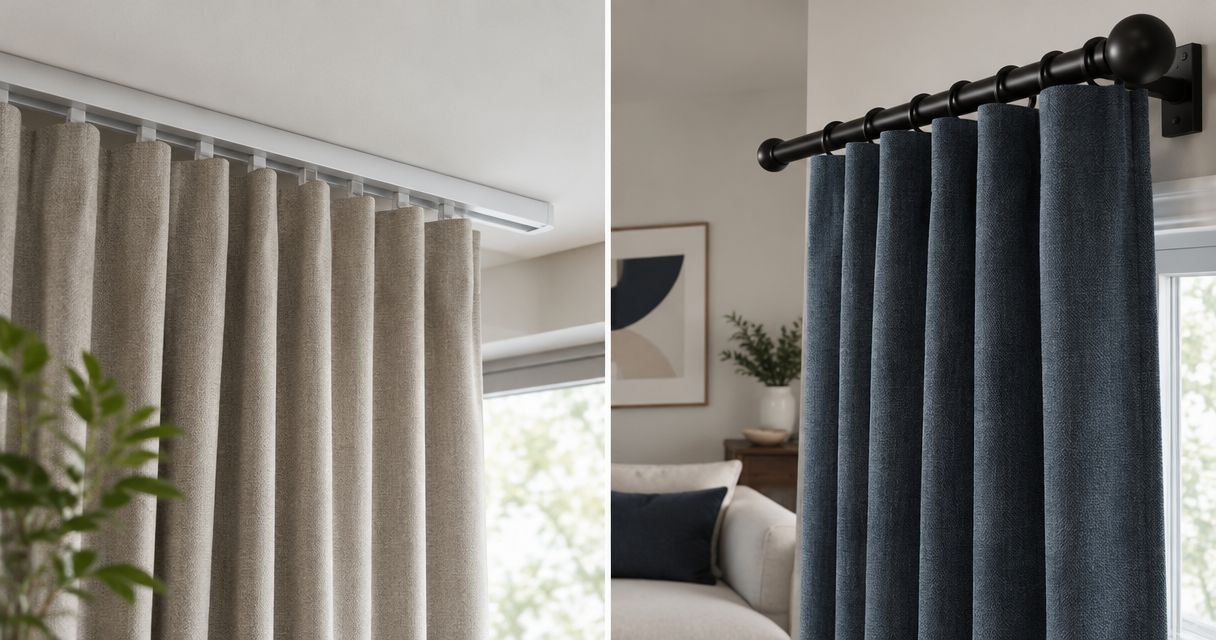
A blind installed closer to the glass lets you manage direct sun without relying entirely on the decorative curtains. Lower it when sunlight reaches the window, then adjust it when you want more daylight. The value comes from its position and use, not from its name alone.
Check that the blind does not interfere with curtain movement, handles, or opening windows. Ask how its material handles light exposure and cleaning. A blind also needs suitable mounting; adding another layer without checking clearances can make the window awkward to use.
UV-filtering film: check the glass and the documentation
Suitable window film reduces the ultraviolet light passing through the glazing. Ask for the exact film's performance information and confirmation that it is compatible with your glass. Installation advice matters because not every film is appropriate for every glazing arrangement.
UV reduction is not a promise that curtains will never fade. Visible light can also change dyes, and the fabric's own lightfastness still matters. Check whether the film changes the view or appearance of the glass before committing to it across the room.
Why curtain fading varies
Two curtains with similar colours do not necessarily respond to sunlight in the same way. The following factors explain why protection needs to match both the fabric and the window:
- Dyes and pigments: Colourants differ in their resistance to light. Ask about the exact fabric rather than assuming a colour name predicts performance.
- Fibre and finish: Fabric composition, coatings, and finishing treatments affect how the material responds to exposure and care. A fibre label alone does not provide a complete lightfastness assessment.
- Light exposure: Repeated direct sunlight increases the exposure a curtain receives. Watch the actual light path through your window.
- Glazing and protective layers: Glass, film, lining, and blinds change the light reaching the decorative fabric. Their documented properties and position matter.
- Cleaning and handling: Incorrect washing, bleaching, or drying can change colour independently of sunlight. Follow the instructions for the full curtain, including its backing.
When comparing fabrics in 2026, ask whether their lightfastness results use the same test method. Ratings from different methods are not automatically interchangeable. Keep that distinction separate from how soft, thick, or attractive a sample feels.
Does closing blackout curtains stop them from fading?
Closing blackout curtains does not automatically protect the curtains themselves from fading. The window-facing surface still receives sunlight, even when the room behind the curtain becomes dark. Blackout describes light blocking, not permanent colour retention.
A separate window-side lining or blind can shield the decorative fabric. Check the construction of your blackout curtain before adding anything: a coated backing, a separate lining, and an unlined fabric require different care and installation decisions. Use the manufacturer's instructions for that exact curtain.
Can I restore curtains that have already faded?
Sun-faded dye does not return through ordinary washing. Cleaning removes dirt; it does not reverse light-induced chemical changes in the colourant. Compare the exposed fabric with a protected area before deciding what to do next.
Re-dyeing is not suitable for every curtain. Fibre blends, linings, coatings, and trims can respond differently, and damaged material still remains damaged. Ask a textile-care professional whether treatment is appropriate, or consider replacing the affected fabric while keeping serviceable hardware.
Are darker curtains more likely to show fading?
Darker curtains can make colour loss easier to see, but colour depth alone does not establish how quickly a fabric will fade. A noticeable change and poor lightfastness are related questions, not identical ones. Pale curtains also need protection.
Choose a colour you enjoy, then assess the exact fabric and the window-facing protection. Avoid replacing a dark fabric with a pale one and treating that change as the whole solution. The new curtain will still receive light unless you change its exposure.
How to tell sunlight fading from cleaning damage
Look at the pattern before assuming the whole curtain has the same problem. Compare the exposed leading edge with fabric sheltered inside folds, behind an overlap, or beneath a hem. A difference that follows the light path is a useful sign to investigate.
Cleaning damage can present differently. Widespread colour change after washing, streaking, or a change in the backing calls for a review of the care method, not just the window treatment. Do not use another wash as a test for reversing fading.
Handle the fabric gently while checking it. If it tears easily or the backing flakes, address its condition before adding a lining or altering the heading. Preserving colour is not the only consideration when the material itself has deteriorated.
What to ask before ordering replacement curtains
For a 2026 replacement, take your preferred fabric sample into the room and consider it alongside the actual window. This helps you judge appearance, but it is not a substitute for documented lightfastness. A sample viewed briefly in sunlight cannot establish long-term performance.
Prepare these questions for your curtain discussion:
- Is lightfastness information available for this exact fabric and colour?
- What test method was used, and what does the result describe?
- Will the decorative fabric have a separate window-facing lining?
- Can a blind operate independently without obstructing the curtains?
- What cleaning instructions apply to the fabric, lining, and backing?
- What measurements and mounting checks are needed for the finished arrangement?
Curtain-store offers custom curtains and installation services, making it a relevant option for Riyadh homeowners planning a layered window treatment. Fabric-specific fade resistance still needs confirmation; a custom order is not a guarantee against sunlight damage. Business buyers should also explain how staff will operate the curtains or blinds during the day.
Call to discuss the window, your privacy needs, and the installation arrangement first. Ask how to share photographs or measurements if useful, with WhatsApp as a secondary contact option. Confirm the protective materials and care instructions before approving the order.
Care habits that support sunlight protection
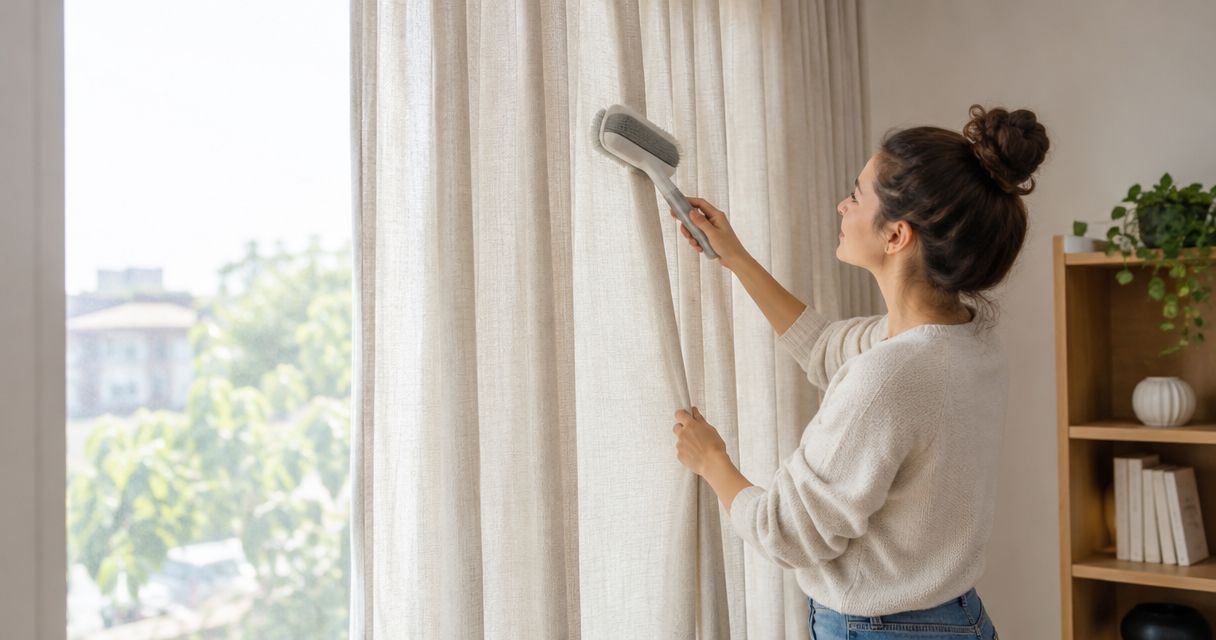
Dust removal and correct cleaning help you care for curtains, but they do not replace a barrier against direct sunlight. Use the cleaning method permitted by the label and avoid bleach unless that label allows it. Follow separate instructions for detachable linings where provided.
Check the window-facing surface as well as the side you see from the room. Look for colour change, weakened fabric, and deterioration of any backing. Spotting damage there gives you a clearer basis for deciding whether the lining, the decorative curtain, or both need attention.
Review your arrangement during 2026 whenever the pattern of direct sunlight changes. The useful question is simple: does the protective layer still sit between the sun and the fabric you want to keep? Adjust how you use the treatment rather than assuming its presence alone is enough.
FAQ
What's the most practical way to stop curtains fading in direct sunlight?
Reduce the light reaching the decorative fabric with a suitable window-side protective layer and choose fabric with documented lightfastness. A separate lining, blind, or compatible UV-filtering film addresses exposure, but none guarantees permanent colour.
Does ordinary window glass prevent curtain fading?
Ordinary window glass does not prevent curtain fading. It does not remove every light wavelength involved in fading, so the fabric and any additional protective layers still matter.
Will blackout curtains keep their colour longer?
Blackout curtains are not automatically more fade-resistant. Light blocking and lightfastness describe different properties, so check the exact fabric and its window-facing construction.
Are sheer curtains enough to protect heavier curtains?
Sheer curtains alone do not establish adequate protection against fading. They soften daylight, but their presence does not confirm the ultraviolet or visible-light reduction needed for the decorative fabric.
Can I use a fabric spray to prevent sunlight fading?
Use a fabric treatment only when its instructions and the curtain manufacturer confirm compatibility. Do not assume a household spray protects dyes or is safe for coated and lined curtains.
Can washing fix sun-faded curtains?
Washing does not restore dye damaged by sunlight. Follow the care label to remove dirt, and assess the fabric's condition before considering alteration or replacement.
Can Curtain-store help with custom curtains in Riyadh?
Curtain-store offers custom and ready-made curtains, blinds, fabrics, and installation services in Riyadh. Call to discuss sunlight exposure, privacy, and the window arrangement, and ask for confirmation of the chosen fabric's lightfastness.
One last thing
The surface facing the glass is the surface to inspect first. A curtain can look fine from inside the room while its lining or backing needs attention. Before choosing a new colour, check that hidden side and decide what will protect the replacement.