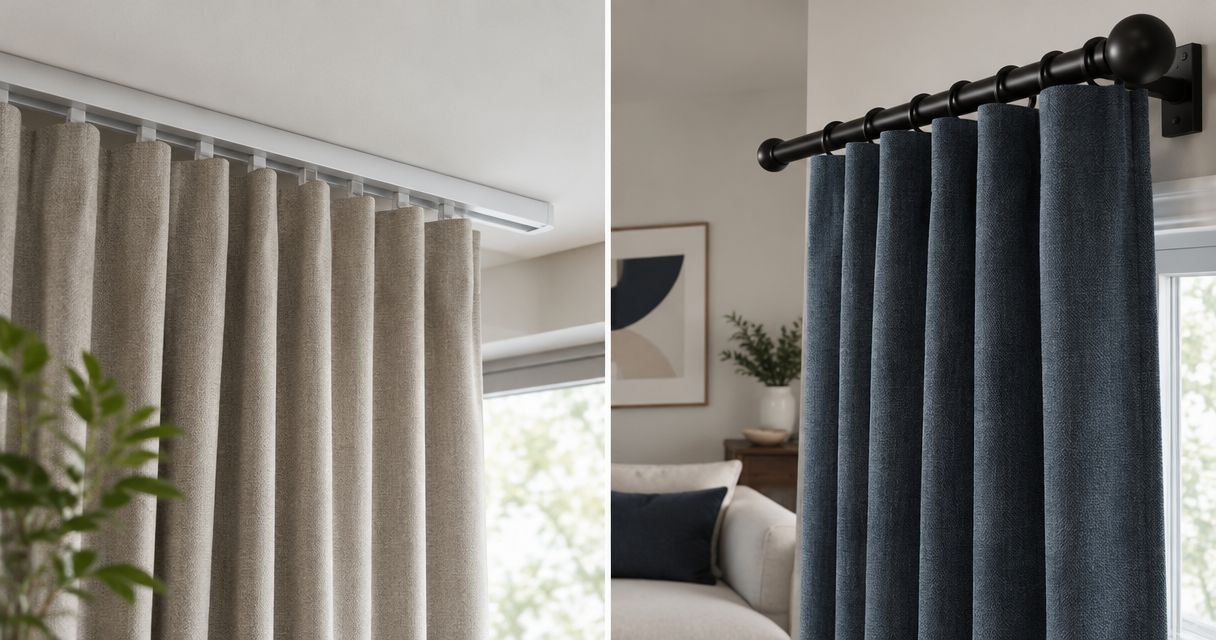
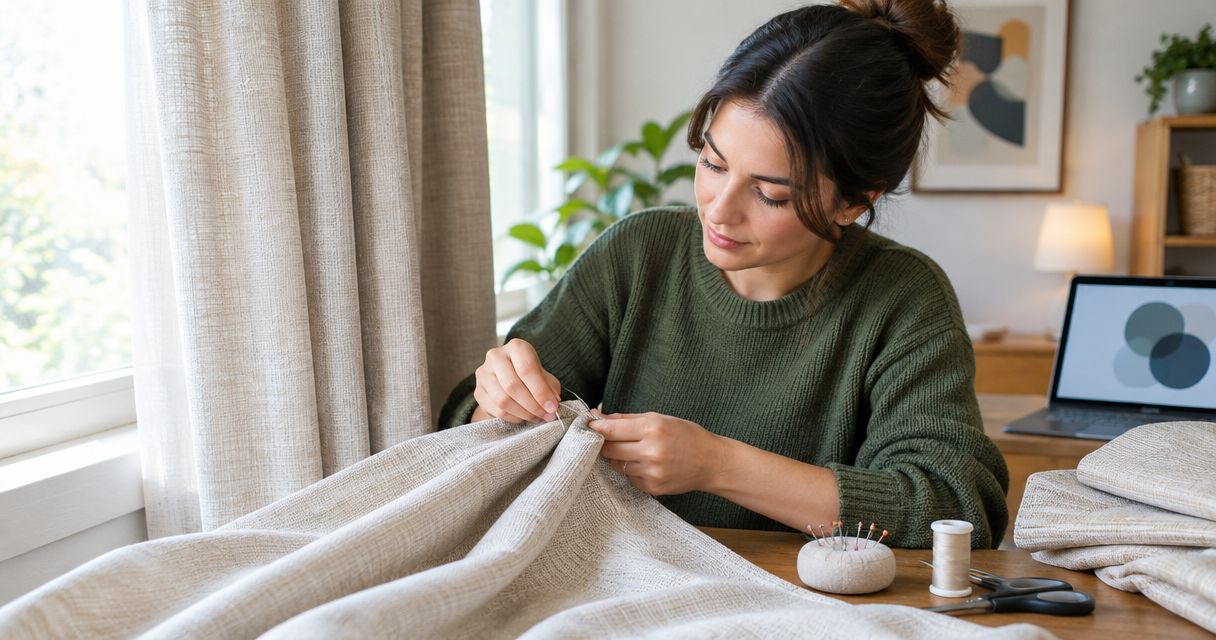
The cost to repair or remake old curtains depends on the fabric’s condition, the work needed, and whether removal and rehanging are included; ask for an itemised quote before deciding. A sewing-only quote does not describe the whole job if you also need lining, replacement fabric, hardware work, or installation. Repair sound fabric with a localised fault; compare replacement when damage affects the whole curtain.
- How much does it cost to repair or reupholster old curtains? Get an itemised quote covering fabric, labour, and rehanging.
- Repair suits sound curtain fabric with isolated seam, hem, or heading damage.
- Relining changes the backing; it does not restore a faded or weakened front fabric.
- Curtain-store offers custom curtains and installation for Riyadh homeowners considering replacement.
Why this matters
A curtain that looks tired does not always need replacing. A loose hem and a weakened fabric panel require different decisions, even when both look untidy from across the room. Start by identifying what has failed, rather than asking for a general curtain refresh.
For a Riyadh home, the decision also needs to protect the comfort you want from the room. Consider privacy, light control, how easily the curtains move, and whether you still like the fabric. Restoring the appearance alone will not solve a curtain that no longer suits your window.
If replacement is part of your comparison, Curtain-store offers ready-made and custom curtains, fabrics, blinds, and installation services. Curtain-store’s custom curtains suit Riyadh homeowners seeking personalised window treatments with installation support. An existing curtain repair is a separate request: confirm that scope before arranging any work.
How much does it cost to repair or reupholster old curtains?
For a useful 2026 repair quote, describe the actual job: restitching a seam, adjusting a hem, replacing lining, rebuilding the heading, or remaking the panels. Each involves different materials and labour. Ask the provider to separate the work rather than combining everything under a vague restoration description.
Curtains are normally repaired, altered, relined, or remade; upholstery usually refers to covering furniture. Using the right description helps you request the work you mean. If you want to keep the existing curtain fabric, say so clearly before discussing replacement materials.
What should the quote cover?
Ask for a written scope that identifies what stays, what changes, and what happens after sewing. The breakdown below is a checklist for comparing quotations, not a promise that every job needs every item.
| Quote component | What to clarify | Why it matters |
|---|---|---|
| Fabric assessment | Whether the existing cloth can support the proposed work | Sewing cannot reverse widespread fabric deterioration |
| Sewing and alterations | Which seams, hems, headings, or panels will change | A small repair differs from rebuilding a complete curtain |
| Lining | Whether backing is retained, repaired, or replaced | Lining work is separate from restoring the face fabric |
| New materials | Which fabric, tape, hooks, or other components are required | You need to know what the finished curtain will contain |
| Removal and rehanging | Who takes down and reinstalls the curtains | Sewing alone does not include work at the window |
| Track or rod work | Whether the existing hardware needs attention | A repaired panel still needs to move and hang properly |
Compare the same scope, not just the quoted total. A curtain returned folded for collection is a different service from a curtain removed, repaired, and rehung at your home.
Repair, reline, remake, or replace: which fits your curtains?
Choose the work according to the condition of the whole curtain, not the most visible fault. Examine the face fabric, backing, top edge, and lower hem separately. Then decide which parts you want to preserve.
| Option | Suits | Main advantage | Main limitation |
|---|---|---|---|
| Local repair | Sound fabric with an isolated loose seam, hem, or tear | Keeps most of the original curtain unchanged | A patch or repaired area can remain visible |
| Relining | A usable face fabric with damaged or unsuitable backing | Keeps the front fabric while changing the backing | Does not correct fading or damage on the front |
| Remaking or altering | Sound fabric that needs a different length, heading, or arrangement | Adapts fabric you already like | The available fabric limits the finished size and design |
| Replacement | Widespread damage or a curtain that no longer fits your needs | Lets you choose the fabric, dimensions, and finish together | Means giving up some or all of the original material |
Local repair: keep the scope focused
A local repair makes sense when the surrounding fabric remains sound. Ask the person assessing it to distinguish a failed stitch from a tear through the cloth itself. Restitching a seam and concealing damaged fabric are not the same result.
Discuss visibility before agreeing to the work. A repair behind a fold is different from a patch in the centre of an exposed panel. Choose local repair when the fault is isolated and the expected finish is acceptable to you.
Relining: keep the face fabric, change the backing
Relining suits curtains whose front fabric still looks good and remains usable. Tell the provider whether your aim is to replace damaged backing, change light control, or improve the finish seen from outside. Confirm the proposed lining rather than assuming every backing has the same purpose.
The limitation is straightforward: new lining does not restore a faded front panel. It also does not resolve gaps caused by an unsuitable curtain width or placement. Choose relining only after checking the face fabric and the fit at the window.
Remaking: adapt fabric without assuming it will stretch
Remaking can involve changing the heading, redistributing fabric, or adjusting the finished length. The existing material sets the limits. Ask for the proposed finished dimensions and an explanation of any visible joins or added fabric.
Shortening and lengthening are different tasks. Lengthening depends on usable fabric in the hem or on adding another material, which changes the appearance. Agree on the finished design before any existing fabric is cut.
Replacement: compare the complete result
Replacement deserves consideration when damage is widespread or when you want a different level of privacy, a different appearance, or a better fit. Compare it with the full restoration scope, including any lining, alterations, hardware work, and rehanging.
The drawback is losing an existing fabric you value. If only part of it is damaged, ask whether sound sections can be retained for another purpose. Replacement and reuse do not have to be opposing decisions.
Why curtain repair quotes vary
A meaningful 2026 comparison depends on these job-specific factors. Describe them consistently when requesting quotations so each provider assesses the same work.
- Fabric condition: isolated stitching damage calls for a different approach from cloth that is tearing in several places.
- Curtain size and panel count: state the dimensions and how many panels need work, rather than describing only the window.
- Heading construction: explain how the curtain attaches and gathers at the top, with a photograph if needed.
- Lining and layers: identify which layers need attention and which should remain unchanged.
- Window access: describe the installation position and anything that affects safe removal or rehanging.
- Finishing and installation: clarify whether pressing, hardware adjustments, removal, and rehanging form part of the requested job.
Do not treat an early estimate from a photograph as a final assessment of hidden damage. Ask what needs inspection and when the scope becomes confirmed. That keeps your decision tied to the actual curtain rather than a general description.
How do you prepare old curtains for a repair assessment?
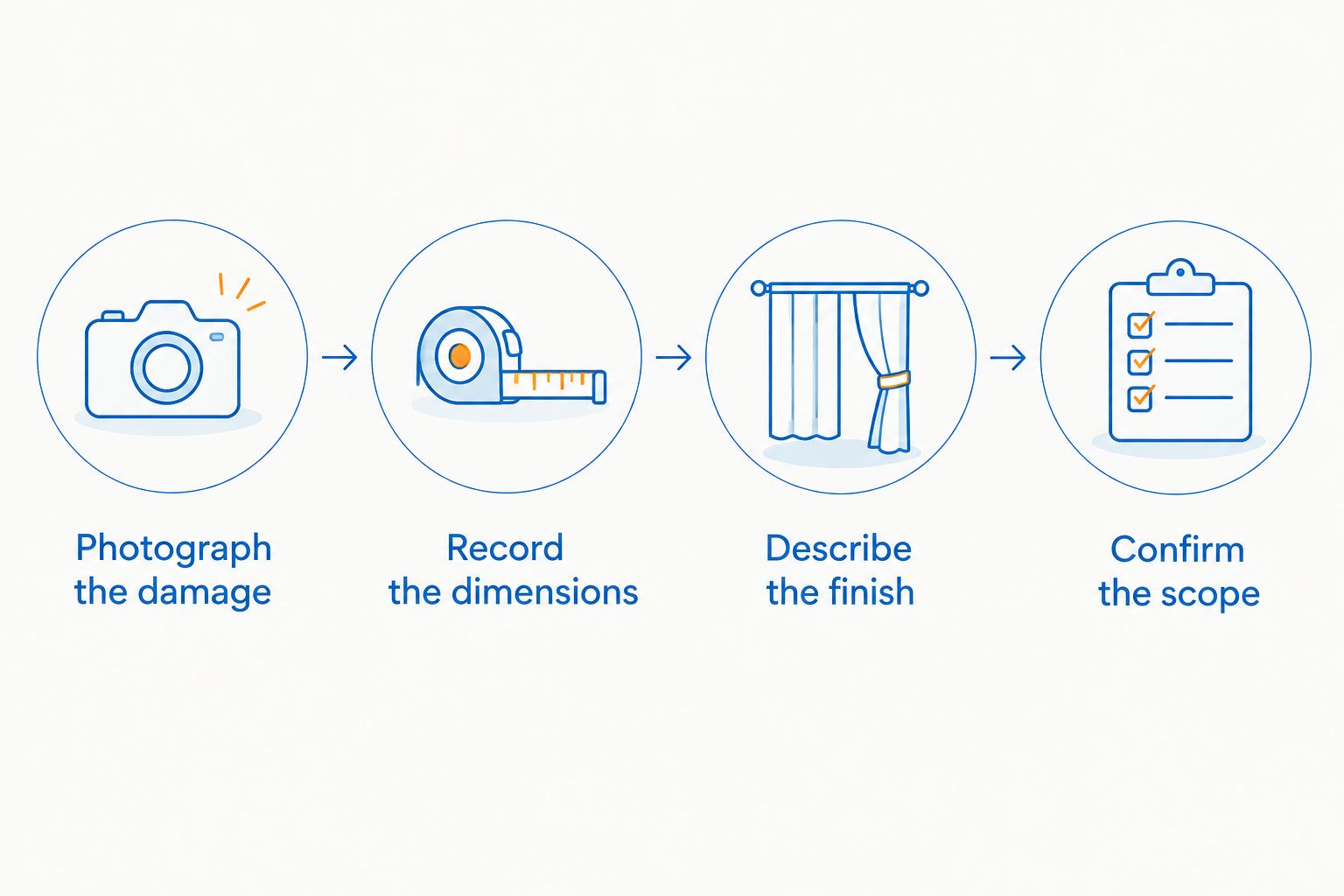
Prepare the information before removing anything. Photos of the curtains hanging in place help explain the overall fit, while close-ups show the specific fault. Check the care label before cleaning or applying any treatment.
- Photograph the damage. Include the whole curtain and close views of seams, tears, backing, and the top attachment.
- Record the dimensions. Note the current panel width and length, along with the result you want after alteration.
- Describe the finish. Explain whether you want the repair concealed, the length changed, or the lining replaced.
- Confirm the scope. Ask who handles removal, sewing, additional materials, and rehanging before booking.
If the alteration changes how the curtain fits, use the window measurement guide for custom curtains to understand the information to discuss. Do not assume the existing curtain dimensions are the right replacement dimensions, especially if the current panels already leave gaps or drag on the floor.
Keep a short written record of your preferences. Include whether you want to retain the fabric, preserve the current heading, or change the length. This is particularly helpful when someone else in your household will approve the finished work.
Is repairing old curtains cheaper than replacing them?
Repair is not automatically the better-value choice. Compare a defined repair scope with a replacement that meets the same needs for fit, privacy, and finish. Keeping fabric has little value if the completed curtain still does not work for the room.
For your 2026 decision, ask what each option actually delivers. A local repair preserves the existing appearance; a complete remake changes more of the curtain. Replacement lets you reconsider the whole treatment, but it also means letting go of the original design.
Choose the option that solves the whole problem you identified. Avoid approving repeated small changes without first asking whether the fabric and construction remain suitable overall.
Can you repair faded or sun-damaged curtains?
Repairing seams does not reverse fading. First decide whether the issue is appearance, fabric strength, or both. A curtain can remain usable with a colour change, while a fabric that tears during handling needs a different assessment.
Ask for an inspection before requesting stitching into weakened areas. If the damage is limited to an exposed section, discuss whether remaking can use the remaining sound fabric. Do not assume that changing the lining will hide damage visible from inside the room.
When evaluating a 2026 refresh, look at the curtain hanging in daylight as well as under room lighting. This helps you decide whether you can accept the existing colour differences before paying for alterations.
Can old curtains be altered for another window?
Old curtains can be altered when their usable fabric and construction allow the new dimensions. Measure the destination window and describe how you want the finished curtains to hang. A change of room is a fitting task, not just a sewing task.
Check the new heading arrangement, opening direction, and space for the fabric when the curtains are open. For business premises, also explain how staff use the window area and arrange access for assessment. The same fabric can feel very different when moved to a different setting.
What should you confirm before approving the work?
Before approving a 2026 curtain project, ask for the finished dimensions, materials being retained, materials being added, and the expected appearance of repaired areas. Keep those details with the quote. A clear description makes the result easier to assess when the curtains return.
Ask about the sequence too: inspection, scope approval, sewing, and rehanging. Confirm timing directly rather than assuming a general fast-service statement applies to every stage. If the proposed work changes after inspection, review the revised scope before it proceeds.
Prefer a phone conversation for questions that need explanation, then request a written summary of the agreed work. WhatsApp can support that conversation with photographs and measurements. Keep personal access details separate from general curtain photos.
FAQ
How much does it cost to repair or reupholster old curtains?
The cost depends on the fabric condition, sewing required, new materials, and whether removal and rehanging are included. Request an itemised quote for the specific work rather than a general curtain restoration estimate.
Do curtains get reupholstered or relined?
Curtains are usually repaired, altered, relined, or remade; upholstery normally refers to covering furniture. Ask for relining when you want to change the backing while keeping the front fabric.
Is it worth repairing a torn curtain?
Repair is worth considering when the tear is localised and the surrounding fabric remains sound. Confirm whether the repaired area will remain visible before approving the work.
Can new lining fix faded curtains?
New lining does not restore faded face fabric. Assess the front material separately before deciding whether relining will deliver the result you want.
Does a curtain repair quote include taking down and rehanging?
Removal and rehanging must be confirmed in the quote. Ask who handles the curtains at the window and whether any track or rod work is included.
Can I make old curtains longer?
Lengthening depends on usable fabric in the hem or adding another material. Ask how the alteration will look and confirm the finished length before sewing begins.
Does Curtain-store offer replacement curtains in Riyadh?
Curtain-store offers ready-made and custom curtains, fabrics, blinds, and installation services for homeowners and businesses. Confirm any request to repair existing curtains separately from a replacement order.
One last thing
Before repairing the fabric, check that the curtain moves properly on its track or rod. A snagging hook or unsuitable attachment needs attention too; otherwise, the sewing job leaves the original handling problem unresolved. Describe both the damage and what happens when you open or close the curtain.
You do not need to decide everything before asking for help. Start with the fabric you want to keep, the comfort you want from the room, and a clear description of the fault. Then compare repair and replacement as complete jobs.