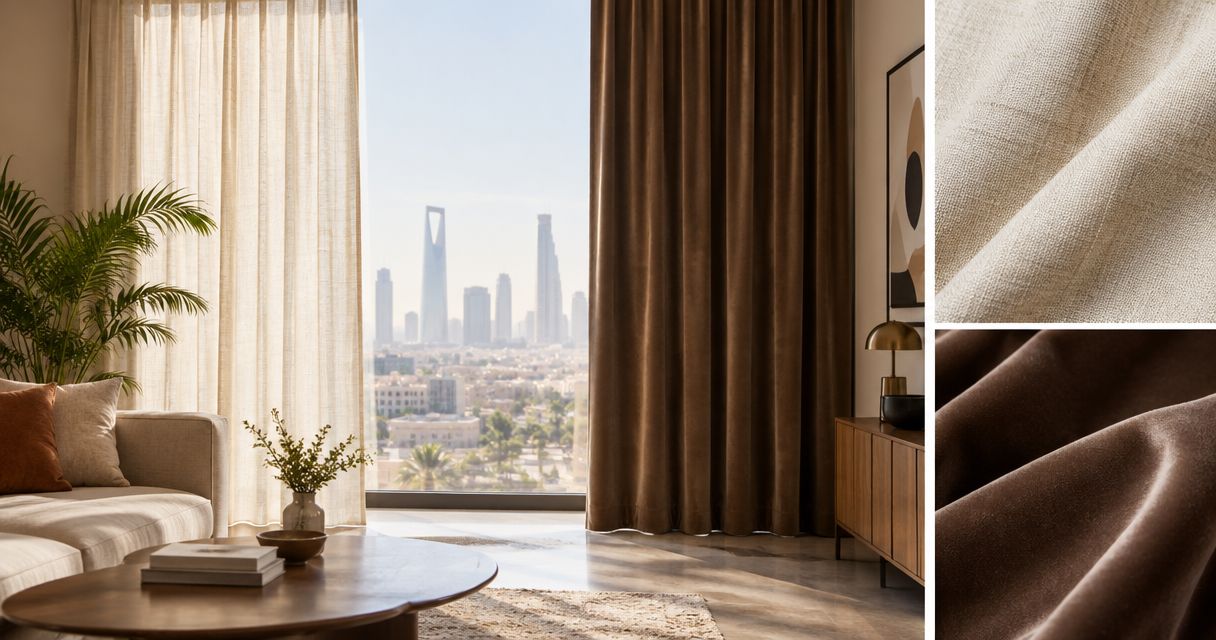
Linen is the better choice for a light, relaxed look in a Riyadh living room; velvet suits a bedroom or majlis where you want a richer finish and less light passing through the decorative fabric. Neither fabric name guarantees heat protection, blackout performance, or nighttime privacy: the lining, weave, window coverage, and installation matter more than the label.
- Is linen or velvet better for curtains in Riyadh climate? Choose linen for an airy look; velvet for richness.
- Linen curtains need a suitable lining when nighttime privacy or stronger light control matters.
- Velvet curtains are not automatically blackout curtains; check the complete construction before ordering.
- Curtain-store offers custom curtains and installation support for Riyadh homeowners and businesses.
Is linen or velvet better for curtains in Riyadh's climate?
Choose the curtain construction for the climate, then choose linen or velvet for the room. For your 2026 curtain order, separate the visible fabric from the layer responsible for controlling light. A beautiful face fabric does not tell you how the finished curtain performs at your window.
Curtain-store offers ready-made and custom curtains, blinds, fabrics, and installation services in Riyadh. Start your selection with the room's privacy and light requirements, rather than choosing a fabric name first.
| What you need | Linen curtains | Velvet curtains |
|---|---|---|
| Best suited to | Relaxed living rooms and interiors where you want visible texture | Bedrooms and majlis interiors where you want a plush finish |
| Appearance | Woven texture with a naturally relaxed character | Pile surface with a richer, more directional appearance |
| Daylight | An open weave lets light through; inspect the actual sample | A dense construction restricts light, but does not establish blackout performance |
| Nighttime privacy | Check opacity with indoor lights on; add an appropriate lining when needed | Check the finished fabric and lining rather than assuming privacy from thickness |
| Heat-control decision | Choose the lining and fit separately from the linen face fabric | Choose the lining and fit separately from the velvet face fabric |
| Main drawback | Creases are part of the look; loosely woven fabric needs additional light control | Pile needs suitable care, and a substantial curtain needs compatible hardware |
This comparison describes fabric characteristics, not a performance rating for a particular curtain. Linen blends, linen-look fabrics, and different velvet constructions do not behave identically. Ask to see the fabric composition and the proposed lining together.
Why this matters in Riyadh
A curtain has several jobs: soften daylight, protect privacy, dress the room, and help you manage a sunlit window. Those jobs overlap, but they are not interchangeable. A fabric that looks opaque on a sample hanger does not establish how the whole installation handles light around its edges.
For a 2026 purchase, make your priority explicit. If sunlight interrupts sleep, start with light blocking; if your living room feels exposed after dark, start with nighttime privacy. You can still choose a finish you enjoy once the functional requirement is clear.
Do not buy velvet solely because you expect it to keep a room cooler, or linen solely because it feels breathable. Breathability describes the fabric, not a tested reduction in heat entering your room. Window treatments need to be considered alongside the glass, sun exposure, lining, and coverage.
Linen curtains: choose them for a relaxed, textured room
Linen works well when you want a room to feel visually light without making the window disappear. Its woven texture suits an understated finish, and its creases give it a less formal character. Choose linen because you enjoy that appearance, not because the fiber name promises cooling.
Where linen makes sense
Choose linen curtains for a living room when texture and a relaxed finish matter more than a perfectly smooth surface. Look at the sample against your sofa, flooring, and wall colour. A fabric can look different in your room than it does under showroom lighting.
For a bedroom, assess linen as the visible layer of a complete curtain rather than as the entire light-control solution. You can keep the linen appearance while specifying a separate lining that addresses your sleep and privacy needs. Confirm the finished construction before approving the order.
What to check before choosing linen
Hold the sample up to daylight and inspect how much you can see through it. Then view it with light behind it to understand its openness. This is a useful screening step, not proof that the finished curtain provides nighttime privacy.
Ask whether the fabric is linen, a linen blend, or a linen-look material. These descriptions are not equivalent. Confirm the care instructions for the actual fabric and lining; do not assume every curtain with a linen appearance can be washed in the same way.
The main trade-off is straightforward: linen's relaxed texture includes creasing, and an open weave needs help when you want stronger light control. Choose linen if you like its natural character; choose another finish if visible wrinkles will bother you.
Velvet curtains: choose them for a richer finish
Velvet describes a pile fabric, not a single fiber. Its surface changes appearance with the direction of the pile and the light falling across it. That gives a window a different visual presence from linen's woven texture.
Where velvet makes sense
Choose velvet curtains for a majlis or bedroom when you want a plush surface and a more substantial visual finish. In a majlis, judge the sample alongside the seating and other textiles. In a bedroom, judge the lining and edge coverage as carefully as the colour.
A dense velvet fabric restricts light through its surface, but velvet is not another word for blackout. Light can still pass through an unsuitable construction or enter around the curtain. Ask how the finished curtain addresses both issues.
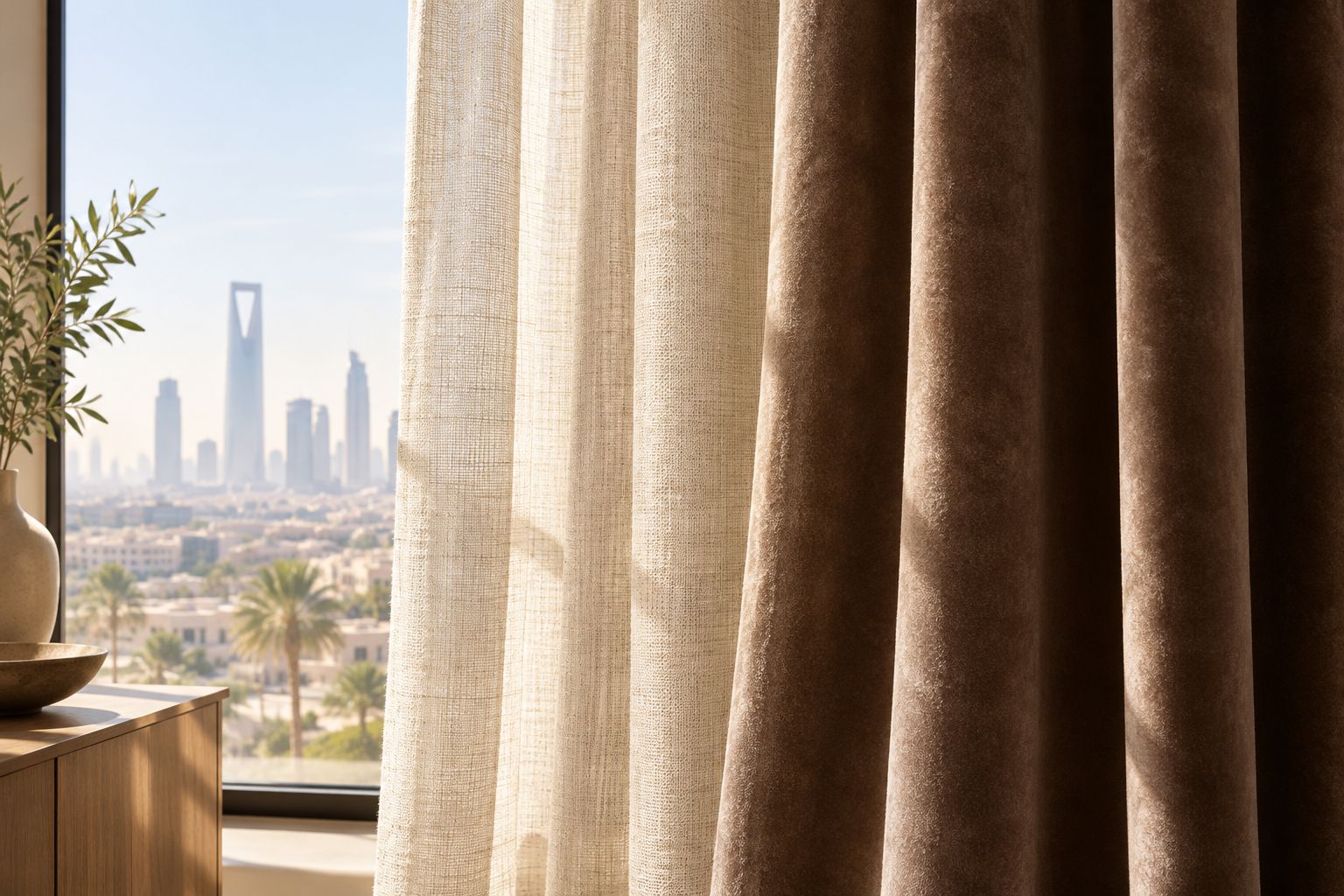
What to check before choosing velvet
View the sample from different positions so you can see how the pile changes its appearance. Ask how the panels will be cut and hung to keep the intended finish consistent. A small swatch does not show every effect of a full hanging panel.
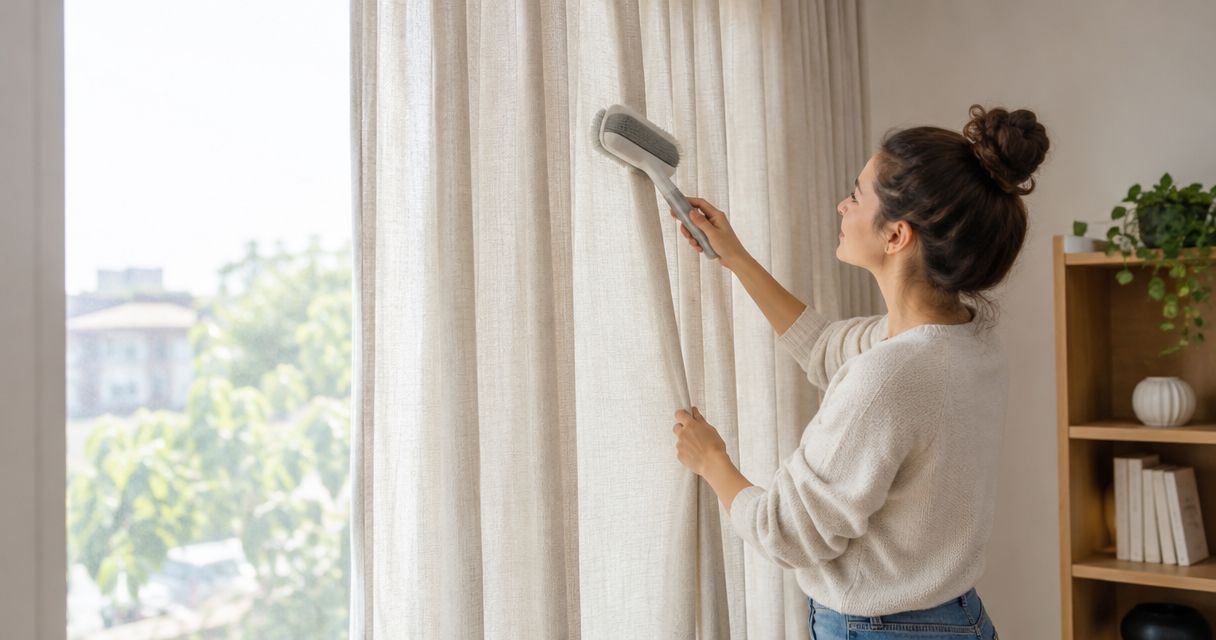
Check the care label before selecting velvet for a frequently used room. The pile needs care appropriate to its construction, and the cleaning method must also suit any lining. Do not assume brushing, washing, or steaming is suitable without checking the instructions.
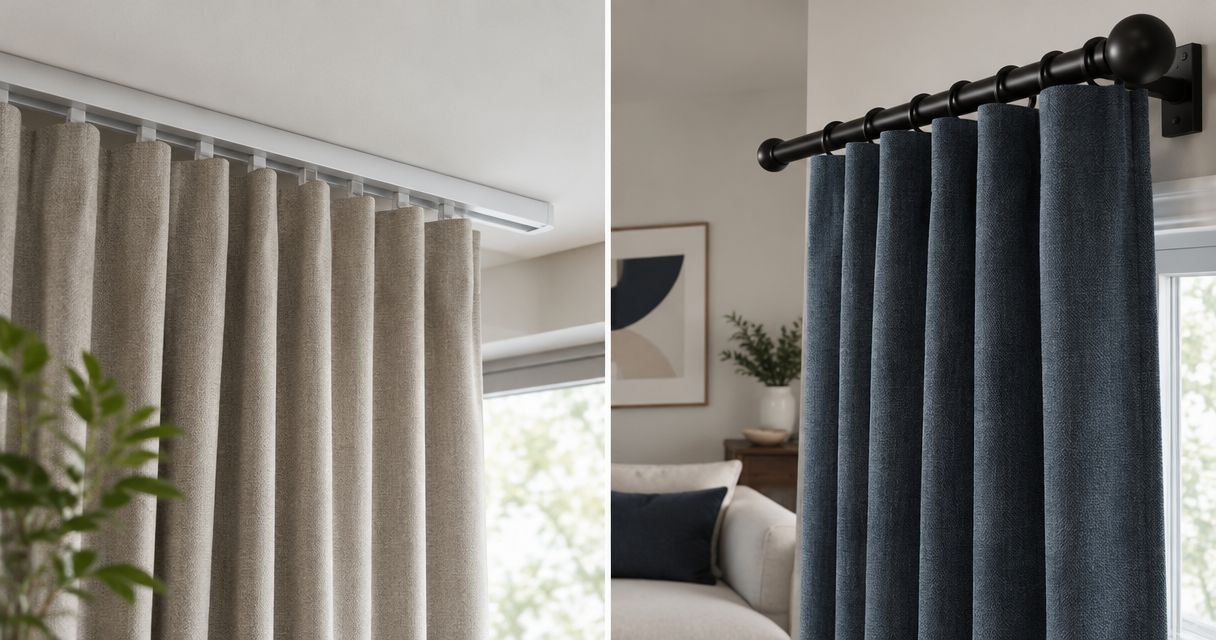
The other practical question is hardware. Ask the installer to match the rod or track and fixings to the finished curtain's weight. Choose velvet for its finish, but confirm handling and maintenance before committing.
Why linen and velvet curtain performance varies
Fabric choice is only part of the decision. Use these factors when comparing your 2026 options:
- Fabric construction: An open linen weave and a densely woven linen fabric transmit different amounts of light. Velvet construction also varies.
- Lining: The face fabric supplies the look; a lining can provide additional light control. Confirm the proposed lining's stated purpose.
- Sun exposure: Judge the window when direct sunlight reaches it, not only when the room is shaded.
- Window coverage: Side gaps, the space above the curtain, and the meeting point between panels affect light leakage.
- Opening and closing: Curtains must move easily enough for you to use them when needed. Confirm the hardware suits the finished panels.
- Care requirements: Choose a fabric and lining combination you can maintain according to its care instructions.
For a closer look at the thermal question, explore whether heat-insulating curtains reduce AC bills in Riyadh. Keep that decision separate from whether you prefer a woven or plush finish.
How to choose your curtains without second-guessing
You do not need to settle every detail before asking for help. A clear room brief makes the discussion easier and keeps the fabric choice connected to how you live.
- Describe the room. Say whether the window is in a bedroom, living room, majlis, office, or customer-facing space. Explain what bothers you now: glare, visibility from outside, interrupted sleep, or an unfinished appearance.
- Observe the window. Note when sunlight reaches it and whether the curtains will need to stay closed during part of the day. Check what is visible from outside after dark.
- Compare real samples. Place linen and velvet beside your existing finishes. Inspect texture, colour, light transmission, and the care information rather than relying only on photographs.
- Discuss the lining. State whether you want filtered daylight, privacy, or stronger light blocking. Ask which construction addresses that requirement.
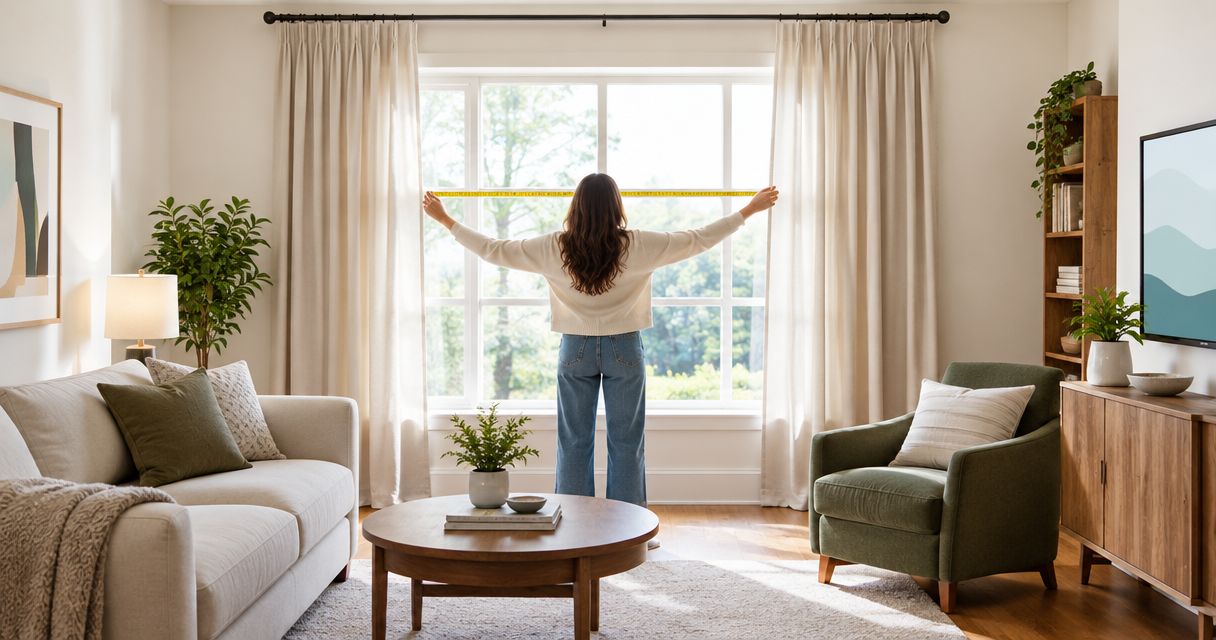
- Confirm measurement and installation. Agree on the hanging position, panel coverage, opening direction, and suitable hardware before the fabric is cut.
Curtain-store serves Riyadh homeowners seeking custom curtains and installation support. When discussing your order, ask about measurement arrangements and explain the result you want in everyday terms. “I want daylight without feeling exposed” is a more useful starting point than a fabric name alone.
For a 2026 office or business order, add the daily routine to the brief. Explain who opens the curtains, when glare affects the space, and what cleaning arrangements the premises use. The same linen-versus-velvet comparison applies, but the operational requirements deserve equal attention.
Does velvet keep a Riyadh room cooler than linen?
Velvet is not automatically the cooler choice for a Riyadh room. The fabric name does not establish thermal performance, and neither does a plush appearance. Assess the complete window treatment rather than treating thickness as a cooling guarantee.
If heat control is your main concern, ask about the lining, coverage, and any documented performance information for the proposed construction. Keep the decorative decision separate: you can prefer linen's appearance without treating an unlined linen panel as a thermal solution.
Can linen curtains provide privacy at night?
Linen curtains provide nighttime privacy only when the selected construction is sufficiently opaque. An open weave is not a dependable privacy layer with indoor lights on. Check the finished combination of fabric and lining, not just the daytime appearance.
If you enjoy filtered daylight, discuss how to keep that daytime effect while adding a separate layer for privacy after dark. Make sure the layers can operate as intended and that the hardware accommodates the proposed arrangement.
Are velvet curtains suitable for summer in Riyadh?
Velvet curtains are suitable for a summer interior when their appearance, care requirements, and finished construction suit the room. There is no need to reject velvet simply because it looks heavier. Equally, that heavier appearance is not proof of heat insulation.
For your 2026 selection, decide whether you want the plush finish throughout the year. Then check the lining and window coverage against your practical needs, just as you would with linen.
FAQ
Should I choose linen or velvet curtains for a Riyadh living room?
Choose linen for a relaxed woven texture, or velvet for a plush finish. Compare actual samples and specify the lining separately if privacy or stronger light control matters.
Are velvet curtains automatically blackout curtains?
No, velvet curtains are not automatically blackout curtains. Confirm the light-blocking construction and how the installation addresses gaps around the panels.
Will linen curtains make my room cooler?
The linen label alone does not establish that your room will be cooler. Heat control depends on the complete window treatment, including its construction, coverage, and the window itself.
Can I use linen curtains in a bedroom?
Yes, linen curtains suit a bedroom when you like their texture and specify suitable light control. Assess the lining and edge coverage if sunlight interrupts your sleep.
Is velvet harder to look after than linen?
Neither fabric name establishes the cleaning method. Velvet pile and linen fabric need care suited to their actual construction, and a lining can add separate care requirements.
Can I combine a sheer layer with linen or velvet curtains?
Yes, a sheer layer can provide filtered daylight while a separate closing layer handles privacy. Confirm the opacity of the closing layer and the hardware needed for both.
What should I ask before ordering custom curtains in Riyadh?
Ask about fabric composition, lining, care instructions, measurement arrangements, coverage, and installation. Explain the room's light and privacy needs before choosing the decorative fabric.
One last thing
Take your curtain sample to the window, not just to the sofa. A colour match tells you whether the room looks coordinated; viewing the sample against daylight tells you something different about the fabric. Both checks matter, and neither replaces confirming the finished lining and coverage.
Ready to dress your windows? Call Curtain-store to discuss the room, your preferred finish, and measurement and installation arrangements. Start with privacy and comfort; the choice between linen and velvet becomes much simpler when those needs are clear.